New York Daily News - News & Views Columnists - Stanley Crouch: Dimming the lights for a jazz beaconDimming the lights
for a jazz beacon
Whether or not anyone outside of this town likes it, New York is the cultural capital of America. Writers, painters, actors, musicians, dancers and everybody else in the arts usually comes this way. So it is fitting that here, Lois Gilbert, managing director and owner of jazzcorner.com, perhaps the busiest jazz Web site, is set to begin what may become a new tradition.
This Sunday night at 9, in recognition of the recent death of pianist John Hicks, the lights will be dimmed in all of New York's major jazz rooms. For a minute, the lights will go down in the Cornelia Street Cafe, the Village Vanguard, the Blue Note, the Jazz Standard, Birdland, Iridium, Smoke, and rooms outside of New York such as Cecil's in New Jersey, Blues Alley in Washington, and Yoshi's in San Francisco. On Friday and Saturday nights, there will be a benefit for the John Hicks family at Sweet Rhythm, where many of New York's finest pianists - Cedar Walton, Kenny Barron, Mulgrew Miller and Junior Mance - will be playing the music of John Hicks. As they used to say, "You can't beat that with a stick."
Why is all of this attention being brought to a musician whom most of you never heard play or never even knew existed? As running backs often observe, the touchdowns for which they are celebrated were made possible by the offensive line. That line protects the back and opens the holes in the defensive line so that they can make their best moves.
Though he was a superb soloist and a fine jazz composer, John Hicks was a great lineman. At the keyboard he was masterful at heating up the rhythm section, making sense of what the featured musician was playing, as well as following, guiding, or correcting either an instrumentalist or a singer. If someone wanted to play pretty, he knew just which notes and chords to pick. If fire was what they wanted, Hicks could bring more than enough logs to build quite a distinctive fire. When swing was the objective, he could put such a jubilant brand on the beat that the walls seemed to shiver with satisfaction and excitement.
In a historical moment as narcissistic as ours, it may be hard to appreciate someone who was loved for his ability to support others. In our empty celebrity culture it is now almost unthinkable that someone would be admired for expressing the essence of his personality through his empathy for fellow performers.
That is the deepest human meaning of jazz: it is about the individual rising from a collective. When you hear a jazz band take off, that is what you are hearing: empathy as self-expression.
As recognizable as his style was, as unique a man as he was, empathy was central to the virtuosity of John Hicks. He gave far more than most others and made it much easier to experience a great performing art as it made its way through the air.
Originally published on May 31, 200
Friday, June 02, 2006


Sunday, May 14, 2006
Daily Kos: Obama dials up criticisms of the administration
Daily Kos: Obama dials up criticisms of the administrationObama dials up criticisms of the administration
by kos
Sun May 14, 2006 at 07:53:11 AM PDT
Barack:
This idea that somehow if you say the words 'plan for victory' and 'stay the course' over and over and over and over again and you put these subliminal messages behind you that say 'victory' and 'victory' and 'victory,' that somehow people are not going to notice the 2,400 flag-draped coffins that have arrived at the Dover Air Force Base.
I don't know about you, but when George Bush said he did not believe in nation building, I did not know he was talking about this nation.
by kos
Sun May 14, 2006 at 07:53:11 AM PDT
Barack:
This idea that somehow if you say the words 'plan for victory' and 'stay the course' over and over and over and over again and you put these subliminal messages behind you that say 'victory' and 'victory' and 'victory,' that somehow people are not going to notice the 2,400 flag-draped coffins that have arrived at the Dover Air Force Base.
I don't know about you, but when George Bush said he did not believe in nation building, I did not know he was talking about this nation.
Saturday, May 13, 2006
John Hicks, 64, Jazz Pianist Active on New York Scene, Is Dead - New York Times

John Hicks, 64, Jazz Pianist Active on New York Scene, Is Dead - New York TimesMay 13, 2006
John Hicks, 64, Jazz Pianist Active on New York Scene, Is Dead
By BEN RATLIFF
John Hicks, a pianist who helped define the mainstream jazz aesthetic of his instrument, died on Wednesday in Manhattan. He was 64.
The cause was internal bleeding, said his daughter Naima Hicks.
Mr. Hicks, a prolific mainstay of jazz in New York since the late 1960's, gave his final performance last Sunday at a fund-raising concert at St. Mark's United Methodist Church in Harlem. The church, which Mr. Hicks attended, was also where his father, the Rev. Dr. John Hicks Sr., had been a minister.
Mr. Hicks was born in Atlanta. His family moved to Los Angeles when he was an infant and moved again to St. Louis when he was 15, when his father was appointed as a minister there.
After high school, Mr. Hicks attended Lincoln University in Missouri, the Berklee School of Music in Boston and the Juilliard School. He was also soon spending time on the road with various blues and jazz bandleaders, including Albert King and Johnny Griffin. In 1963, having taken a job with the singer Della Reese, he moved to New York City, and for the most part he stayed there.
With a dense, heavy, physical style, influenced by McCoy Tyner, he played in all kinds of situations, from free jazz to programs of music written by Billy Strayhorn, Mary Lou Williams and Sonny Clark.
Among his dozens of jobs with working bands, Mr. Hicks had stretches with three of the most important incubators of young jazz musicians: from 1964 to 1966 he was in Art Blakey's Jazz Messengers, from 1966 to 1968 with the singer Betty Carter, and from 1968 to 1970 with Woody Herman's big band. It was after a second period with Ms. Carter in the late 1970's that Mr. Hicks's career as a leader picked up; he went on to record many albums under his own name.
For a highly visible time in the 1980's and 1990's, he recorded as a solo pianist, in duos and quartets and in cooperative trios (the Power Trio and the Keystone Trio); was the regular pianist in the Mingus Dynasty Band; maintained his own big band; and played in small groups, including those of David Murray and Arthur Blythe.
Beginning in 1983, he often performed and recorded with the flutist Elise Wood, whom he married in 2001. In addition to Ms. Wood, he is survived by his brother, Raiford Hicks of Manhattan; his sisters Emma Hicks Kirk and Paula Hicks Neely, both of Stockbridge, Ga.; a daughter and son from a previous marriage, Naima Hicks of Atlanta and Jamil Hicks of Manhattan; two stepchildren, Khadesha Wood of Teaneck, N.J., and Malik Wood of Manhattan; and one granddaughter.
Thursday, May 11, 2006
Pianist John Hicks Funeral Arrangements
Funeral arrangements for recently deceased jazz pianist John Hicks have been finalized.
Viewing of the Body will be held Thursday, May 18, 2006 at Saint Mark's United Methodist Church located at 55 Edgecombe Avenue, New York City. Homegoing service for Mr. Hicks will be held on Friday May 19, 2006 at 2:00 p.m. at Saint Mark's United Methodist Church.
Funeral arrangements are being handled by John H. Joyce Funeral Directors located at 2332 Adam Clayton Powell, Jr. Blvd. New York, new York 10030 Phone number is 212-690-3500.
Following the funeral services for Mr. Hicks, the family will have his body shipped to Atlanta, Georgia to be buried at South View Cemetery in the family plot along with his parents, grandparents, and brother, Eldon.
Flowers can be sent to the funeral home.
Thank you.
Respectfully submitted,
Emma H. Kirk, MA, MS.Ed.
Viewing of the Body will be held Thursday, May 18, 2006 at Saint Mark's United Methodist Church located at 55 Edgecombe Avenue, New York City. Homegoing service for Mr. Hicks will be held on Friday May 19, 2006 at 2:00 p.m. at Saint Mark's United Methodist Church.
Funeral arrangements are being handled by John H. Joyce Funeral Directors located at 2332 Adam Clayton Powell, Jr. Blvd. New York, new York 10030 Phone number is 212-690-3500.
Following the funeral services for Mr. Hicks, the family will have his body shipped to Atlanta, Georgia to be buried at South View Cemetery in the family plot along with his parents, grandparents, and brother, Eldon.
Flowers can be sent to the funeral home.
Thank you.
Respectfully submitted,
Emma H. Kirk, MA, MS.Ed.
DO THE MATH: Brief (Village Vanguard Style) Obituary for John Hicks
DO THE MATH: Brief (Village Vanguard Style) Obituary for John Hicks
the V.V. tonight, Ethan heard an excellent set of Fly (Mark Turner, Larry Grenadier, and Jeff Ballard). His companion at the bar was Stanley Crouch, who informed Iverson that John Hicks had passed away.
We salute a modern jazz piano master. The last time Iverson saw Hicks it was with the Charles Tolliver big band, about three or four months ago at the Jazz Standard. Hicks was the star of the show.
We have always been a little disappointed in John Hicks on record.
Crouch said tonight: I heard him live with both Arthur Blythe and Pharoh Sanders when he played---amazing, He knew everything--the whole history of jazz piano. A trio record? Try the one with Elvin Jones and Cecil Mcbee--I think you'll like that one.
Mickey, the elder bartender at the Vanguard, chimed in with: John Hicks was the favorite piano player of both Bradley [the owner of the famous defunct piano bar] and Max Gordon [the first owner of the Vanguard]. He also knew every tune.
Crouch: Yeah, you could ask him for any standard, or even any jazz tune, and he wouid know it.
EI: I just checked out an album of his where he plays Sonny Clark music--not that common a repertoire!
Crouch: Well, you dig?
the V.V. tonight, Ethan heard an excellent set of Fly (Mark Turner, Larry Grenadier, and Jeff Ballard). His companion at the bar was Stanley Crouch, who informed Iverson that John Hicks had passed away.
We salute a modern jazz piano master. The last time Iverson saw Hicks it was with the Charles Tolliver big band, about three or four months ago at the Jazz Standard. Hicks was the star of the show.
We have always been a little disappointed in John Hicks on record.
Crouch said tonight: I heard him live with both Arthur Blythe and Pharoh Sanders when he played---amazing, He knew everything--the whole history of jazz piano. A trio record? Try the one with Elvin Jones and Cecil Mcbee--I think you'll like that one.
Mickey, the elder bartender at the Vanguard, chimed in with: John Hicks was the favorite piano player of both Bradley [the owner of the famous defunct piano bar] and Max Gordon [the first owner of the Vanguard]. He also knew every tune.
Crouch: Yeah, you could ask him for any standard, or even any jazz tune, and he wouid know it.
EI: I just checked out an album of his where he plays Sonny Clark music--not that common a repertoire!
Crouch: Well, you dig?
Sunday, April 23, 2006
A pianist who opened minds, and doors - The Boston Globe
A pianist who opened minds, and doors - The Boston GlobeJAZZ
A pianist who opened minds, and doors
Toshiko Akiyoshi, a Berklee pioneer, returns to Boston
By Andrew Gilbert, Globe Correspondent | April 23, 2006
No jazz musician from abroad has ever made as immediate and far-reaching an impact in the United States as Toshiko Akiyoshi.
Before she even came to America, she had already so impressed pianist Oscar Peterson that he touted her to impresario Norman Granz, who recorded the young pianist in Tokyo with Peterson's formidable rhythm section in 1953. When she alighted in Boston 50 years ago to study at the Berklee College of Music, she was an instant sensation as the school's first Japanese student, appearing on television and landing a regular gig at the city's top jazz club, Storyville, while opening doors to the campus for women and Japanese-born players.
Akiyoshi returns to the city on Wednesday for two shows at Scullers with powerhouse tenor saxophonist and flutist Lew Tabackin, bassist Doug Weiss, and drummer Mark Taylor. In many ways, her influence still reverberates at Berklee, which was a struggling enterprise with about 350 students when she arrived in January 1956. Now, about 10 percent of the school's enrollment, or approximately 300 students, are Japanese.
''She was an immediate force on the campus," says saxophonist Larry Monroe, Berklee's associate vice president for international programs, noting that a succession of great Japanese musicians followed Akiyoshi to the school, including saxophonist Sadao Watanabe, trumpeter Tiger Okoshi, and pianist Makoto Ozone.
''The Berk family frankly didn't have a lot of money for scholarships, but somehow they brought her here," Monroe continues. ''At first she was a novelty item, but she wasn't a normal student in any sense. She was already an extraordinary, gifted, and quite complete musician, and she performed with all the great players in Boston."
In recognition of her accomplishments as a musician and contributions to the school, Berklee presented Akiyoshi with an honorary doctor of music degree in 1998. She appreciates the unique role she played at the school and the way in which the limelight benefited both her and Berklee. She also points out that she arrived in the United States at a propitious moment. A virtually peerless, Bud Powell-besotted pianist in Tokyo, Akiyoshi came to America seeking out players better than herself, and she thrived when she found them here.
''The jazz scene wasn't quite so business driven," says Akiyoshi, 75, in a phone interview from her Manhattan apartment. ''Everything was very open. If you knew the tune you could sit in, and I consider that my valuable experience."
Starting with the Max Roach/Clifford Brown Quintet, Akiyoshi had the chance to play with many of jazz's greatest musicians. She took over the piano several times when Miles Davis brought his quintet into the Storyville jazz club, once with John Coltrane, and another time with Sonny Rollins. ''Miles always leaned on the piano," Akiyoshi recalls. ''He's looking at my hands and I'm frozen. He said, 'Are you nervous?' I said, 'Yes.' He said, 'Don't be, but I understand, I felt like that with Bird.' "
Before long, Akiyoshi was leading her own quartet at the famed jazz club four nights a week. She played the Boston Globe Jazz Festival in 1956, and George Wein started presenting her annually at the Newport Jazz Festival.
Despite all the attention, Akiyoshi initially planned to return to Japan, but by the time she graduated in 1959 she felt that she hadn't learned enough. She had also married a Berklee professor, the great alto saxophonist Charlie Mariano, so instead of heading back to Tokyo, she moved to New York, where she gained more recognition playing with Charles Mingus, Elvin Jones, and Donald Byrd.
But it was with her second husband, saxophonist and flutist Tabackin, that Akiyoshi did her most profound work. When his gig in Doc Severinsen's Tonight Show Orchestra moved to Los Angeles in 1972, the couple relocated to the West Coast. Before long, they had created a big band stocked with top LA studio players that became a vehicle for her extraordinary compositions and arrangements, blending Japanese influences with orchestral bebop.
She documented the groundbreaking sound on a series of classic records for RCA such as ''Long Yellow Road," ''Tales of a Courtesan," and ''Road Time" (albums that are criminally out of print in the United States). In the early 1980s, they moved back to New York and re-created the orchestra, though instead of recruiting veterans, they turned the band into a proving ground for talented young players.
In recent years, Akiyoshi has concentrated on her trio and solo work. The time-intensive nature of creating big band charts left her too little time to practice, and she decided to disband her celebrated orchestra when she found herself dissatisfied with her keyboard technique. But the challenge isn't merely getting her bebop chops back to the level that amazed Oscar Peterson. She's seeking to capture her music's fusion of jazz and Japanese influences in a small group setting.
''When you have certain horns, it's comparatively easy to convey some elements of my heritage," Akiyoshi says. ''But in a limited piano, bass, and drums situation, to convey that to the listener, that's something I'm working on."
A pianist who opened minds, and doors
Toshiko Akiyoshi, a Berklee pioneer, returns to Boston
By Andrew Gilbert, Globe Correspondent | April 23, 2006
No jazz musician from abroad has ever made as immediate and far-reaching an impact in the United States as Toshiko Akiyoshi.
Before she even came to America, she had already so impressed pianist Oscar Peterson that he touted her to impresario Norman Granz, who recorded the young pianist in Tokyo with Peterson's formidable rhythm section in 1953. When she alighted in Boston 50 years ago to study at the Berklee College of Music, she was an instant sensation as the school's first Japanese student, appearing on television and landing a regular gig at the city's top jazz club, Storyville, while opening doors to the campus for women and Japanese-born players.
Akiyoshi returns to the city on Wednesday for two shows at Scullers with powerhouse tenor saxophonist and flutist Lew Tabackin, bassist Doug Weiss, and drummer Mark Taylor. In many ways, her influence still reverberates at Berklee, which was a struggling enterprise with about 350 students when she arrived in January 1956. Now, about 10 percent of the school's enrollment, or approximately 300 students, are Japanese.
''She was an immediate force on the campus," says saxophonist Larry Monroe, Berklee's associate vice president for international programs, noting that a succession of great Japanese musicians followed Akiyoshi to the school, including saxophonist Sadao Watanabe, trumpeter Tiger Okoshi, and pianist Makoto Ozone.
''The Berk family frankly didn't have a lot of money for scholarships, but somehow they brought her here," Monroe continues. ''At first she was a novelty item, but she wasn't a normal student in any sense. She was already an extraordinary, gifted, and quite complete musician, and she performed with all the great players in Boston."
In recognition of her accomplishments as a musician and contributions to the school, Berklee presented Akiyoshi with an honorary doctor of music degree in 1998. She appreciates the unique role she played at the school and the way in which the limelight benefited both her and Berklee. She also points out that she arrived in the United States at a propitious moment. A virtually peerless, Bud Powell-besotted pianist in Tokyo, Akiyoshi came to America seeking out players better than herself, and she thrived when she found them here.
''The jazz scene wasn't quite so business driven," says Akiyoshi, 75, in a phone interview from her Manhattan apartment. ''Everything was very open. If you knew the tune you could sit in, and I consider that my valuable experience."
Starting with the Max Roach/Clifford Brown Quintet, Akiyoshi had the chance to play with many of jazz's greatest musicians. She took over the piano several times when Miles Davis brought his quintet into the Storyville jazz club, once with John Coltrane, and another time with Sonny Rollins. ''Miles always leaned on the piano," Akiyoshi recalls. ''He's looking at my hands and I'm frozen. He said, 'Are you nervous?' I said, 'Yes.' He said, 'Don't be, but I understand, I felt like that with Bird.' "
Before long, Akiyoshi was leading her own quartet at the famed jazz club four nights a week. She played the Boston Globe Jazz Festival in 1956, and George Wein started presenting her annually at the Newport Jazz Festival.
Despite all the attention, Akiyoshi initially planned to return to Japan, but by the time she graduated in 1959 she felt that she hadn't learned enough. She had also married a Berklee professor, the great alto saxophonist Charlie Mariano, so instead of heading back to Tokyo, she moved to New York, where she gained more recognition playing with Charles Mingus, Elvin Jones, and Donald Byrd.
But it was with her second husband, saxophonist and flutist Tabackin, that Akiyoshi did her most profound work. When his gig in Doc Severinsen's Tonight Show Orchestra moved to Los Angeles in 1972, the couple relocated to the West Coast. Before long, they had created a big band stocked with top LA studio players that became a vehicle for her extraordinary compositions and arrangements, blending Japanese influences with orchestral bebop.
She documented the groundbreaking sound on a series of classic records for RCA such as ''Long Yellow Road," ''Tales of a Courtesan," and ''Road Time" (albums that are criminally out of print in the United States). In the early 1980s, they moved back to New York and re-created the orchestra, though instead of recruiting veterans, they turned the band into a proving ground for talented young players.
In recent years, Akiyoshi has concentrated on her trio and solo work. The time-intensive nature of creating big band charts left her too little time to practice, and she decided to disband her celebrated orchestra when she found herself dissatisfied with her keyboard technique. But the challenge isn't merely getting her bebop chops back to the level that amazed Oscar Peterson. She's seeking to capture her music's fusion of jazz and Japanese influences in a small group setting.
''When you have certain horns, it's comparatively easy to convey some elements of my heritage," Akiyoshi says. ''But in a limited piano, bass, and drums situation, to convey that to the listener, that's something I'm working on."
Monday, April 17, 2006
Opinion - Stanley Crouch: Lasting gifts from McLean - sacbee.com
Opinion - Stanley Crouch: Lasting gifts from McLean - sacbee.comStanley Crouch: Lasting gifts from McLean
By Stanley Crouch
Published 2:15 am PDT Saturday, April 15, 2006
The recent death of saxophonist Jackie McLean brought to mind an exceptional life that spanned the worlds of performance, education and community uplift.
Born in Harlem, N.Y., in 1931, McLean died in Hartford, Conn., where he had lived since 1970. McLean's story was unusual because the man himself was such an original combination of artistry, commitment and a willingness to battle so many of the limitations of the music world and the hard urban streets of America, where kids are swallowed up by drugs and gang activity, as addicts or dealers, as murderers or the murdered.
John Lenwood McLean, a member of Harlem's Abyssinian Baptist Church during his early years, was one of the most impressive talents to come off Sugar Hill. That was where the Harlem entertainers and classy types who worked hard and wanted their children to make something of themselves often lived. Few wanted their children to become musicians, who could be seen everywhere on the streets, from Duke Ellington on down.
As usual, parents' dreams were different from their children's.
McLean grew up with Sonny Rollins and others who began working on jazz as high-school students and were doing professional jobs by the 1950s. Like many of them, McLean became a heroin addict and struggled with the problem until near the end of the 1960s. He recalled pushers on corner after corner of his neighborhood by his middle teens.
In 1970, he moved to Hartford, where he began teaching jazz in the department that is now the Jackie McLean Institute of Jazz. While there, he decided that the young people needed a community center that would teach them the arts as a retort to the troubles of the streets.
In conjunction with his wife, Dollie, McLean began a fundraising campaign and eventually saw a sizable community built, which is called the Artists Collective.
McLean developed a reputation during the 1950s in the bands of Miles Davis, Art Blakey and Charles Mingus. He also led fine bands and made many superb recordings under his own name. But McLean was more than a superior musician; he was extremely intelligent, witty and insightful.
"We thought that shooting dope was a way of being cool and showing you were aware when I was coming up," McLean once said. "For a long time it seemed that our suffering added up to nothing but death and wasted lives. We were wrong: Our suffering became a symbol of what drugs can really cost you. Now young musicians think you are corny or a fool if you get messed up with drugs. We didn't know it, but that was our gift to them."
McLean's final gift to younger musicians was his work as a teacher and as a builder of community alternatives to knuckleheaded behavior.
His sound was special, full of the same sincere warmth one felt from him as a man. He was a marvelous storyteller, on and off his horn, a fine composer, a good mimic, and one whose stories could turn surreal corners and move from the tragic to hilarious in no more than one or two beats.
He is now a symbol of what can be done in an individual life and with individual effort. McLean always read and kept his mind alive because he loved learning and sought to be something more than a dope addict who played saxophone.
That he developed an entire department and went on to work with his wife and supporters until the Artists Collective was built expressed his determination to leave something solid after he died. As long as people like jazz, there will be an audience for Jackie McLean's recordings. As long as community centers are built to offer something of value to those at the bottom, the spirit of Jackie McLean will remain in action. He will always be with us.
By Stanley Crouch
Published 2:15 am PDT Saturday, April 15, 2006
The recent death of saxophonist Jackie McLean brought to mind an exceptional life that spanned the worlds of performance, education and community uplift.
Born in Harlem, N.Y., in 1931, McLean died in Hartford, Conn., where he had lived since 1970. McLean's story was unusual because the man himself was such an original combination of artistry, commitment and a willingness to battle so many of the limitations of the music world and the hard urban streets of America, where kids are swallowed up by drugs and gang activity, as addicts or dealers, as murderers or the murdered.
John Lenwood McLean, a member of Harlem's Abyssinian Baptist Church during his early years, was one of the most impressive talents to come off Sugar Hill. That was where the Harlem entertainers and classy types who worked hard and wanted their children to make something of themselves often lived. Few wanted their children to become musicians, who could be seen everywhere on the streets, from Duke Ellington on down.
As usual, parents' dreams were different from their children's.
McLean grew up with Sonny Rollins and others who began working on jazz as high-school students and were doing professional jobs by the 1950s. Like many of them, McLean became a heroin addict and struggled with the problem until near the end of the 1960s. He recalled pushers on corner after corner of his neighborhood by his middle teens.
In 1970, he moved to Hartford, where he began teaching jazz in the department that is now the Jackie McLean Institute of Jazz. While there, he decided that the young people needed a community center that would teach them the arts as a retort to the troubles of the streets.
In conjunction with his wife, Dollie, McLean began a fundraising campaign and eventually saw a sizable community built, which is called the Artists Collective.
McLean developed a reputation during the 1950s in the bands of Miles Davis, Art Blakey and Charles Mingus. He also led fine bands and made many superb recordings under his own name. But McLean was more than a superior musician; he was extremely intelligent, witty and insightful.
"We thought that shooting dope was a way of being cool and showing you were aware when I was coming up," McLean once said. "For a long time it seemed that our suffering added up to nothing but death and wasted lives. We were wrong: Our suffering became a symbol of what drugs can really cost you. Now young musicians think you are corny or a fool if you get messed up with drugs. We didn't know it, but that was our gift to them."
McLean's final gift to younger musicians was his work as a teacher and as a builder of community alternatives to knuckleheaded behavior.
His sound was special, full of the same sincere warmth one felt from him as a man. He was a marvelous storyteller, on and off his horn, a fine composer, a good mimic, and one whose stories could turn surreal corners and move from the tragic to hilarious in no more than one or two beats.
He is now a symbol of what can be done in an individual life and with individual effort. McLean always read and kept his mind alive because he loved learning and sought to be something more than a dope addict who played saxophone.
That he developed an entire department and went on to work with his wife and supporters until the Artists Collective was built expressed his determination to leave something solid after he died. As long as people like jazz, there will be an audience for Jackie McLean's recordings. As long as community centers are built to offer something of value to those at the bottom, the spirit of Jackie McLean will remain in action. He will always be with us.
Saturday, April 15, 2006
NPR : Lost Lester Young Jam Session Turns Up
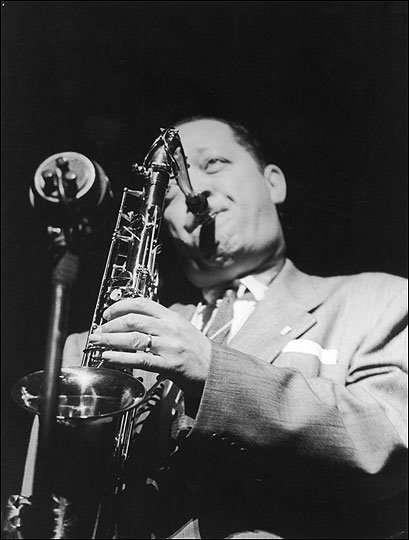
NPR : Lost Lester Young Jam Session Turns UpLost Lester Young Jam Session Turns Up
Listen to this story...
Weekend Edition - Saturday, April 15, 2006 · This week, the Library of Congress announced 50 more audio recordings it will preserve... and the discovery of a previously unknown recording by jazzman Lester Young. The piece was recorded in 1940, probably in New York City.
Tuesday, April 11, 2006
I Have written an article about Jackie McLean. This was first published in July of 2004
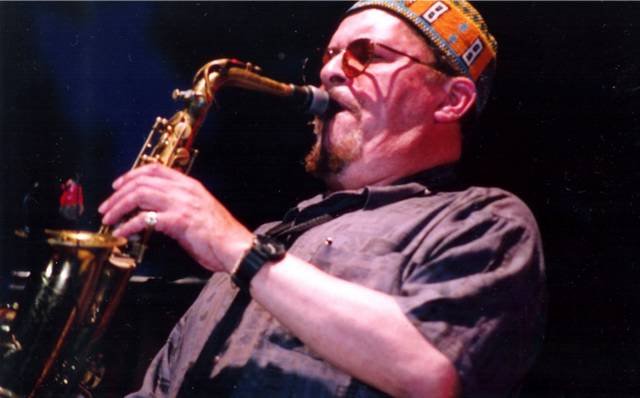
Jackie McLean or “Jackie Mac” as he is known to his fans, was the most original alto saxophone player to emerge from that first generation of jazz players shaped by the all pervasive influence of alto saxophone player Charlie Parker. Bebop, the style of music of which Parker was the principle innovator, became the dominant style in jazz from the nineteen forties onward.
Parker changed the way musicians played music. His influence went far beyond the realm of alto saxophone players. Parker revolutionized the rhythmic concept of jazz by incorporating new and sophisticated rhythmic accents into his music. The role of the jazz drummer was forever change. Jazz players who performed older styles of the music incorporated many of Parker’s rhythmic innovations into their music. Parker completely revolutionized the manner in which jazz musicians approached harmony. His use of advanced chord structures in his music laid a foundation for jazz musicians which has inspired every succeeding generation of musicians. Then there was Parker the brilliant alto saxophone soloist who developed a brand new blues based musical vocabulary for not just his instrument but for all jazz players. Only Louis Armstrong had caused such a change in the way a soloist played their instrument. Given this context it is even more amazing that a young saxophone player, like McLean, who knew Charlie Parker personally, would develop such a unique and original style. Parker encouraged McLean to find his own sound and uniquely among alto saxophone players of his generation McLean successfully followed Parker’s advice.
Now in his seventies, Mr. McLean continues to perform in varying musical contexts, ever refining his unique and singular sound. In fact the thing that makes Jackie McLean’s music so unique is his sound. Once heard, Jackie Mac’s sound is immediately identifiable. His sound has a piercing, penetrating quality that is so intense and filled with passion that sometimes it almost hurts. Jackie’s sound cuts right through to the core of your being where all of your emotions reside. Whether happiness or sadness or any emotion in between, McLean will touch you. Jackie will hit notes, while he is soloing, that will make you cry with pleasure. He makes you hurt so good.
McLean’s sound conveys to me the sound and feeling of New York City, probably as much as any jazz player. His sound and music are so filled with the searing pulse which is that city. I hear the streets of Harlem in McLean’s music, even in a tune named “Appointment in Ghana” I hear New York. The musical tempos of his music are often fleet. Jackie traverses the complex harmonies of his tunes and jazz standards with both ease and finesse. McLean’s music draws you into its magic by being both intensely passionate and harmonically interesting.
Jackie McLean has had a five decade performing and recording career. He has taught music at the Hart School of Music in Hartford Connecticut for over twenty years. Do not pass up an opportunity to see Mr. McLean perform live. His performances are unforgettable.
There are many Jackie McLean recordings available for purchase. He also performed as a regular sideman, during the nineteen sixties, on many Blue Note Records recording sessions led by musicians such as trumpeters Lee Morgan and Donald Byrd. During the nineteen fifties he recorded with trumpeter Miles Davis and bassist Charles Mingus among others. I would recommend for an initial purchase the albums Swing, Swang, Swingin from the nineteen sixties, Old Wine, New Bottles from the nineteen seventies and Hat Trick from the nineteen nineties. These albums are representative of Jackie McLean’s mature style. These recordings convincingly demonstrate the relevance of Bebop as a contemporary musical style fully capable of serving as a vehicle for expressing a twenty first century sensibility. Bebop lives.
© 2004 John H. Armwood
Monday, April 10, 2006
New York Daily News - Ideas & Opinions - Stanley Crouch: Saying goodbye to a jazzman - and a good man
New York Daily News - Ideas & Opinions - Stanley Crouch: Saying goodbye to a jazzman - and a good man
The funeral at Abyssinian Baptist Church for saxophone great, educator and community leader Jackie McLean reminded one of how much has been lost uptown since McLean was born there in 1931. At the same time that Harlem is being renovated and may eventually become one of the places where the middle and upper middle class choose to live, it is also much of an esthetic graveyard. Though there is plenty of soul uptown, as always, one hears or sees little of the vitality for which Harlem was once legendary.
John Lenwood McLean, a member of the Abyssinian Baptist Church during his early years, was one of the most impressive talents to come off of Sugar Hill. That was where the Harlem entertainers and classy types who worked hard and wanted their children to make something of themselves often lived. Few wanted their children to become musicians, who could be seen everywhere on the streets, from Duke Ellington on down.
As usual, parents' dreams were different from their childrens'. McLean grew up with Sonny Rollins and others who began working on jazz as high school students and were doing professional jobs by the 1950s. Like many of them, McLean became a heroin addict and struggled with the problem until near the end of the 1960s.
In 1970, he moved to Hartford, Conn., where he began teaching jazz in the department that is now the Jackie McLean Institute of Jazz at the Hartt School of Music. While there, he decided that the young people needed a community center that would teach them the arts as a retort to the troubles of the streets. With his wife, Dolly, McLean began a fund-raising campaign and eventually saw a sizable community built, which is called the Artists Collective.
McLean developed a reputation in the 1950s in the bands of Miles Davis, Art Blakey and Charles Mingus. He also led fine bands and made many superb recordings under his own name.
But McLean was more than a superior musician; he was extremely intelligent, witty and insightful. He always read and kept his mind alive because he sought to be something more than a dope addict who played saxophone.
"We thought that shooting dope was a way of being cool and showing you were aware when I was coming up," McLean once said. "For a long time it seemed that our suffering added up to nothing but death and wasted lives. We were wrong: Our suffering became a symbol of what drugs can really cost you. Now young musicians think you are corny or a fool if you get messed up with drugs. We didn't know it, but that was our gift to them."
McLean's final gift to younger musicians was his work as a teacher and as a builder of community alternatives to knuckleheaded behavior. His sound was special and full of the same sincere warmth one felt from him as a man.
He is now a symbol of what can be done in an individual life and with individual effort. As long as people like jazz, there will be an audience for Jackie McLean's recordings. As long as community centers are built to offer something of value to those at the bottom, the spirit of Jackie McLean will remain in action. He will always be with us.
Originally published on April 10, 2006
The funeral at Abyssinian Baptist Church for saxophone great, educator and community leader Jackie McLean reminded one of how much has been lost uptown since McLean was born there in 1931. At the same time that Harlem is being renovated and may eventually become one of the places where the middle and upper middle class choose to live, it is also much of an esthetic graveyard. Though there is plenty of soul uptown, as always, one hears or sees little of the vitality for which Harlem was once legendary.
John Lenwood McLean, a member of the Abyssinian Baptist Church during his early years, was one of the most impressive talents to come off of Sugar Hill. That was where the Harlem entertainers and classy types who worked hard and wanted their children to make something of themselves often lived. Few wanted their children to become musicians, who could be seen everywhere on the streets, from Duke Ellington on down.
As usual, parents' dreams were different from their childrens'. McLean grew up with Sonny Rollins and others who began working on jazz as high school students and were doing professional jobs by the 1950s. Like many of them, McLean became a heroin addict and struggled with the problem until near the end of the 1960s.
In 1970, he moved to Hartford, Conn., where he began teaching jazz in the department that is now the Jackie McLean Institute of Jazz at the Hartt School of Music. While there, he decided that the young people needed a community center that would teach them the arts as a retort to the troubles of the streets. With his wife, Dolly, McLean began a fund-raising campaign and eventually saw a sizable community built, which is called the Artists Collective.
McLean developed a reputation in the 1950s in the bands of Miles Davis, Art Blakey and Charles Mingus. He also led fine bands and made many superb recordings under his own name.
But McLean was more than a superior musician; he was extremely intelligent, witty and insightful. He always read and kept his mind alive because he sought to be something more than a dope addict who played saxophone.
"We thought that shooting dope was a way of being cool and showing you were aware when I was coming up," McLean once said. "For a long time it seemed that our suffering added up to nothing but death and wasted lives. We were wrong: Our suffering became a symbol of what drugs can really cost you. Now young musicians think you are corny or a fool if you get messed up with drugs. We didn't know it, but that was our gift to them."
McLean's final gift to younger musicians was his work as a teacher and as a builder of community alternatives to knuckleheaded behavior. His sound was special and full of the same sincere warmth one felt from him as a man.
He is now a symbol of what can be done in an individual life and with individual effort. As long as people like jazz, there will be an audience for Jackie McLean's recordings. As long as community centers are built to offer something of value to those at the bottom, the spirit of Jackie McLean will remain in action. He will always be with us.
Originally published on April 10, 2006
Saturday, April 08, 2006
Thursday, April 06, 2006
AOL Black Voices: AOL BlackVoices Entertainment Feature Story - BV Entertainment Newswire April 3: Cassandra Wilson

AOL Black Voices: AOL BlackVoices Entertainment Feature Story - BV Entertainment Newswire April 3: Cassandra Wilson
Entertainment Newswire April 3: Cassandra Wilson
By Karu F. Daniels, AOL Black Voices
A 'New' Cassandra
This week, Cassandra Wilson releases her latest CD, 'Thunderbird,' ushering in what some have described as a "new and different sound" for the Grammy Award winner. "It's good to be known and to be valued as someone who is accomplished at doing something but it's also important, I think, to challenge yourself and at the same time have fun," the Mississippi native told Black Voices.
* Listen to 'Thunderbird'
* Read the Last BV Entertainment Newswire
* Sign Up For BV Entertainment Newswire Alerts
Back to Black Voices Entertainment
Days of 'Thunder'
"I think the direction took me," Cassandra Wilson says of her latest album, 'Thunderbird,' which has been proclaimed as a "new and different sound" by the jazz media. Acclaimed producer T-Bone Burnett -- of Roy Orbison and Elvis Costello fame -- helmed the eclectic 10-track CD, in stores April 4, featuring new spins on traditional classics, and Wilson's own compositions. "Something I think most people know about me as a musician, I'm open to possibilities. I never paint myself into a corner because music is intimate and there are so many things you can do that are fun and exciting with it. And when is becomes a chore, you keep doing the same thing over and over again, eventually you lose, and your audience loses it as well. So I love the challenge of working with new musicians and working with a new methodology and 'Thunderbird' is a prime example of that."
The Grammy Award winning jazz singer/songwriter says the album took a little under a year to record, utilizing three Los Angeles studios. "You don't just go into a studio and knock it out all in a month or a couple of months," she explained. "You have to take time to breathe and to let the project breathe. Because if you rush it, you won't give the material an opportunity to show you where it is going."
The release of the new disc comes at a very difficult time for the Wilson, who turned 50 in December. She is currently based out of her native Jackson, Miss., caring for her 80-year old mother, who is suffering from Alzheimer's. "She was diagnosed the year before last and it took a turn for the worst in November so I had to come down to help manage things and to help set up the household so that she is cared for," Wilson told Black Voices. "So I've been here since November."
Your Voice
"It has been a little bit difficult, it has been trying," she added. "But the other side of it is that it's a great opportunity for me to be with my mother at this time in her life and it's so much information that you get when you spend that time, that quality time with an aging parent. It's really a blessing. And I feel fortunate to be able to. It's heavy, but it's wonderful."
'Thunderbird' isn’t the only latest music contribution Wilson has made. She is featured on 'Confidential,' the debut album from dead prez rapper M-1, whom she refers to as "quite a character." Wilson collaborates with Q-Tip on the track "Love You Can't Borrow." Wilson, the mother of a 17-year old son, is embracing hip-hop culture. "I'm not one of those jazz purists who believes that it's an insignificant form. It's true that a lot of the lyrics are insubstantial, to say the least, but I think the methodology is fascinating. I think the ways the kids are making music now are really interesting."
"It's good to be known and to be valued as someone who is accomplished at doing something but it's also important, I think, to challenge yourself and a the same time have fun," she added.
Tuesday, April 04, 2006
Jackie McLean Viewing :: eJazzNews.com : The Number One Jazz News Resource On The Net :: Jazz News Daily

Jackie McLean Viewing :: eJazzNews.com : The Number One Jazz News Resource On The Net :: Jazz News Daily Jackie McLean Viewing
Posted by: editoron Tuesday, April 04, 2006 11:39 AM
Jazz News Thursday, April 6th, 2006
5:00 to 8:00 p.m.
Benta's Funeral Home 630 St. Nicholas Avenue
(at 141st Street ~ across from Harlem School for the Arts)
Condolences/Remembrances:The McLean Family
261 Richfield Street
Hartford, Connecticut? 06112
Funeral Services
for Jackie McLean Friday, April 7th 2006
10:00 in the morning, Abyssinian Baptist Church
132 Odell Place (138th Street)between
Adam Clayton Powell Jr. & Malcolm X Boulevards
(7th& Lenox Avenues)
The Rev. Calvin Butts Officiating
A Bittersweet Melodic Imagination By Stanley Crouch

A Bittersweet Melodic Imagination By Stanley Crouch
Remembering the saxophonist Jackie McLean.
By Stanley Crouch
Posted Tuesday, April 4, 2006, at 5:12 PM ET
Jackie McLean
"The cry of jazz" is one of those clichéd phrases firmly rooted in the fact of a certain kind of sound. It almost always refers to saxophone players, although trumpets and trombones were once known as "singing" or "talking horns" because rubber plungers and mutes were used to better their imitation of the human voice. Saxophone players, however, use nothing but the brass-bodied reed instrument itself, expressing their battle with the limitations of life through two things—timbres that tailor the notes with vocal inflections and rhythms that imply speech or song. In the hands of an artist, those techniques can delineate the minuscule or vast distances between joy and pain. Such musicians are often known for the stubborn delivery of frail dreams and the fierce rhythm with which they play. Now and again they evoke no particular emotion, only an earnest refusal to be run down by life that translates as heroic.
The alto saxophonist Jackie McLean, who died last Friday at 73 in Hartford, Conn., was one of those players. A hero to his listeners, McLean had an unapologetic New York sound that embodied the hard sorrow of urban life, but answered it with the triumphal dance of swing. His jazz audience would fill the clubs, but he was not a well-known commodity. The essence of jazz is symbolized by players like him who are neither epic innovators nor pace-setters (very few are, regardless of the hype). Early on, McLean attained one of the highest achievements of a jazz musician: He found his own sound on the alto. This separated him from his fellow imitators of Charlie Parker. McLean's immediately recognizable tone was displayed in many indelible situations over more than five decades of recording.
Born in 1931, John Lenwood McLean came up in a time when jazz ceased to be a dance music. With the arrival of the World War II bebop generation, musicians collided with the entertainment conventions that were wrapped up in minstrelsy. McLean grew up in Harlem and was one of the Sugar Hill boys, a group of musicians that included Sonny Rollins, Kenny Drew, and Arthur Taylor, all of whom became drug addicts by the time they left high school. "I remember," McLean said, "right after the war everybody was trying to be hip, which meant being rebellious with a super cool style of awareness. Shooting heroin was considered a form of hipness and being aware. Now young musicians, thank God, think it's corny to be a dope fiend."
Continue Article
<A TARGET="_new" HREF="http://ad.doubleclick.net/click%3Bh=v5|33be|3|0|%2a|v%3B29027248%3B0-0%3B0%3B10662972%3B4307-300|250%3B15744581|15762476|1%3B%3B%7Eaopt%3D2|1|2800a7%3B%7Esscs%3D%3fhttp%3a%2f%2fwww.herestobeer.com/default.aspx?page=your_beer_style "><IMG SRC="http://www.washingtonpost.com/wp-adv/advertisers/ab/beer/big_box_flat.gif" BORDER=0></A>
With few exceptions, most of the bebop generations had drug problems because so many of the men they admired, like Charlie Parker, were addicts. For McLean, Parker was an early hero, influence, and model. "Bird was always an extremely aware person, and no matter what he did in order to handle his addiction and his appetites, he had great dignity. His discipline was shown in the way he played his horn."
McLean came up fast. He studied chords with Bud Powell, the major influence on bebop piano, played jobs with his buddies, and, when he had the nerve, sat in with Charlie Parker. "When I sat in with Bird, it was not so much to play but to be up there on the bandstand where I could listen to him as closely as possible. Every time he played was a lesson. You could learn how to develop a melody, how to negotiate some harmony, and how to phrase. Bird was an academy of excellence. Just listening, you could hear the artistry of the horn and that artistry could make you aware of something beyond everything you knew. Not just music. Whatever creation means on the deepest level is what Charlie Parker had to offer."
During the early '50s, McLean went to North Carolina, where he lived with relatives for a year and was able to clean up his drug habit. While living the country life, he got a deep, down-home soaking on jobs where the saxophonist literally walked the bar and played the blues all night. That Southern sound of blues is one of the most distinctive aspects of McLean's style and remained in place throughout all his artistic evolutions.
By the middle '50s, McLean was rising to prominence among the men of his generation. He made hard-swinging records with drummer Art Blakey and innovative ones with Charles Mingus. His richest period of recording was in the late '50s and '60s. Most of his best work was captured on Blue Note, where he led exemplary sessions of unapologetic New York swing and was later to successfully experiment in the wake of John Coltrane and Ornette Coleman.
"Coltrane taught me something about determination when I watched him kick the habit in public," McLean once recalled. "He made the decision and came to work looking like a mess. He wasn't shaving or combing his hair; his suit was all wrinkled up, the collar of his shirt turning brown. That's how he had to do it. He wouldn't accept even a little bit of dope to help him get through. No. There he was playing his heart out every night. He wasn't hiding, he didn't disappear. We all saw it. By the end of the gig, he started combing his hair and shaving and looked like a new man. He had conquered himself."
McLean made many excellent records before leaving New York in 1970 and dedicating a part of his life to education. Those recordings prove him a timeless original who could put his own flavor on bebop and the modal developments that followed. Much of this was the result of McLean's bittersweet melodic imagination, his blowtorch tone, and the palpable daring that underlay his intense rhythmic drive. Examples include New Soil; Swing, Swang, Swinging; Jackie's Bag; A Fickle Sonance; Let Freedom Ring; Destination Out; and One Step Beyond.
At the University of Hartford, he started what eventually became the Jackie McLean Institute of Jazz. And he considered the Artists Collective, a sizable community center that offers an alternative to the pitfalls of the streets through the teaching of the arts, his finest achievement outside of music. He and his wife, Dolly, conceived it, led the fund-raising drive, and saw it built. All the dues had been paid off because McLean remained a superb player throughout his career and made a solid offering to his community through the teaching of aesthetic discipline. McLean will be missed and remembered as an artist, an educator, and a community leader dedicated to leaving monuments rather than hot air. He always believed in deeds achieved with heat, discipline, humility, and compassion. He embodied the best jazz has to offer.
Stanley Crouch is the author of The Artificial White Man and the forthcoming Considering Genius: Writings on Jazz.
Photograph of Jackie McLean by Francis Wolff© Mosaic Images/Corbis.
Subscribe to:
Posts (Atom)