Contact Me By Email

Jackie McLean

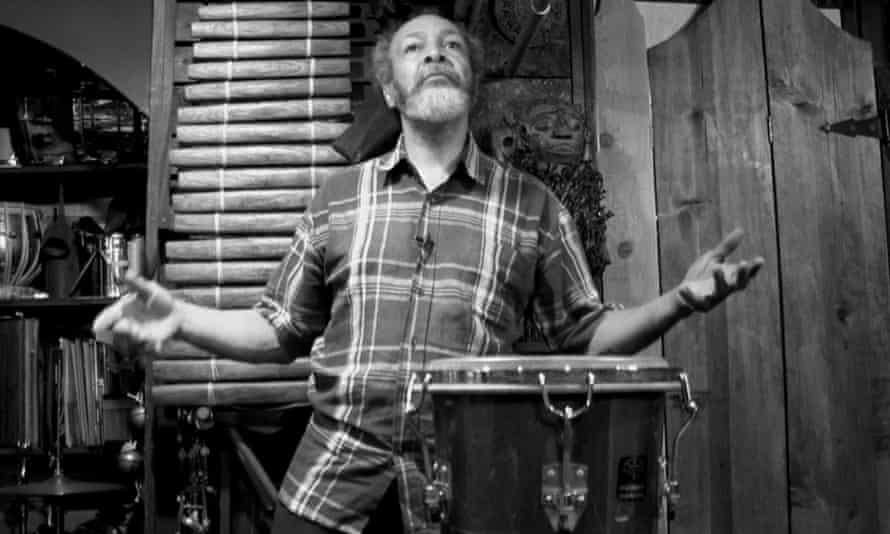
John H. Armwood Jazz History Lecture Nashville's Cheekwood Arts Center 1989

Monday, February 15, 2021

Johnny Pacheco, Who Helped Bring Salsa to the World, Dies at 85 - The New York Times

A Dominican-born bandleader and songwriter, he co-founded Fania Records, known as the Motown of Salsa.

Credit...Chad Batka for The New York Times

    Johnny Pacheco, the Dominican-born bandleader who co-founded the record label that turned salsa music into a worldwide sensation, died on Monday in Teaneck, N.J. He was 85.

    His wife, Maria Elena Pacheco, who is known as Cuqui, confirmed the death, at Holy Name Medical Center. Mr. Pacheco lived in Fort Lee, N.J.

    Fania Records, which he founded with Jerry Masucci in 1964, signed Latin music’s hottest talents of the 1960s and ’70s, including Celia Cruz, Willie Colón, Hector Lavoe and Rubén Blades. Mr. Pacheco, a gifted flutist, led the way on and off the stage, working as a songwriter, arranger and leader of the Fania All Stars, salsa’s first supergroup.

    From the beginning, he partnered with young musicians who were stirring jazz, rhythm and blues, funk and other styles into traditional Afro-Cuban music.

    By the 1970s, Fania, sometimes called the Motown of salsa, was a powerhouse in Latin music, and the Fania All Stars were touring the world. The label gave birth to combustive creative collaborations, like that between Mr. Colón, a trombonist and composer, and Mr. Blades, a socially conscious lyricist and singer; and to cult heroes like Mr. Lavoe, the Puerto Rican singer who battled drug addiction and died of AIDS-related complications at 46.

    Fania dissolved in the mid-1980s amid lawsuits involving royalties, and in 2005, Emusica, a Miami company, purchased the Fania catalog and began releasing remastered versions of its classic recordings.

    Juan Azarías Pacheco Knipping was born on March 25, 1935, in Santiago de los Caballeros, in the Dominican Republic. His father, Rafael Azarias Pacheco, was a renowned bandleader and clarinetist. His mother, Octavia Knipping Rochet, was the granddaughter of a French colonist and the great-granddaughter of a German merchant who had married a Dominican woman born to Spanish colonists.

    The family moved to New York when Johnny was 11, and he studied percussion at the Juilliard School and worked in Latin bands before starting his own, Pacheco y Su Charanga, in 1960.

    The band signed with Alegre Records, and its first album sold more than 100,000 copies in the first year, becoming one the best-selling Latin albums of its time, according to his official website. It jump-started Mr. Pacheco’s career with the introduction of a new dance craze called the pachanga. He became an international star, touring the United States, Europe, Asia and Latin America.

    Fania Records was born out of an unlikely partnership between Mr. Pacheco and Mr. Masucci, a former police officer turned lawyer who fell in love with Latin music during a visit to Cuba.

    From its humble beginnings in Harlem and the Bronx — where releases were sold from the trunks of cars — Fania brought an urbane sensibility to Latin music. In New York, the music had taken on the name “salsa” (Spanish for sauce, as in hot sauce), and the Fania label began using it as part of its marketing.

    Guided by Mr. Pacheco, artists built a new sound based on traditional clave rhythms and the genre Cuban son (or son Cubano), but faster and more aggressive. Many of the lyrics — about racism, cultural pride and the tumultuous politics of the era — were far removed from the pastoral and romantic scenes in traditional Cuban songs.

    In that sense, salsa was “homegrown American music, as much a part of the indigenous musical landscape as jazz or rock or hip-hop,” Jody Rosen wrote in The New York Times in 2006 on the occasion of the reissue of the Fania master tapes — after they had spent years gathering mold in a warehouse in Hudson, N.Y.

    Credit...Fania

    Mr. Pacheco teamed up with Ms. Cruz in the early 1970s. Their first album, “Celia & Johnny,” was a potent mix of hard-driving salsa with infectious choruses and virtuosic performances. It soon went gold, thanks to Ms. Cruz’s vocal prowess and Mr. Pacheco’s big-band direction, and its first track, the up-tempo “Quimbara,” helped propel Ms. Cruz’s career to Queen of Salsa status.

    The two released more than 10 albums together; Mr. Pacheco was a producer on her last solo recording, “La Negra Tiene Tumbao,” which won the Grammy for best salsa album in 2002.

    Over the years, Mr. Pacheco produced for several artists and performed all over the world, and he contributed to movie soundtracks, including one for “The Mambo Kings,” a 1992 film based on based on Oscar Hijuelos’s novel “The Mambo Kings Play Songs of Love.” For the Jonathan Demme movie “Something Wild,” he teamed up with David Byrne, leader of the Talking Heads, one of his many eclectic partnerships.

    Mr. Pacheco, the recipient of numerous awards and honors both in the Dominican Republican and the United States, was inducted into the International Latin Music Hall of Fame in 1998. He wrote more than 150 songs, many of them now classics.

    For many years he spearheaded the Johnny Pacheco Latin Music and Jazz Festival at Lehman College in the Bronx, an annual event in collaboration with the college (streamed live in recent years) that provides a stage for hundreds of talented young musicians studying music in New York City schools.

    In addition to this wife, Mr. Pacheco’s survivors include two daughters, Norma and Joanne; and two sons, Elis and Phillip.

    The salsa phenomenon that Mr. Pacheco created hit a new high on Aug. 23, 1973, with a volcanic sold-out show at Yankee Stadium, where the Fania All Stars brought 40,000 fans to a musical frenzy, led by Mr. Pacheco, his rhinestone-encrusted white shirt soaked in sweat. The concert cemented the band’s, and his, legendary stature.

    Credit...Fania Records

    In 1975, Fania released the long-awaited double album “Live at Yankee Stadium,” which, despite the name, also included material from a show at the Roberto Clemente Coliseum in Puerto Rico that had much better sound quality. The album earned the Fania All Stars their first Grammy nomination for best Latin recording.

    In 2004, the Library of Congress added it to the National Recording Registry.

    Michael Levenson contributed reporting."


    Johnny Pacheco, Who Helped Bring Salsa to the World, Dies at 85 - The New York Times

    Sunday, February 14, 2021

    Milford Graves (full set) - Hopscotch 2019

    Milford Graves: the pioneering drummer whose naturalistic rhythms freed up jazz

    “Milford Graves: the pioneering drummer whose naturalistic rhythms freed up jazz

    ‘Reaching for inspiration back into the music’s deepest origins’ ... Milford Graves.
    ‘Reaching for inspiration back into the music’s deepest origins’ ... Milford Graves.

    Last modified on Sun 14 Feb 2021 07.35 EST

    Of all the freedoms opened up by the free-jazz revolution of the 1960s, none was more radical or, to many, disturbing than the freeing of rhythm from fixed points of bar lines and regular time signatures. The American drummer Milford Graves, who has died aged 79, was in the forefront of that move to create momentum through surges of energy that seemed to reflect the social and political passions driving what became known simply as the new music.

    Graves collaborated with many of the movement’s leaders, including the pianist Don Pullen and the saxophonist Albert Ayler, in a long and influential career as a performer. But he was much more than that. In the description of the composer and saxophonist John Zorn, he was its shaman: a student – and eventually teacher – of many disciplines, from linguistics and human biology to martial arts.

    Like that of his contemporary Sunny Murray, Graves’s drumming appeared to reject the clarity and technical sophistication, with its origins in military-band rudiments, developed over decades by jazz drummers and brought to a peak in the bebop era by the likes of Max Roach. Sometimes he would use tree branches or other implements instead of regular drumsticks. He threw away the snare that gave the snare drum its crisp sound and detuned his tom-toms, removing the bottom heads (skins) to create a different projection of the sound. Sceptics viewed all this as a reversion to primitivism. In fact, it was another kind of sophistication, reaching for inspiration back into the music’s deepest origins.

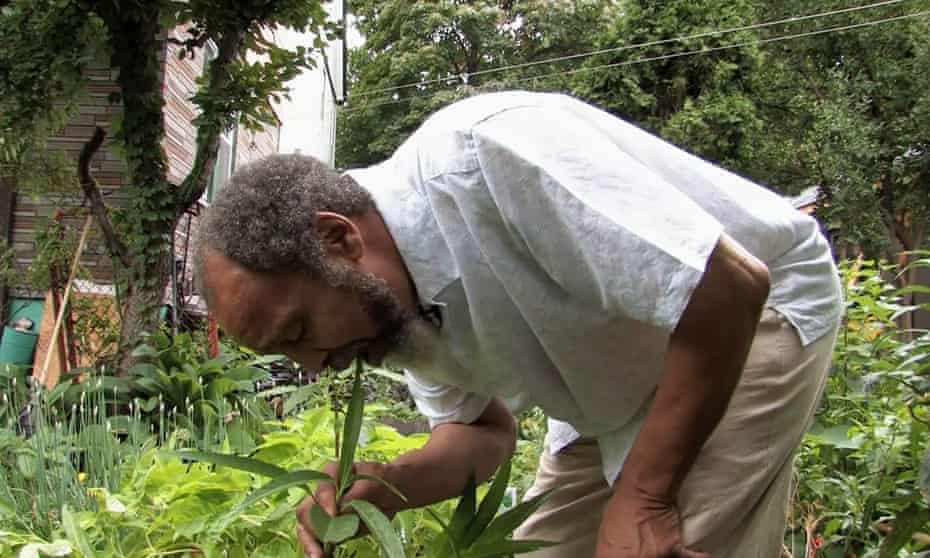
    The jazz drummer, herbalist, biologist, visual artist and martial arts practitioner in his garden.
    The jazz drummer, herbalist, biologist, visual artist and martial arts practitioner in his garden.Photograph: Everett Collection Inc/Alamy

    “I work for natural sounds rather than trying to sound like drums,” he told Val Wilmer in the 1970s. “Sometimes I try to sound like car motors or the continuous cracking of glass.” Disciples of Buddy Rich were duly scandalised.

    Born in the New York borough of Queens in 1941, Graves began by playing conga drums and timbales in Latin groups, some of them featuring a young classically trained pianist named Chick Corea. Facing prejudice against non-Latino players in that environment, Graves refused to do what many others were doing and change his name to something that sounded Hispanic.

    Invited by his fellow percussionist Don Alias to take part in a summer school in Boston in 1963, he met the saxophonist Giuseppi Logan and for the first time started using a conventional drum kit. With Logan he began to explore the possibilities offered by non-metred rhythms; back in New York they fell in with a crowd of musicians playing mostly in coffee houses who eventually, under the aegis of the trumpeter Bill Dixon, coalesced into the following year’s October Revolution in Jazz, a festival at the Cellar Café featuring Logan and Graves alongside the groups of the pianists Sun Ra and Paul Bley, the saxophonist John Tchicai and others.

    Soon Graves was appearing on the ESP label’s recordings by Logan, Bley and the New York Art Quartet, a highly influential group led by Tchicai and the trombonist Roswell Rudd. In 1966, he and Pullen recorded a duo concert at Yale University and released it on their own label, hand-painting the covers of albums that would become highly prized collectors’ items. The following year he joined the quartet of Albert Ayler; they played at the Newport Jazz festival and, three weeks later, opened John Coltrane’s funeral in St Peter’s Lutheran Church in New York City, an emotional ceremony closed by Ornette Coleman’s quartet.

    Graves left Ayler when the saxophonist began to head in a more commercial direction. Thereafter his appearances on record were sporadic, although they included the guitarist Sonny Sharrock’s Black Woman and two albums of solo percussion on Zorn’s Tzadik label.

    He life took a different turn in 1973 when, at Dixon’s invitation, he accepted a teaching post in the Black Music department at Bennington College, a liberal arts establishment in Vermont. The students in his first year were almost uniformly white – “they weren’t speaking no ghetto language,” he said – but he would spend the next 39 years there imparting the wisdom collected through his own studies in many fields, in particular, the fluctuations of the human heartbeat, through which he explained his own approach to rhythm. As he told Alan Licht in an interview for The Wire magazine: “All you gotta do is feel your wrist pulse, and start counting, and you’re gonna find yourself at times counting a little faster and a little slower. You’re not gonna have a steady beat. If you do have a steady beat, that’s dangerous. Extremely dangerous.”

    In place of that steady beat, Graves discovered rhythms that required a different drummer: one with a knowledge of gardening and herbalism, of algorithms and acupuncture, of painting and sculpture, who studied the neuromuscular properties of Chinese or Yoruba singing as well as Indian drumming; one who collaborated with Lou Reed and the Japanese dancer Min Tanaka, and who created his music in the way he cooked his meals, with ingredients from around the world and the rhythms of the human heart.’


    Milford Graves: the pioneering drummer whose naturalistic rhythms freed up jazzMilford Graves: the pioneering drummer whose naturalistic rhythms freed up jazz

    Sunday, December 20, 2020

    Big Band Holidays: Music on Jazz at Lincoln center:

    Not a wonderful world: why Louis Armstrong was hated by so many

    Not a wonderful world: why Louis Armstrong was hated by so many

    The reality is far more complicated ... Louis Armstrong.
    The reality is far more complicated ... Louis Armstrong. Photograph: Eliot Elisofon/The Life Picture Collection/Getty Images

    "Casual listeners think of him as a gentle giant of jazz, but critics and African Americans often saw him as a sell out or ‘Uncle Tom’. A new book aims to show how radical ‘Pops’ really was

    Ed Prideaux

    Last modified on Fri 18 Dec 2020 06.15 EST

    “I cannot think of another American artist who so failed his own talent. What went wrong?” asked one biographer of Louis Armstrong. “The sheer weight of his success and its attendant commercial pressures,” answered another.

    The popular opinion of the trumpeter and gravel-voiced singer of What a Wonderful World is as a genial, foundational voice in jazz. But the jazz establishment – and many African Americans – reviled him as a sellout or an “Uncle Tom”. When he died in 1971, he was seen as having peaked in the 1920s with the Hot Five and the Hot Seven, a series of inventive small-band recordings, and been in decline ever since. A new book, Ricky Riccardi’s Heart Full of Rhythm: the Big Band Years of Louis Armstrong, charts this apparent fall from grace, but shows the reality to be far more complicated.

    After signing with Decca in the mid-1930s, Armstrong began working with Joe Kapp, a svengali producer who boasted of keeping a “pulse on the multitude”. The singer switched from respected Dixieland jazz to populist fare: Bing Crosby collaborations, Hawaiian instrumentals, syrupy romances, Iberian mariachis, and B-list comedy movies. At record speed, Armstrong would become America’s first black multimedia star, and was often hated for it: Gunther Schuller, the noted American jazz critic, remarked that “creepy tentacles of commercialism” had laid bare a “wasteland” in Armstrong’s career for more than 40 years.

    “The band behind him are positively abominable. Nothing could possibly do more harm to such a great artist. It’s absolutely murderous,” one critic wrote in Metronome magazine. “Armstrong no longer is a vital force in hot jazz … [and] has chosen to play exclusively for the box-office,” published Music and Rhythm.

    On the set of A Rhapsody in Black and Blue, the earliest surviving footage of Armstrong on film.
    On the set of A Rhapsody in Black and Blue, the earliest surviving footage of Armstrong on film.Photograph: Courtesy of the Louis Armstrong House Museum

    African Americans found Armstrong more troubling still. The handkerchief-holding persona – cheerful, fond of silly jokes – he’d perfected had echoes of an “Uncle Tom”, a black person who happily does the bidding of a white master.

    Bob O’Meally, the head of jazz studies at Columbia University in New York, remains divided. While lauding Armstrong as “one of the greatest people of the 20th century”, he was “offended by his presentations … At the time of the rise of Malcolm X, the authority of Martin Luther King, examples in the popular media like Muhammad Ali and others, there was Armstrong – a kind of throwback from another era, with this borderline minstrelsy role that he played. I cringed as a black American.”

    Armstrong’s reputation has improved since, but there’s still much room to recover – and not least in elite circles. Riccardi, a director of research collections at the Louis Armstrong House Museum, recalls that his master’s at Rutgers University in jazz history devoted just two hours to Armstrong in the whole programme. “I go into universities now, and everybody knows every Charlie Parker solo in every key. I say, ‘OK, how many of you have ever checked out Louis Armstrong?’ Blank faces.”

    Riccardi’s book spans 1929 to 1947, when Armstrong became the world’s biggest pop star. But going against the usual complaints of critics – who portray the period in almost-Faustian terms – Riccardi sees Armstrong’s escape from jazz royalty as the man’s true making.

    For one, crossing over (or “selling out”) as an African American in the 1930s was hardly a ticket to gold and glamour. Just as he got started, Armstrong was jailed and kicked out of California for smoking cannabis; he was later chased from Chicago by gun-toting gangsters and forced to travel with permanent armed protection. On tour in the deep south, Armstrong was turned away constantly from lodgings, struggled getting gigs from racist promoters and was harassed by police. He was sent to jail again while on a pit stop in Memphis, after onlookers grew suspicious about the band’s nice suits, “fancy-looking cigarette holders”, and that the manager’s white wife was sitting on the bus.

    His times in Europe were no less challenging. On his first night in London in 1932, Armstrong couldn’t get to bed until 5am because hotels wouldn’t admit black guests. Reviewers wrote of “rhythmical jungle noises”, his “hippopotamus physiognomy”, “gravelly gorilla roar”, and “wild Negro African ancestor’s primitive cries”.

    Yet as Riccardi emphasises, meeting culture in the middle meant Armstrong could change things from within. The list of firsts he oversaw is staggering. Knockin’ a Jug, which featured black and white musicians, was one of the US’s first integrated recordings. That same year, he cut the first integrated vocal duet, Rockin’ Chair, with white singer Hoagy Carmichael. Black and Blue, a 1929 B-side on Okeh Records’ “popular music” listings (a label that had previously marketed him for “race records”), has been called American music’s first bona fide protest song against racial inequality.

    Lobby card for the now-lost movie Ex-Flame filmed in California in 1930, and featuring Armstrong alongside trombonist Lawrence Brown, pianist Henry Prince, saxophonist Les Hite and 22-year-old drummer Lionel Hampton.
    Lobby card for the now-lost movie Ex-Flame filmed in California in 1930, and featuring Armstrong alongside trombonist Lawrence Brown, pianist Henry Prince, saxophonist Les Hite and 22-year-old drummer Lionel Hampton. Photograph: The Jack Bradley Collection, Louis Armstrong House Museum

    On tour in New Orleans, his home town, Armstrong handed out cash in the street, bought a radio set for the orphanage where he grew up, and was the first African American to do his own announcing on city radio. In a first for black musicians, he published an autobiography, Swing That Music, in 1936. The following year, he was the first African American to host a national radio show, and get featured billing in a Hollywood film. For O’Meally, the Columbia jazzer who grew up sceptical, Armstrong’s importance for the cause of racial equality is simply “incalculable.”

    At the same time, working the culture from within could raise difficult questions. His stage persona – later problematised by African Americans in the 1950s and 1960s – seemed to fit the cloying stereotypes manufactured by a cynical white media. “He made a lot of black people uncomfortable”, the African American critic Gerald Early said, and Miles Davis, still fond of Armstrong, resented his penchant for “clowning”.

    His film appearances in the 1930s posed a particular challenge. In Pennies from Heaven, a launchpad for Armstrong’s multimedia success, he played a mentally challenged farmer that couldn’t count. He was draped in a Tarzan cape in a movie soon after, and was even directly named Uncle Tom in another.

    Riccardi offers a subtler take. The tide had certainly turned against him by the 1960s, he concedes, but African Americans were once overwhelmingly supportive of Armstrong. “The black press, they constantly praised his personality” while he rose to fame, he says. “They love the showmanship. They love everything. And I think that’s what always rankled Armstrong [with the Uncle Tom allegations, because] that persona, the smile, the humour, the jokes, the comedy, all the non-musical aspects of his stage persona, were perfected in front of black audiences.”

    “I wouldn’t judge Armstrong”, O’Meally says. “The delicacy of the balancing act meant that at times he did fall, he did falter, and contradicted what Martin Luther King and others were trying to do.”

    Testing the demarcation lines of jazz would always touch on race, too. “Jazz is an extension of the black voice, of black style, of moving”, O’Meally says. And even as Armstrong moved away from jazz and apparently pandered to white audiences, O’Meally still detects an immutable black essence in his music: “a sense of an audience around the corner”, one away from the white wings, to whom he was really performing.

    How Armstrong affected jazz music itself is equally contestable. Catherine Russell is a jazz singer and the daughter of Luis Russell, who worked as Armstrong’s bandleader, including on Song of the Islands, a 1930 Hawaiian muzak single some considered “the beginning of the end”. Jazz has always been a mixture of “high art” and “folk art”, she says, and Armstrong never affected a particular loyalty to either.

    His best work, she says – especially the Hot Five recordings of the 1920s – are hardly classical fineries. Big Butter and Egg Man, Irish Black Bottom, Big Fat Ma and Skinny Pa: the Hot Five were dealing in the everyday crudities of blues, putting New Orleans street humour to song. Things would change in the 1940s. Led by Dizzy Gillespie and Parker in New York, the new bebop sound paid little mind to the demands of easy listening. It was harsher, more cerebral, heavily improvised, and conceived as a direct challenge to what Gillespie termed Armstrong’s “Uncle Tom sound”.

    Armstrong saw danger in bebop. Its “weird notes” and “Chinese music” was made only for other musicians, he feared, and the consequences would soon come to bear. You could plausibly trace the bebop germ to the 1960s, when it flowered in the dissonant avant garde of free jazz: a sound so harsh and abrasive, the story goes, that black audiences were driven to more accessible alternatives in other genres. If musicians had kept a closer eye on Armstrong’s open-ended approach, Riccardi asks, one wonders where jazz may have headed, and how popular it’d be today.

    From left to right: Dizzy Gillespie, unidentified, Louis Armstrong, Arvell Shaw and Big Sid Catlett at a nightclub in the late 1940s.
    From left to right: Dizzy Gillespie, unidentified, Louis Armstrong, Arvell Shaw and Big Sid Catlett at a nightclub in the late 1940s. Photograph: Courtesy of the Louis Armstrong House Museum

    Yet mixing genres, as Armstrong did, could dilute jazz’s musical core. Crucially, the closer jazz gets to the pop and institutional mainstream, critic Gary Giddins feared in Visions of Jazz, the more a dependence on “big money”, corporate donations and government grants may gnaw at its inner authenticity: the energy that enabled “its glorious eruptions” last century. But playing the field is often the thing keeping jazz alive, and prompts innovation in its own way: think of Davis’s experiments with funk, the growth of jazz fusion in the 1970s, or how most jazz musicians today make their money from playing in other genres. It was called selling out then; it’s collaboration now.

    “I don’t see Armstrong turning against the revolution. He had fomented it in the first place and then stepped aside from it and kept going,” O’Meally says. And no matter how rapacious or all-encroaching the music business gets, nothing can ever kill jazz, he claims. Its musical identity – chordal experimentation, the blues undercurrent, playing with notions of time – remains as influential as ever. Even hip-hop is “one of the extensions of the world of Louis Armstrong”, O’Meally says, pointing to Biggie Smalls’ reputed schooling in jazz.

    All in all, maybe Armstrong did “sell out”. But in doing so he secured his place in history. Roy Eldridge, “Hot Lips” Page, Henry “Red” Allen, Rex Stewart: the 20th century had plenty of trumpet gods, but they’re sadly forgotten to most.

    Armstrong took a different path. “When the world is ready to define what we mean by modernism, we will realise that the shift away from 19th-century forms of music, vocal and instrumental, was something achieved by African Americans,” O’Meally concludes. “Armstrong led the band.”

    • Heart Full of Rhythm: The Big Band Years of Louis Armstrong by Ricky Riccardi is out now, published by Oxford University Press."

    Not a wonderful world: why Louis Armstrong was hated by so many

    Saturday, December 19, 2020

    Ma Rainey's Black Bottom | Official Trailer | Netflix

    'Ma Rainey’s Black Bottom' and the Liberating Power of Music

    Ma Rainey’s Black Bottom and the Liberating Power of Music

    Netflix’s new adaptation of August Wilson’s play understands the singular magic of the blues.

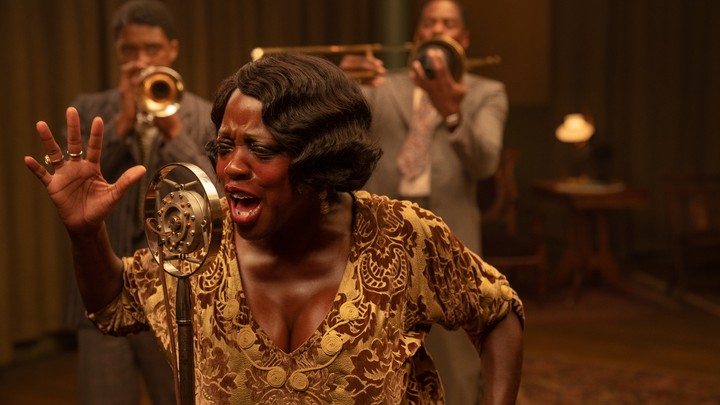
    As Ma Rainey, Viola Davis moves with calculated swagger and delivers her monologues with rawness and precision.David Lee / Netflix

    Ma Rainey’s Black Bottom begins with what seems at first like a harrowing journey. Netflix’s new adaptation of the late August Wilson’s play opens with a foreboding shot of the woods; the only noises are of crickets chirping, dogs barking, and young Black men gasping for air as they sprint through the trees. But then, we hear the music. As soon as the men detect Ma Rainey’s thunderous voice spilling out from a tent where the famed blueswoman is singing, we know they’re safe. Cradled by sweet sounds and the chatter of the crowd, they’ve made it home.

    Released yesterday on streaming, Ma Rainey’s Black Bottom tells the story of a fictionalized Ma (played by Viola Davis) gathering with her backing band to record new songs in a Chicago studio in 1927. The members of the band—Cutler (Colman Domingo), Slow Drag (Michael Potts), Levee (Chadwick Boseman, in his final role), and Toledo (Glynn Turman)—clash with one another and with the white managers producing Ma’s album. But like Wilson’s play, the George C. Wolfe–directed film isn’t just about a brilliant singer, or about the entertainment industry. The story concerns itself chiefly with the role of music in documenting and, in some cases, defusing the unspeakable pains that birthed the blues. Even when no songs are playing, Ma Rainey is a reminder of Wilson’s reverence for the genre. Just as the film takes care to depict its lead’s formidable presence, it pays attention to the larger forces threatening Ma’s artistry—and the lives of all the singers in the room with her.

    Read: The 10 best films of 2020

    Though some of the disagreements among the band members stem from prosaic matters, much of the conflict in the studio is rooted in the racism of the era. Even when the musicians criticize one another’s style, musically or otherwise, they are really wrestling with their place in the country as Black men. When Toledo mocks Levee’s ostentatious sartorial choices, he scoffs that “more niggas have got killed trying to have a good time than God got ways to count.” Meanwhile, the white record-label managers treat Ma carelessly, seeing her only as a vehicle for their own profit. They botch her recordings, ignore her requests, and interrupt the band’s studio time. Ma knows that the executives, Irvin (Jeremy Shamos) and Sturdyvant (Jonny Coyne), don’t actually value her as a person. “They wanna take your voice and trap it in all them fancy boxes with all them buttons and dials, and then too cheap to buy you a Coca-Cola,” Ma tells Cutler at one point. “They don’t care nothin’ about me. All they want is my voice.”

    Along with showcasing her vocal prowess, Wilson’s play imbues the Georgia-born singer with the rebellious spirit that many observed in real life. As the blues scholar Steven C. Tracy wrote in his 1987 essay “A Reconsideration: Hearing Ma Rainey,” “Ma’s southern-drenched voice, echoing the field hollers and folk songs of 16-hour days among turn rows worked so unrelentingly that the laborers could see them in their dreams, had a depth of feeling matched by few other blues singers of her time.” Fittingly, Rainey is played by a southern woman and one of the greatest modern actors: Davis (who won an Oscar for her role in Fences, another Wilson adaptation).

    From Ma Rainey’s opening musical performance in the woods, Davis throws all of her artistic gravitas into the portrayal. She moves with calculated swagger and delivers her monologues with rawness and precision. In real life, Rainey was sometimes mocked by northerners for her “country” mannerisms. But as Davis told Vanity Fair, Wilson displayed a deep respect for the speech patterns that came most naturally to southerners such as Rainey and herself. Plus, Davis said, Wilson “lets [Black characters] talk. A lot of times I don’t get to talk. And then sometimes even when I do talk, I’m like, that’s not what I would say.”

    The original play premiered as the second in Wilson’s The American Century Cycle, a series of 10 works that each dramatized one decade of Black life in the 20th century. After the concert in the woods, Ma Rainey’s Black Bottom (the only American Century play set in Chicago) doesn’t have any more scenes in Georgia. But for Wilson, exploring the resistance baked into mundane parts of Black life meant emphasizing the southern sensibilities that Black people held onto even after leaving the region. The Netflix adaptation’s screenwriter, Ruben Santiago-Hudson, sought to preserve Wilson’s interest in conveying the “nobility and courage” of his characters. “Their values, their integrity, the way they do things, their recipes, and the way they worship and courted—I had to keep all that intact,” Santiago-Hudson, a longtime collaborator of Wilson’s and a playwright himself, told me. “The music of August Wilson is his writing. And his writing is exactly what he heard from the people.”

    Other writers might have portrayed Ma, a queer, dark-skinned woman born in 1886, as a wholly tragic character; Wilson’s play and Santiago-Hudson’s adaptation resist that narrow vision in part by focusing on the power of her music. Brash though she may be, Ma speaks with a defiance honed by years of working in an industry that first discarded her. To witness her singing is to feel that vulnerability and triumph, if only you know how to listen. Ma Rainey’s Black Bottom stresses how integral music is to keeping its protagonist, and all Black people, alive. “White folk don’t understand about the blues. They hear it come out, but they don’t know how it got there,” Ma says in the film. Wilson’s writing underscores the legacy of suffering that created the blues—and the comfort the music provides. “You don’t sing to feel better,” Ma explains in one scene. “You sing ’cause that’s a way of understanding life. The blues help you get out of bed in the morning. You get up knowing you ain’t alone.”

    In his final role before his death, Chadwick Boseman inhabits Levee, a zealous and temperamental trumpet player, with characteristic grace. (David Lee / Netflix)

    Wilson once called the blues “the bedrock of everything I do.” As he told The Believer in 2004, a year before his death, “all the characters in my plays, their ideas and their attitudes, the stance that they adopt in the world, are all ideas and attitudes that are expressed in the blues.” Like Wilson, Santiago-Hudson embraces the literary virtue of the blues. Both men have marveled at the genre’s ability to tell the story of Black America, whose history in this country has largely been distorted by official accountings. “There’s no clearer documentation of our journey than the blues,” Santiago-Hudson said. “The blues’ll tell you when the boll-weevil crop wiped out all the cotton. The blues’ll tell you when Martin Luther King [Jr.] got killed.” The genre gave Wilson the name of one Pittsburghplay and provided the thematic foundation of many others. And it has brought Black artists together and had a seismic influence on the cultural landscape of America.

    Ma Rainey’s Black Bottom doesn’t suggest that making music is a panacea for Black people. The characters wrestle with the failure of white power brokers to grasp the depth of Black art; at the same time, the musicians grapple with racism’s hold on other areas of their lives. Some of the movie’s most affecting scenes feature Levee, a zealous and temperamental trumpet player, whom Boseman inhabits with characteristic grace. Levee alternates between deference to a label manager and confrontation with Toledo, who chastises the younger musician for pandering to an indifferent white executive. Boseman’s Levee is a hothead, to be sure, but he’s also a wounded man whose craft eases the grief of losing his father to racist violence. “Me and this horn, we’s tight. If my daddy had-a knowed I was gon’ turn out like this, he woulda named me Gabriel,” he jokes early on. “I know how to play real music, not this old jug-band shit. I got style.”

    Read: Chadwick Boseman gave us something we had not had before

    Through casual conversations such as these, Ma Rainey lays bare the effects of 1920s racism, and the frustration of seeing Black art filtered through white arbiters’ visions of commercial success. In real life, Rainey was said to have reserved her best singing not for the technologically shaky records that her label produced, but for live concerts in front of Black audiences, who responded to her with wonder and genuine appreciation. In the film, the ecstatic opening performance is a visceral illustration of what Bonnie Raitt called “the fire and gusto” of her voice at Rainey’s 1990 induction into the Rock & Roll Hall of Fame. The most famous blues artists of the early 20th century challenged white entertainment institutions, whether record labels or performance venues. These musicians demanded more ethical treatment than such institutions were accustomed to giving Black people, especially women. Billie Holiday, whose complicated legacy gets a thoughtful investigation in a recently released documentary, rejected the societal expectations placed on her. Like Rainey, she resented the gatekeepers who held her career in their hands even as the talent was all her own.

    No matter how varied the arc of their stories, these women, like so many of their fellow musicians throughout history, found ways to keep the best of themselves for the people who most understood the traumas sublimated into their songs. With their music, they charted a path toward collective understanding, if not also healing. They did what Santiago-Hudson noted that Black artists such as Rainey—and Davis and Boseman—do best: “With a free hand, we express things that we protect and cherish inside.”


    'Ma Rainey’s Black Bottom' and the Liberating Power of Music