Contact Me By Email

Jackie McLean

John H. Armwood Jazz History Lecture Nashville's Cheekwood Arts Center 1989

Tuesday, February 06, 2007

'Lush Life,' a Self-Portrait in Song

azz

'Lush Life,' a Self-Portrait in Song

by
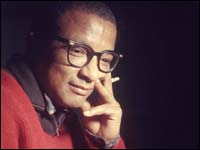
Billy Strayhorn

Billy Strayhorn.

Morning Edition, February 6, 2007 · Best known as the songwriting genius who created many of Duke Ellington's masterpieces, Billy Strayhorn is the subject of a new documentary premiering Tuesday night on public television, as well as a fine companion CD. Both are titled Lush Life, after Strayhorn's most enduring composition, which commentator Ashley Kahn sees as the composer's autobiography in music form.

Though it was written in the '30s, "Lush Life" was not recorded for public release until Nat "King" Cole sang it in 1949 with a free and easy feel. Since then, it's become one of the most standard of pop standards, with no signs of fading away. It was even a highlight of a recent Grammy Awards gala, performed by Queen Latifah.

"Lush Life" conveys such a vast range of emotions that more than 500 musicians have explored it. Some, like Joe Henderson playing solo saxophone, have chosen a hushed approach, while singers like Nancy Wilson have given it a shot of drama.

"Lush Life" seems simple, but it's quite complex — emotionally and musically, with a very unusual structure. It even gave Frank Sinatra a hard time when he tried to record in 1958. He gave up on the song, laughing that he would "put it aside for about a year." But he never did return to it.

"Not everybody could sing it," says Andy Bey, a celebrated jazz singer and pianist with a strong personal connection to "Lush Life," a song he has returned to repeatedly throughout a 55-year career. "A lot of songs had verses and refrains, you know, but it's like a mind boggling thing. It's not about 'ring-a-ding ding' when you do "Lush Life."

"It's about somebody's life. There's a worldliness, about a person who has lived. You really have to kind of understand the story and try to keep the mood, keep the focus."

The pun in the song's title suggests that "Lush Life" might be speaking of a life of elegance, or of boozy despair. In both senses, the song reflects the life of the man who wrote it. Billy Strayhorn was the piano prodigy Duke Ellington recruited in 1938 to compose material for his band. Through a 30-year, on-and-off relationship, Strayhorn wrote many of Ellington's most memorable and sophisticated tunes.

"He was like Duke Ellington's right-hand man," says Bey.

Strayhorn was born in 1915, and fell in love with classical music before developing a fascination with jazz. Growing up in a working-class neighborhood in Pittsburgh, he dreamed of a more cultured and cosmopolitan way of life. He was only 16 when he began to write "Lush Life," which he first called "Life Is Lonely" — and which we now know as "Lush Life."

In fact, the words Strayhorn wrote as a teenager predicted the life he did eventually lead. He did become a socialite, he did make it to France. And he did become an alcoholic.

The song's lyric reveals both poetry and a maturity that's surprising coming from a teenager. It also seems to suggest another significant side to Strayhorn's identity: his sexual orientation.

Bey quotes the first line of the song — "I used to visit all the very gay places..." — and adds, "Who knows? He might have been thinking about the gay bars, but I think it was something broader than that, because he was too broad of a person. I see it as places that are happy and carefree and gay."

As his biographer David Hajdu wrote, Strayhorn was a minority three times over — African-American, gay and open about his homosexuality. His offstage role in Ellington's band made it possible to avoid the public spotlight.

"I think he loved taking a back seat," Bey says. "Because that way, it gave him the freedom to be himself, even though it might have hurt him, because he wasn't given the credit that he deserved as an artist. Billy had the strength and the balls to come out and be who he was."

Strayhorn died in 1967, his death hastened by years of alcohol and cigarettes. He never said if "Lush Life" was intended to be a pronouncement of his lifestyle, yet the song survives as a poignant self-portrait: complex, mature and open to interpretation.

Jazz

Recommended Strayhorn: Career Highlights

by

NPR.org, February 5, 2007 · Few American composers — in any category of music — were on a par with William Thomas Strayhorn. His ability to weave the intricate and sophisticated harmonies of classical music into the richness and swing of big-band jazz was unparalleled. (Just check out the nimble chordal movement in a tune like "Chelsea Bridge.") He excelled at composing melodies and writing lyrics with wit and poetry, as in his signature tune "Lush Life."

"With all respect to Cole Porter and Rogers and Hart and Jerome Kern, I love them all, they're great geniuses," singer/pianist Andy Bey said. "But Billy Strayhorn was a different kind of a genius because he was in the background."

When the 51-year-old Strayhorn died in 1967 after battling cancer, he was well on his way to the recognition he deserved. Certainly, Duke Ellington — with whom he had remained, off and on, for most of Strayhorn's 30-year career — emphasized his contributions to the Ellington orchestra in stage announcements, on LP covers, and on a posthumous tribute album to his friend and songwriting partner: And His Mother Called Him Bill.

To know Strayhorn's full story, check out the new television documentary Lush Life, airing as part of PBS's Independent Lens series, or read David Hajdu's biography of the same name. For those looking to hear his music, the titles listed below represent a good start.

Passion Flower art

Billy Strayhorn, Passion Flower

Easily the best CD overview of the diminutive maestro's oeuvre, this collection features 21 tracks — mostly performances by the Ellington band of such classics as "Lotus Blossom," "Rain Check," "Take the A Train" and "Satin Doll." Also included: Nat "King" Cole's version of "Lush Life" — the public debut of the song from 1949, with Pete Rugolo's impressionistic arrangement — and drummer Louie Bellson's take on "Johnny Come Lately," with Strayhorn himself on piano.

Duke Ellington art

Duke Ellington, Three Suites

By the early '50s, miffed at the lack of credit he had received under Ellington's wing, Strayhorn departed for a few years to freelance his talents and try his hand at writing a Broadway show. Upon his return in 1957, Ellington spent the next 10 years making up for past slights: granting Strayhorn co-credit on their collaborations and lending him headline status on various projects, including the suites collected on this CD. Of special note: their oh-so-hip reworkings of tunes from Tchaikovsky's Nutcracker Suite, like "Sugar Rum Cherry" (from "Dance of the Sugar Plum Fairy") and "Danse of the Floreadores" ("Waltz of the Flowers").

Lush Life art

Various Artists, Lush Life

Not surprisingly, the Strayhorn tributes that are currently available outnumber the composer's recordings of his own music. He created music intended for wide interpretation, and it shows; a tune like "Lush Life" has been convincingly performed as a swinging celebration or as moody self-reflection. The takes on this collection feature stellar soloists from the current Blue Note jazz roster, including saxophonist Joe Lovano, vocalist Dianne Reeves, and pianists Bill Charlap and Hank Jones. The four-handed workout "Tonk," performed by Charlap and Jones, is a revelation, while Lovano's "Chelsea Bridge" and "Johnny Come Lately" are flavorful and fun.

Saturday, February 03, 2007

MICHAEL BRECKER MEMORIAL

MICHAEL BRECKER MEMORIAL

Jazz News MICHAEL BRECKER MEMORIAL
Tuesday, February 20th
Town Hall
123 West 43rd Street
6:00-7:30pm
General Admission
Public Invited
Doors open at 5.15pm

Friday, February 02, 2007

Whitney Balliett, 80, Dean of Jazz Writers

Whitney Balliett, 80, Dean of Jazz Writers

BY WILL FRIEDWALD - Special to the Sun
February 2, 2007

Whitney Balliett, who died yesterday at 80, was the longtime jazz reviewer for the New Yorker.

A reporter, historian, and expert interviewer, Balliett's greatest gift was as an astute listener with the rare ability to capture the sound of the music in words. He wrote with a cadence and rhythm that mirrored the music itself, and was as witty and fun to read as he was serious and scholarly.

He wrote that Blossom Dearie had a voice so small that "without a microphone it would not reach the second floor of a doll's house"; he described another singer, Betty Carter, as being so far out that she "makes Sarah Vaughan sound like Kate Smith." He once compared the midperformance moaning of pianist Keith Jarrett to that of a woman giving birth. Balliett also likened jazz drumming to tap dancing: "a great drummer dances sitting down, a great tap dancer drums standing up."

Balliett's favorite kind of jazz was intensely melodic, the style he had grown up with in the '30s and '40s; he tended to favor the great swing players and their latter-day descendants. He also had a fascination for the Great American Songbook, and the more traditional singers of both the jazz and related pop variety who sang it.

Yet he also had a special proclivity for drummers and did not neglect the many equally essential modern and postmodern players who flourished in the decades of his tenure at the magazine. Some of his earliest columns focused on Jimmy Giuffre, Sonny Rollins, and even the extremely avant-garde Cecil Taylor.

Balliett was raised in New York. Soon after graduating from Cornell University in 1951, he began submitting poetry and Talk of the Town entries to the New Yorker. After a four-year stint at the Saturday Review, he began writing a regular column on jazz for the New Yorker in January 1957. His last article in that magazine was published in 2001; he spanned an even half century at the magazine.

"I think the role of any critic is, first, to explain or describe what it is that he is criticizing, and then make his evaluation," Balliett said in one of his last interviews. He preferred to let the music come alive in the reader's head rather than dwelling on what he thought of it.

He continued, "I think you waste time by battling and sending out sharp opinions and dumping on people. It's a waste of effort and it's also destructive."

Although Balliett had been writing his column for a scant two years, his first book was published in 1959. Like most of the dozenplus books he produced, "The Sound of Surprise" collected his New Yorker columns.

Balliett's wrote in two modes, reviews and profiles, some of which were not, strictly speaking, on musicians, such as "Alec Wilder and His Friends" (1974) and "Barney, Bradley, and Max: Fifteen Portraits in Jazz" (1989).

In his profiles, Balliett let's subjects speak for themselves, at length. In his reviews, he offered witty, vivid verbal-paintings such as this typical description of Ray Charles in action: "One waits for the shout that falls in a beat to a whisper, the flashing falsetto, the pine-sap diction, the pained hoarseness, the guttural asides, the spidery staccato sprays of notes, the polysyllabic explosions, the faster-than-the-ear dynamics."

On the pianist Dave McKenna: "His eyes are deep-set and close together, and his wide face has eagle lines. His long arms end in banana fingers."

More than any other critic in the genre's history, Balliett captured the *feel* of jazz. He wrote of the clarinetist Pee Wee Russell: "Russell's blues were an examination of the proposition that there must be a way to make sadness bearable and beautiful."

He was a profound influence on the next generation of jazz critics, including Gary Giddins, Francis Davis, and Stanley Crouch.

Apart from his writing, Balliett's other best-known achievement was serving as a musical consultant, alongside fellow reviewer Nat Hentoff, on the 1957 CBS-TV show "The Sound of Jazz." This program is among the finest hours of the music ever televised (and possibly ever recorded), but is also the most celebrated all-star gathering in the history of jazz. Indeed, Balliett would go on to write at length about such iconic figures as Billie Holiday, Lester Young, Count Basie, Gerry Mulligan, Ben Webster, Coleman Hawkins, and many others who appeared on "The Sound of Jazz."

I once asked Balliett how he got so many jazz greats in a single production, and he answered, "Easy — they needed the gig!"

Whitney Balliett

Born April 17, 1926, in Manhattan; died February 1 at his home in Manhattan; survived by his wife, Nancy Balliett, his children Whitney Balliett, James Balliett, Julie Rose, Blue Balliott, and Will Balliett, his seven grandchildren, and a brother, Fargo Balliett.

++++++++++++++++++++++++++++++++++++++++++++++++++++++++++++++

Not my favorite jazz writer. He was of the "old school" when it came to race relations. This old school perspective was obvious in his writing.

John H. Armwood

Wednesday, January 17, 2007

Alice Coltrane, Jazz Artist and Spiritual Leader, Dies at 69 - New York Times

Alice Coltrane, Jazz Artist and Spiritual Leader, Dies at 69 - New York Times:
January 15, 2007

Alice Coltrane, Jazz Artist and Spiritual Leader, Dies at 69

Alice Coltrane, widow of the jazz saxophonist John Coltrane and the pianist in his later bands, who extended her musical searches into a vocation as a spiritual leader, died on Friday in Los Angeles. She was 69.

The cause was respiratory failure, said Marilyn McLeod, her sister and assistant.

Ms. Coltrane lived in the Woodland Hills section of Los Angeles near the Sai Anantam ashram in Agoura Hills, which she had founded in 1983. Known as Swami Turiyasangitananda, Sanskrit for “the highest song of God,” she was the guiding presence of the 48-acre ashram, set among the Santa Monica mountains, where 25 to 30 full-time residents study the Vedic scriptures of ancient India, as well as Buddhist and Islamic texts.

She was also the manager of Coltrane’s estate, as well as of his music-publishing company, Jowcol Music, and the John Coltrane Foundation, which has given out scholarships to music students since 2001.

As a pianist, her playing was dense with arpeggios that suggested the harp; the instrument had an important place in her life. One of her childhood heroes was the Detroit-based jazz harpist Dorothy Ashby, and she was later motivated to study that instrument by Coltrane, who loved its sound.

Raised in a musical family in Detroit, Ms. Coltrane played piano and organ for church choirs and Sunday school from age 7. As a young musician in Detroit, she was studying classical music and playing piano in jazz clubs, in a group including her half-brother, the bassist Ernie Farrow, and the trombonist George Bohannon.

In her early 20s she lived briefly in Paris, where she studied informally with the pianist Bud Powell, and was briefly married to the singer Kenny (Pancho) Hagood, with whom she had a daughter, Michelle. She returned to Detroit, playing in a band with her brother, and then moved to New York in 1962. A year later she met John Coltrane.

She was playing vibraphone and Powell-inspired bebop piano in a group led by the drummer Terry Gibbs at Birdland, on a double-bill with Coltrane’s quartet. Coltrane was well established by the beginning of the 1960s, though she hadn’t known about him for long before moving to New York; the first time she ever heard him, she said, was on the 1961 album “Africa/Brass.”

They connected instantly; she moved in with him and traveled with the Coltrane band. By the summer of 1964 they had relocated from New York City to a house in Dix Hills, on Long Island. They married in 1965 in Juárez, Mexico, coinciding with Coltrane’s divorce from his first wife, Naima Grubbs. By that time she and Coltrane had already had two of their three children together — John Jr., who died in 1982, and Ravi, who by his 30s had become an acclaimed jazz saxophonist.

Ms. Coltrane is survived by her sisters, Marilyn McLeod of Winnetka, Calif., and Margaret Roberts of Detroit; her daughter, Michelle Carbonell-Coltrane of Los Angeles; her sons Oran Coltrane of Los Angeles and Ravi, of Brooklyn; and five grandchildren.

In 1966, as the Coltrane band’s music became wilder and more prolix, she became its pianist. She replaced McCoy Tyner, who quit without rancor, largely because he could no longer hear himself on the bandstand. Though she wasn’t Mr. Tyner’s technical equal and lacked his percussive power, she fit with the group’s new purpose; by the time of the recordings that would become the album “Stellar Regions,” in February 1967, she was fluid and energetic within the group’s freer new language.

She told an interviewer that Coltrane helped her to play “thoroughly and completely.” This meant stretching the definitions of rhythm and harmony, but she also meant something broader; Coltrane was talking about “universalizing” his music, creating a nondenominational religious art that took cues from ancient history and foreign scales. He helped her to sign a contract as a solo artist with his label, Impulse. And he introduced her to Eastern philosophy and religion, which became the main focus of her life.

After Coltrane’s death from liver cancer in 1967, Ms. Coltrane took a vow of celibacy. And at first she made music closely related to his, often reflective, minor and modal; on piano or harp she played flowing, harplike phrases over a deep midtempo swing, and she worked with the bassist Jimmy Garrison and the drummer Rashied Ali from John Coltrane’s band. On records like “A Monastic Trio,” “Ptah, the El Daoud” and “Journey in Satchidananda,” she was able to reconcile blues phrases and jazz rhythm with a kind of ancient, flowing sound.

Ms. Coltrane met her guru, Swami Satchidananda, in 1970, and in more recent years became a devotee of Sathya Sai Baba. By the early 1970s she developed a renewed interest in the organ, because it produced a continuous sound; she wanted to make a meditative music that wouldn’t be interrupted by pauses for breath. Her 1972 record, “Universal Consciousness,” with Ms. Coltrane on Wurlitzer organ and string arrangements by Ornette Coleman, became a far-out classic. In the mid-70s she switched to the Warner Brothers label and made four more records, including orchestras and Hindu chants. Thereafter, until 2004, she made records purely for religious purposes, distributing them privately.

After first establishing the Vedanta Center in San Francisco, she moved her ashram to Agoura Hills, just northwest of Los Angeles, and expanded it. In the past 10 years, she performed the occasional concert with Ravi, and in 2004 she finally returned to recording jazz, making “Translinear Light,” produced by Ravi, who reunited her with some old colleagues like Charlie Haden and Jack DeJohnette, as well as a chorus of singers from her ashram.

ALICE COLTRANE, MUSICIAN 1937-2007

ALICE COLTRANE, MUSICIAN 1937-2007
She became a devotee of Indian guru Sathya Sai Baba after the 1967 death of her husband, legendary saxophonist John Coltrane
Pianist and harpist Alice Coltrane was the widow of legendary jazz saxophonist John Coltrane, whose death led her to explore a vocation as a spiritual leader.

Ms. Coltrane lived in the Woodland Hills section of Los Angeles near the Sai Anantam Ashram in Agoura Hills, which she had founded in 1983. Known as Swami Turiyasangitananda, Sanskrit for “the highest song of God,” she was the guiding presence of the 20-hectare ashram, set among the Santa Monica mountains, where 25 to 30 fulltime residents study the Vedic scriptures of ancient India, as well as Buddhist and Islamic texts. She was also the manager of John Coltrane’s estate, as well as of his publishing company, Jowcol Music.

Tuesday, January 16, 2007

Michael Brecker | Obituaries | Guardian Unlimited

Michael Brecker | Obituaries | Guardian Unlimited:

Michael Brecker


Master saxophonist who straddled the worlds of jazz, blues rock and funk

John Fordham
Tuesday January 16, 2007
The Guardian


Michael Brecker, the Philadelphia-born saxophonist star who has died of leukaemia aged 57, could hurl out more notes faster than almost all of his fellow-practitioners, but his 11 Grammy awards, devoted worldwide audience and status among musicians everywhere testified to artistic strengths that went far beyond technique. He was a composer, bandleader and improviser whose solo career started late, after years as a sideman and session-player; but in the two decades after he made his leadership debut, he became the most emulated jazz saxophonist on the planet after John Coltrane.

Brecker was held in such awe by students, commentators and players alike that the thought of his exit will be hard for many to comprehend. A reserved, private and undemonstrative man, who made light of his talent - he was so indifferent to onstage histrionics that he would play the most high-energy solos with almost nothing visibly moving but his fingers - Brecker inspired enduring loyalties for his modesty as much as his influence. He also inspired confidence in the most demanding of artists that his presence would make even their best work sound better. Those who hired him in his pre-leadership days included Frank Sinatra, John Lennon and Yoko Ono, Steely Dan, Frank Zappa, Bruce Springsteen, Joni Mitchell, Charles Mingus and Jaco Pastorius.

Brecker combined the striving energy, technical ambition and sophisticated harmonic sense of Coltrane - his first and biggest inspiration - with a soulful bluesiness that allowed him to drop easily into the earthiest of blues, rock or funk bands. In his prime, he could sustain an unaccompanied one-man show by sounding like several sax players, and even parts of a rhythm section, all at the same time. But if he could tingle the spine with Coltranesque split-note wails that took the tenor sax way above its regular range as well as transforming it into a chordal instrument, he could be tender with slow music, as his performance of Every Day I Thank You on guitarist Pat Metheny's 80/81 album confirms.

Self-revelatory emotions were not perhaps his style, in the way they were Coltrane's. But, playing in New York in the week following 9/11, Brecker told me: "I maybe felt in touch with the true purposes of music in a way I never had been before - as a hearing, transporting, unifying force." He seemed to tune into both his inner voices and the wider possibilities of his art increasingly in later years; that journey ends with an as yet unnamed new album completed just two weeks ago.

Brecker's lawyer father was a part-time jazz pianist, his sister Emmy a classical pianist, and his brother Randy became a celebrated jazz trumpeter. Michael would joke that the only way the children could have had a subversive teenage rebellion would have been to become doctors or attorneys. "[Our father] took us to jazz concerts the way other kids went to ball games," he recalled of those childhood trips to hear Miles Davis, Duke Ellington or Thelonious Monk.

Michael played drums at first (percussive accents remained a strong feature of his saxophone style), then clarinet from the age of seven, alto sax in high school, and finally the tenor and soprano instruments. While at Indiana University he mostly played rock, turning to R&B and funk at the end of the 60s when he moved to New York to play professionally. In 1969 Michael and Randy Brecker, guitarist John Abercrombie and drummer Billy Cobham co-founded Dreams, one of the earliest and most creative of the first wave of jazz-rock bands. Work with Cobham and with Horace Silver followed, before Randy and Michael formed the Brecker Brothers.

One of the group's album titles, Heavy Metal Bebop, aptly described the style. Michael's spiky, chromatically dense improvising style developed in this period - but, unlike a good many jazz players turning to funk in the 70s, he never sounded cramped by the rhythm patterns of the idiom. He burst with ideas whether the underpinning was the loose, cruising feel of swing, or the slamming backbeats of rock.

The Brecker Brothers continued with various line-ups until 1982, and between 1977 and 1985 they also ran a New York club called Seventh Avenue South. Between 1970 and the mid-80s, Michael also contributed to more than 400 pop albums as a session saxist. Then, in 1986, with pianist Joey Calderazzo, drummer Adam Nussbaum and bassist Jeff Andrews, he formed a much more jazz-oriented post-bop group, and in 1987 recorded his debut album as a leader (it was jazz album of the year in both Downbeat and Jazziz magazines), and toured with Herbie Hancock's quartet. He also briefly explored the possibilities of an electronic sax, the EWI.

That first album was well received, partly for the revelation that Brecker had an eloquent compositional talent with which to trigger his torrential saxophone variations (though he never composed extensively, and depended on a close relationship with pianist Gil Goldstein as a composer-arranger). Sideman roles still occasionally tempted him (he toured with Paul Simon in 1991-92 and with Hancock in 1997), and the Brecker Brothers were occasionally coaxed out of retirement, but it was the powerful quartet (often featuring the drummer Jeff "Tain" Watts) that was his most regular vehicle through the 1990s. Albums like Tales From the Hudson, Time Is Of the Essence, The Ballad Book and Wide Angles (2004) displayed the same improvisational verve as ever, but were also showcases for Brecker's high-class admirers - like McCoy Tyner, Metheny, Hancock and Elvin Jones.

In his 50s, Brecker's improvising gradually shed the grandstanding pyrotechnics, gaining subtler colours, greater contrast and a compelling narrative strength. In 2001, at the invitation of the English Contemporary Music Network, he also successfully explored leadership of a larger band, working with Gil Goldstein and an Anglo-American group on expanded arrangements of his own compositions. A bigger group also participated on Wide Angles, which won two Grammy awards.

The following year, the news emerged that Brecker was suffering from the blood disease myelodysplastic syndrome, a condition that frequently precedes leukaemia. Last summer, an experimental blood stem cell transplant was attempted, but was unsuccessful. Realising the importance of the marrow donor programme, Brecker and his family began campaigning for raised awareness about it generally. "This whole experience has allowed me to be a conduit to attract attention for a cause that's much larger than me," Brecker said. He is survived by his wife Susan, children Jessica and Sam, brother Randy and sister Emily Brecker Greenberg.

· Michael Brecker, saxophonist, born March 29 1949; died January 13 2007


Michael Brecker, the Philadelphia-born saxophonist star who has died of leukaemia aged 57, could hurl out more notes faster than almost all of his fellow-practitioners, but his 11 Grammy awards, devoted worldwide audience and status among musicians everywhere testified to artistic strengths that went far beyond technique. He was a composer, bandleader and improviser whose solo career started late, after years as a sideman and session-player; but in the two decades after he made his leadership debut, he became the most emulated jazz saxophonist on the planet after John Coltrane.

Article continues
Brecker was held in such awe by students, commentators and players alike that the thought of his exit will be hard for many to comprehend. A reserved, private and undemonstrative man, who made light of his talent - he was so indifferent to onstage histrionics that he would play the most high-energy solos with almost nothing visibly moving but his fingers - Brecker inspired enduring loyalties for his modesty as much as his influence. He also inspired confidence in the most demanding of artists that his presence would make even their best work sound better. Those who hired him in"

Thursday, January 04, 2007

village voice > music > by Greg Tate

village voice > music > by Greg Tate:
Eulogy for Black Caesar
James Brown, 1933–2006
by Greg Tate
January 2nd, 2007 4:00 PM


James Brown funeral procession
photo: Cary Conover
See also:
Photo gallery from the Apollo wake

Tune in
High Bias: The James Brown special
Skinny white bands who owe the Godfather


Eeeeeeyow. Gud gaad. Aintit fonkeenah? James Brown knew how to freak the tribal speak and the tribal feet alike—the tribal neckbone and irrepressible tribal hambone too. Being a poet, a boxer, and a onetime Pentecostal supplicant, the Godfather knew a thing or two about being hit with the spirit and hit with the quickness; he also knew how to hit back, how to respond in kind in a New York minute. Bold, Black, and Beautiful things just happened faster in the world according to Brown. Tempos, terpsichore, tantrums, tangents, even jail time. They didn't call him Mr. Dynamite for nothing. Word is that when the Hardest Working Man in Showbiz did his three-year bid, he stayed industrious, organized a choir, ran the kitchen and laundry detail. Sit-down time for Black Caesar? Fuhgeddaboudit. And unlike so many of our fallen fighters whom dust and base cocaine dropped to the mat in the '80s and '90s, JB came back up as superbaaad as ever. Lest we forget, he transitioned to another world tour by straight stealing Jesus' thunder on Xmas Day. He wasn't ever a puny human to begin with anyway, so don't act surprised.

The line for his people's wake at the Apollo Thursday—as great a day in Black ancestor worship as the world done seen since James Baldwin's 1987 going-away soiree at St. John the Divine—began at 1 p.m. and didn't end till nine that night, teeming multitudes still being turned away to the chilly neon darkness uptown. All kinds of reporters, I'm talking cats from here to Melbourne, spent all day asking about the significance of JB. Your reporter hit it and quit with one inquisitor, obliquely declaring Brown "the Alpha and the Omega of the African in African American." Say wha? Because JB is the embodiment of all the working-class African blood that got us through, all that African left in us beyond the Middle Passage. Because JB embodied all our collective love, joy, ingenuity, and indefatigability, all our spirited and spiritual survivalist complexity, all our freedom jazz dance. The power of King James rang true for continental Africans too—in Ghana, Nigeria, Mali, and Congo especially. He became the bridge, and the measure of how much New World African modernity they needed to keep their postcolonial cultures moving, grooving, and counting off like a sex machine too. In a nutshell, JB was our grand Black unifier. The universal Negro solvent with the feral eyes, flashwhite teeth, torrential sweaty brow, swinging crown of piled-up processed hair, and skintight pants, who made us understand nothing less than absolute soulfulness as our cultural prime directive.

Truth be told, JB remains the one Black truth we can all agree to agree on as a life-giving essential. Just ask Sly, Jimi, Miles, Fela, and Marley, because by the time the '70s rolled around they were all convinced James was the Answer. You can hear that for yourself in Fresh, Band of Gypsys, Jack Johnson, Africa 70, Exodus, and everything that flowed from those funk-saturated templates. All the way to heaven, all the way to Parliament-Funkadelic, all the way to hiphop. No surprise that everybody attributes the way hiphop music sounds to JB—the Godfather, Jimmy Nolen, Clyde Stubblefield, and Maceo Parker knew they had built a rhythmcentric beast, a perpetual-motion-making machine whose gifts couldn't help but keep on giving. But dig, if you will, this picture: The streetwise poesy of hiphop lyrics is all his inspiration too. JB's every economical, anthropological utterance legitimized and laid bare the thought process of the 'hood's hardknockschooled philosophers, those organic Black intellectual Bamm-Bamms whose only book might be the Bible, but whose chiseled, charismatic bullet-point language was their bloodsoaked own. Point-blank, the vernacular priesthood of the MC begins with Mr. Brown, a man whose savior-like social vision, bottomless erotic optimism, and boundless capitalist ambition all found expression in his dolla-bill raps, his gangsta raps, his love raps, his protest raps, and his party raps for damn sure.


This man could sum up the modern Black condition and modern Black gender relations in two or three declarative sentences: "I don't care about your past/I just want our love to last. . . . I don't care about your wants/I just want to tell you about the dos and don'ts. . . . When you kiss me and ya miss me/You hold me tight/Make everything alright/I break out—in a cold sweat." You could fish a whole August Wilson play out of those lines, with their naked, scary promise of unconditional love and inflexible control, their spooked response to a sexual charge, their punch-drunk fervor thrown down before his intended like damnation and salvation will be delivered by the same hand. Girl, you heard the man: Get up off that thang, dance to the music, and put your foot on the rock.

While we're on that subject, we'll also remind y'all that JB's footwork, legwork, and neckwork were damn near bionic in their velocity, violence, viscosity. Talking about that way he had of moving everything below his waist at fuming warp speed while his triangular pugilist's torso became hummingbird-still, more implacable than any mannequin. Talking about the way that famously unhinged slide so aptly contrasted with that almost "zombie" freeze. Talking about that voodoo thing he did with his visage midstroke, that look from somewhere between trance and terror, jokes and hallelujah, grimace and beatitude.

Something like that look was seen on his face at the Apollo last week, Mr. Brown's body driven there by two white horses and two dark horsemen in tails and top hats. Lying in state in a solid-gold casket on the very stage he'd rocked so often in days of yore, Mr. Dynamite, a/k/a the Godfather, a/k/a He's Soul Brother Number One in Tokyo was decked out in a dark-powder-blue silk suit, delicate white gloves, and sparkling silver ankle boots as his music burst like bombs around the solemn processional line and the Apollo's famous ushers did everything they could not to break in to the Funky Chicken. His face, his death mask, postmortem and post- mortician—yes, that carved granite face, first on Black Rushmore after King and X (and before Clinton and Pryor)—epitomized what the old folks mean when they say they made him look "natural." And maybe even too natural at that, as there was something etched in that famous ebony-grain skin whose cheeks now sagged under the weight of a suddenly tight mouth poised somewhere between smirk, surrender, and dissatisfaction. Something that said he wasn't too happy the way this final act had been sprung on him, and on us too, quiet as it's kept. Because truth be known, Mr. Brown was one of those iconic figures we all thought of as family first, and as with family, we took his every success and setback as our reflection, illumination, and humiliation too. If loud James said we were Black and proud, we instantly became all that in spades: louder, Blacker, prouder. If James liked the hot pants, we blindly followed suit. And if Brown went to the slammer, we did too: "Free James Brown!" Tell me you don't remember that! And we always knew, as he'd already so famously reminded us, that while money won't change you, time will take you out. Troubles, flaws, and all, Mr. Brown was one of our best, perhaps precisely because he was an object lesson in self-mastery and self-martyrdom, and took every licking as a spur to resurrection. Lawd, tell me: Now that James Brown is truly free, what's to become of the rest of us?

Monday, December 25, 2006

James Brown, 73, Dies; ‘Godfather of Soul’ - New York Times

James Brown, 73, Dies; ‘Godfather of Soul’ - New York Times:
December 25, 2006

James Brown, 73, Dies; ‘Godfather of Soul’

Filed at 8:44 a.m. ET

ATLANTA (AP) -- James Brown, the dynamic, pompadoured ''Godfather of Soul,'' whose rasping vocals and revolutionary rhythms made him a founder of rap, funk and disco as well, died early Monday, his agent said. He was 73.

Brown was hospitalized with pneumonia at Emory Crawford Long Hospital on Sunday and died around 1:45 a.m. Monday, said his agent, Frank Copsidas of Intrigue Music. Longtime friend Charles Bobbit was by his side, he said.

Copsidas said the cause of death was uncertain. ''We really don't know at this point what he died of,'' he said.

Along with Elvis Presley, Bob Dylan and a handful of others, Brown was one of the major musical influences of the past 50 years. At least one generation idolized him, and sometimes openly copied him. His rapid-footed dancing inspired Mick Jagger and Michael Jackson among others. Songs such as David Bowie's ''Fame,'' Prince's ''Kiss,'' George Clinton's ''Atomic Dog'' and Sly and the Family Stone's ''Sing a Simple Song'' were clearly based on Brown's rhythms and vocal style.

If Brown's claim to the invention of soul can be challenged by fans of Ray Charles and Sam Cooke, then his rights to the genres of rap, disco and funk are beyond question. He was to rhythm and dance music what Dylan was to lyrics: the unchallenged popular innovator.

''James presented obviously the best grooves,'' rapper Chuck D of Public Enemy once told The Associated Press. ''To this day, there has been no one near as funky. No one's coming even close.''

His hit singles include such classics as ''Out of Sight,'' ''(Get Up I Feel Like Being a) Sex Machine,'' ''I Got You (I Feel Good)'' and ''Say It Loud -- I'm Black and I'm Proud,'' a landmark 1968 statement of racial pride.

''I clearly remember we were calling ourselves colored, and after the song, we were calling ourselves black,'' Brown said in a 2003 Associated Press interview. ''The song showed even people to that day that lyrics and music and a song can change society.''

He won a Grammy award for lifetime achievement in 1992, as well as Grammys in 1965 for ''Papa's Got a Brand New Bag'' (best R&B recording) and for ''Living In America'' in 1987 (best R&B vocal performance, male.) He was one of the initial artists inducted into the Rock and Roll Hall of Fame in 1986, along with Presley, Chuck Berry and other founding fathers.

He triumphed despite an often unhappy personal life. Brown, who lived in Beech Island near the Georgia line, spent more than two years in a South Carolina prison for aggravated assault and failing to stop for a police officer. After his release on in 1991, Brown said he wanted to ''try to straighten out'' rock music.

From the 1950s, when Brown had his first R&B hit, ''Please, Please, Please'' in 1956, through the mid-1970s, Brown went on a frenzy of cross-country tours, concerts and new songs. He earned the nickname ''The Hardest Working Man in Show Business'' and often tried to prove it to his fans, said Jay Ross, his lawyer of 15 years.

Brown would routinely lose two or three pounds each time he performed and kept his furious concert schedule in his later years even as he fought prostate cancer, Ross said.

''He'd always give it his all to give his fans the type of show they expected,'' he said.

With his tight pants, shimmering feet, eye makeup and outrageous hair, Brown set the stage for younger stars such as Michael Jackson and Prince.

In 1986, he was inducted in the Rock and Roll Hall of Fame. And rap stars of recent years overwhelmingly have borrowed his lyrics with a digital technique called sampling.

Brown's work has been replayed by the Fat Boys, Ice-T, Public Enemy and a host of other rappers. ''The music out there is only as good as my last record,'' Brown joked in a 1989 interview with Rolling Stone magazine.

''Disco is James Brown, hip-hop is James Brown, rap is James Brown; you know what I'm saying? You hear all the rappers, 90 percent of their music is me,'' he told the AP in 2003.

Born in poverty in Barnwell, S.C., in 1933, he was abandoned as a 4-year-old to the care of relatives and friends and grew up on the streets of Augusta, Ga., in an ''ill-repute area,'' as he once called it. There he learned to wheel and deal.

''I wanted to be somebody,'' Brown said.

By the eighth grade in 1949, Brown had served 3 1/2 years in Alto Reform School near Toccoa, Ga., for breaking into cars.

While there, he met Bobby Byrd, whose family took Brown into their home. Byrd also took Brown into his group, the Gospel Starlighters. Soon they changed their name to the Famous Flames and their style to hard R&B.

In January 1956, King Records of Cincinnati signed the group, and four months later ''Please, Please, Please'' was in the R&B Top Ten.

Pete Allman, a radio personality in Las Vegas who had been friends with Brown for 15 years, credited Brown with jump-starting his career and motivating him personally and professionally.

''He was a very positive person. There was no question he was the hardest working man in show business,'' Allman said. ''I remember Mr. Brown as someone who always motivated me, got me reading the Bible.''

While most of Brown's life was glitz and glitter -- he was the singing preacher in 1980's ''The Blues Brothers'' -- he was plagued with charges of abusing drugs and alcohol and of hitting his third wife, Adrienne.

In September 1988, Brown, high on PCP and carrying a shotgun, entered an insurance seminar next to his Augusta office. Police said he asked seminar participants if they were using his private restroom.

Police chased Brown for a half-hour from Augusta into South Carolina and back to Georgia. The chase ended when police shot out the tires of his truck.

Brown received a six-year prison sentence. He spent 15 months in a South Carolina prison and 10 months in a work release program before being paroled in February 1991. In 2003, the South Carolina parole board granted him a pardon for his crimes in that state.

Soon after his release, Brown was on stage again with an audience that included millions of cable television viewers nationwide who watched the three-hour, pay-per-view concert at Wiltern Theatre in Los Angeles.

Adrienne Brown died in 1996 in Los Angeles at age 47. She took PCP and several prescription drugs while she had a bad heart and was weak from cosmetic surgery two days earlier, the coroner said.

More recently, he married his fourth wife, Tomi Raye Hynie, one of his backup singers. The couple had a son, James Jr.

Two years later, Brown spent a week in a private Columbia hospital, recovering from what his agent said was dependency on painkillers. Brown's attorney, Albert ''Buddy'' Dallas, said the singer was exhausted from six years of road shows.

Brown was performing to the end, and giving back to his community.

Three days before his death, he joined volunteers at his annual toy giveaway in Augusta, and he planned to perform on New Year's Eve at B.B. King Blues Club in New York.

''He was dramatic to the end -- dying on Christmas Day,'' said the Rev. Jesse Jackson, a friend of Brown's since 1955. ''Almost a dramatic, poetic moment. He'll be all over the news all over the world today. He would have it no other way.''

Tuesday, December 19, 2006

Michael Woods

Michael Woods: Tuesday, December 12, 2006 Dr. Martin Luther King, Jr. on Humanity and the Importance of Jazz


"God has brought many things out of oppression. He has endowed his creatures with the capacity to create - and from this capacity has flowed the sweet songs of sorrow and joy that have allowed man to cope with his environment and many different situations.

Jazz speaks for life. The Blues tell the story of life's difficulties, and if you think for a moment, you will realize that they take the hardest realities of life and put them into music, only to come out with some new hope or sense of triumph. This is triumphant music.

Modern Jazz has continued in this tradition, singing the songs of a more complicated urban existence. When life itself offers no order and meaning, the musician creates an order and meaning from the sounds of the earth which flow through his instrument.

It is no wonder that so much of the search for identity among American Negroes was championed by Jazz musicians. Long before the modern essayists and scholars wrote of "racial identity" as a problem for a multi-racial world, musicians were returning to their roots to affirm that which was stirring within their souls.

Much of the power of our Freedom Movement in the United States has come from this music. It has strengthened us with its sweet rhythms when courage began to fail. It has calmed us with its rich harmonies when spirits were down. And now, Jazz is exported to the world. For in the particular struggle of the Negro in America there is something akin to the universal struggle of modern man. Everybody has the Blues. Everybody longs for meaning. Everybody needs to love and be loved. Everybody needs to clap hands and be happy. Everybody longs for faith. In music, especially this broad category called Jazz, there is a stepping stone towards all of these."

Walter Booker Obit :: eJazzNews.com : The Number One Jazz News Resource On The Net :: Jazz News Daily

Walter Booker Obit :: eJazzNews.com : The Number One Jazz News Resource On The Net :: Jazz News Daily: Obituaries: Walter Booker Obit
Posted by: editoron Thursday, December 14, 2006 - 09:57 AM
Jazz News Walter Monroe Booker, Jr., lovingly dubbed “Bookie,” was born on December 17, 1933 in Prairie View, Texas to the late Walter Monroe Booker, Sr. and the late Thomye Collins Booker. The family moved to Washington, D.C. when his father accepted a position with the Howard University Medical School and later became Head of the Department of Pharmacology. Booker was the oldest of two children, his sister, Marjorie, fifteen years his junior resides in Washington, D.C. He attended the District of Columbia Public Schools for his early education and graduated from high school at the Palmer Institute of North Carolina. Booker then matriculated and graduated from Morehouse College in Atlanta, Georgia.

Booker was drafted into the United States Army during which period he became fascinated with and began to play the acoustic bass. He married Yvonne Blakeney with whom he had two sons, Randall and Russell. In 1959, he returned to Washington where he quickly became a member of Andrew White’s band, the JFK Quintet, who performed regularly at the Bohemian Caverns. Cannonball Adderley discovered them at the Caverns and brought them to public attention by way of their first recording, “New Jazz Frontiers From Washington.” He attended Howard University Medical School while performing with the quintet, but withdrew from school after two years to pursue his musical career full time.

He moved to New York City in 1964 and studied privately with Homer R. Mensch, Juilliard faculty member and one of the 20th Century’s greatest bass players and teachers of that instrument. Booker later married Maria Smith and had one son, Krishna. His remarkable talent gained recognition fast from notable and professional jazz musicians. He was first hired by trumpeter Donald Byrd, and later performed with both Stan Getz’ and Sonny Rollins’ bands. From 1967 to 1969, Booker recorded and toured with many jazz greats — Ray Bryant, Art Farmer, Harold Vick, Betty Carter, and, most notably, with Thelonius Monk’s last touring ensemble.

In 1969, Booker was invited to join the Cannonball Adderley Quintet, a recording, and touring relationship and friendship that lasted until Cannonball’s untimely death in 1975. That year, Booker became Sarah Vaughan’s bassist. He recorded and toured with her for the next six years.

While playing with Cannonball and Sarah Vaughan, Bookie began to explore his interest in music production and recording. He designed, constructed, and operated Boogie Woogie Studios in his Upper West Side Manhattan apartment. Booker used geodesic principles to sculpt two rehearsal and recording spaces, an ingenious concept that produced clean, pure, high-tech quality sound. For over ten years Boogie Woogie became a launching pad for musicians from all over the world, helping to shape their growth by providing a safe haven for them to develop their craft and learn at the feet of the many masters who passed through the studio doors. Artists who credit Walter Booker and Boogie Woogie Studios for their start include Nat Adderley, Jr., Rasheed Ali, Angela Bofill, Earl McIntyre, T.S. Monk, Airto Moreira, Noel Pointer, and Moroslav Vigous Ira “Buddy” Williams.

Three unions born of Boogie Woogie Studio include the young group “Natural Essence,” led by artist Rasheed Ali; “Love Carnival and Dreams,” a wonderful Brazilian jazz collaboration formed by Booker and Guilherme Vergueiro; and “Weather Report” the jazz crossover group formed by Joe Zawinul and Wayne Shorter.

In 1983, Bertha Hope was sent by a friend to meet Booker to investigate recording in the Boogie Woogie studio. This was the beginning of a friendship that blossomed over the next three years into a life-long relationship. They enjoyed many hours of playing and recording together.

Booker traveled and performed with the John Hicks Trio. The trio also accompanied saxophonist Pharaoh Sanders on a West Coast tour. Nat Adderley, Cannonball’s brother, asked Bookie to join his new quintet. Booker continued to play, record, and tour with other jazz artists, but he primarily recorded and toured internationally with Nat for 17 years until Nat’s demise in early 2000. Every year since its 1987 inception, Booker performed at the annual Child of the Sun Festival in Lakeland, Florida with the Nat Adderley Quintet, continuing after Adderley’s death with the remaining members.

In the early ‘90s Booker served as tutor, teacher and mentor to many, inspiring young musicians through lectures, demonstrations and performances at the Sewell Music Conservatory in Washington, D.C. This exemplified his love and dedication to music. His generosity in sharing his knowledge with others expanded his influence by reaching across generations in this “hometown” setting.

In 2000, after recording on well over 250 albums, Walter Booker produced and released his first album as bandleader forming the Walter Booker Quintet to record “Bookie’s Cookbook” on Mapleshade Records. He was anchored by Cecil Payne on baritone sax, Marcus Belgrave on trumpet, Roni Ben-Hur on guitar, and Leroy Williams on drums. He toured as part of the Bertha Hope Trio, together with drummer Jimmy Cobb. Bookie also formed ElMollennium with his wife jazz pianist Bertha Hope and guitarist Roni Ben-Hur, an ensemble dedicated to performing the music of the late be-bop pianist Elmo Hope.

“Book’s Bossa” and “Saudade,” tunes Walter Booker composed, were recorded by Pat Metheny, Donald Byrd and over a dozen others. Portions of another composition from the “Zodiac Suite” were sampled by Hip Hop artist “A Tribe Called Qwest” and Grammy recipient “Monica.” In 2004, in recognition of his music integrated into the most played song for the prior year, Booker received a Citation of Achievement from BMI for the “Monica” recording, “So Gone” which attained the No. 1 slot on Billboard’s R&B chart.

In September 2004, as a birthday tribute to Cannonball Adderley, Booker performed at the Iridium in New York City with the last rhythm section to perform with Cannonball’s band. Joining him were Michael Woolf on piano, Roy McCurdy on drums, Vincent Herring on alto sax, James Moody on tenor sax and James Carter on baritone sax. In December of that same year, La Belle Epoch restaurant hosted a special birthday bash for Booker. It was heavily attended by many world-renowned musicians and friends who came to jam and celebrate with him. It would be his last public performance.

On Friday, November 24, 2006, Walter M. Booker, Jr. left this world to journey to the next. He is survived by Bertha, his loving wife of twenty years, three children Randall, Russell, and Krishna, his sister Marjorie, niece Cecily and her husband Keith, nephew Thomas, grandnephew Victor; his stepchildren Monica, Daryl and Kevin -- whom he called his ‘brother-in-the-craft,’ a host of cousins and many loving friends and acquaintances.


“Celebration of Life”
Memorial Service
for
Walter M. Booker, Jr.

to be held on

Sunday
January 14, 2007
7:30 P.M.


Saint Peters Lutheran Church

Bebop Lives! Jazz at Lincoln Center :: eJazzNews.com : The Number One Jazz News Resource On The Net :: Jazz News Daily

Bebop Lives! Jazz at Lincoln Center :: eJazzNews.com : The Number One Jazz News Resource On The Net :: Jazz News Daily: Bebop Lives! Jazz at Lincoln Center
Posted by: eJazzNews Readeron Friday, December 15, 2006 - 09:45 AM
Jazz News Bebop Lives!

Featuring James Moody &
Charles McPherson with Roy Hargrove & Roberta Gambarini

January 26 & 27, 8pm, Rose Theater in Frederick P. Rose Hall
January 26-Friday Free Pre-Concert Lecture w/ Phil Schaap


New York, NY (December 12, 2006) Bebop saxophonists James Moody (tenor) and Charles McPherson (alto) are two of the greatest living players of this exciting style of jazz and they bring the swing to Frederick P. Rose Hall on January 26 and 27 in Rose Theater. These two will be joined by two incredible performers, Roy Hargrove (trumpet) and Roberta Gambarini (vocals). Ms. Gambarini is nominated for a Grammy ® this year for Best Jazz Vocal Album. With a rich history in the continuation of bebop, these artists bring to life the jazz style founded by giants like Charlie Parker, Dizzy Gillespie and Thelonious Monk.

Tickets for Bebop Lives! are $30, $50, $75, $100, $120 and can be purchased at the Jazz at Lincoln Center box office on Broadway at 60th Street, by calling CenterCharge at (212) 721-6500 or via www.jalc.org.

Bebop Lives! Is a celebration of one of the greatest and most difficult innovations to duplicate in jazz. There will also be a Friday pre-concert lecture with Jazz at Lincoln Center curator Phil Schaap introducing all ticket holders to the breadth of bebop and the impact this innovation had on the history of jazz.

Charles McPherson says, "I'm looking forward to doing the gig with James Moody because of his association with Dizzy's big band. Just playing with somebody who was around at that time is an extra special treat for someone like me...I'm a little younger."

"Bebop is incredibly important music because it has all of the real elements of what music is," Mr. McPherson adds. "The innovators of this music were melodic, they were harmonically saavy and rhythmically very advanced. The bebop idiom exemplifies all three of those nuances."

Cadillac is the Lead New York Sponsor of Jazz at Lincoln Center.

Jazz at Lincoln Center proudly acknowledges its 2006-07 sponsors: Altria Group, Inc., Bank of America, Bloomberg, The Coca-Cola Company, Time Warner Inc., XM Satellite Radio.

BET J is proud to partner with Jazz at Lincoln Center to present the television series
Journey with Jazz at Lincoln Center.

For more information please visit www.jalc.org

# # #


--------------------------------------------------------------------------------

LISTING INFORMATION:


Producer: Jazz at Lincoln Center
Event: Bebop Lives! Featuring James Moody, Charles McPherson, Roy Hargrove & Roberta Gambarini
Date/Time: Friday-Saturday, January 26 & 27, 2007/8pm
Location: Rose Theater in Frederick P. Rose Hall located on Broadway at 60th St.
Tickets: $30, $50, $75, $100, $120 and available at the Jazz at Lincoln Center box office on Broadway at 60th St., by calling CenterCharge at (212) 721-6500 or via www.jalc.org.

For Immediate Release

December 12, 2006

For More Information Contact:
Scott Thompson, Assistant Director, Public Relations (212) 258-9807 or sthompson@jalc.org

Rifftides: Doug Ramsey on jazz and other matters


Rifftides: Doug Ramsey on jazz and other matters: "«


December 19, 2006

The Bebop Bentley

The Baroness Pannonica de Koenigswarter was known for her friendship with Charlie Parker, Thelonious Monk and other leading musicians of the bop and post-bop periods. She was born a Rothschild -- as Jean Bach puts it, a vraie Rotschild -- of the English branch of the lavishly moneyed international banking family. She married into minor royalty, was an ambulance driver in the Free French resistance during World War Two, lived in Mexico for a time and popped up in New York in 1951. Her interest in jazz led her to become a patron of a number of musicians. She is honored in the titles of several compositions including Monk's "Pannonica" and Horace Silver's "Nica's Dream," first recorded in an unforgettable version by the original edition of Art Blakey's jazz messengers.

Nica's favorite Bentley S1, one of several Bentleys and Rolls Royces she owned, was noted for its disposition around Manhattan, often in front of jazz clubs where parking was not necessarily sanctioned by the city. The Baroness died in 1988, but her fame and that of the Bentley continue. A Rifftides reader in New Zealand who is a Bentley collector asked a while back if I had stories about Nica and the Bentley. I hadn't, but I asked Jean Bach, the filmaker of A Great Day in Harlem, who knew Nica. She replied with a letter that I forwarded to New Zealand. Jean gave permission to use it here as well. It gives a sense of Nica's personality and of her dedication to Monk in his later days. For that matter, it gives a sense of the delightful Mrs. Bach.

In the early fifties, a fashion photographer friend of our asked my late husband to round up some musicians for a party on his roof. The worlds of jazz and fashion were just beginning to fuse, and Bob came up with an assortment of stars that soon became the Jazz Messengers.

Outside the building I spotted a Bentley and a Rolls. "Must be some heavy garmentos," I thought. And then I met the driver of the Bentley - the very British, very fragrant Baroness. "You like my scent? I think it's my daughter's - Jonka's."

I think the Bentley was the band bus for the musicians, and I guess the Rolls followed with the instruments. A vraie Rothschild, she was one of several fascinating siblings. Her sister was the author of a book titled, Dear Lord Rothschild, which was the opening line of a letter from someone named Balfour - probably a first draft of the Balfour declaration. Nica's brother, Lord Victor Rothschild, was studying piano with Teddy Wilson, which is how and when she got turned onto jazz. When she immigrated to the U.S., she settled in a house just across the Hudson River from Manhattan* with several of her children and more than five or six cats. Letters from her were always datelined, "The Cat House."

I spotted the Bentley outside a nearby piano bar one night, and since I had a leg of lamb roasting slowly in the oven, I popped in to see if she'd care to join me and a couple of friends for dinner. I gave her the whole menu, which appeared to meet her approval, and we started to walk back to my house, when she suddenly said, "Good heavens, what time is it?"

Turns out she was already late for Thelonious Monk's night-time tray. As Monk had become more and more eccentric, Nica and Monk's wife, Nellie, had agreed that it would be more convenient for him to move into chez Koenigswarter, where he could spend his days and nights in his own room, where each meal would be delivered on a tray, and he could dine alone.

I once asked the pianist Barry Harris, who also had a room in Nica's house, "Does someone (usually Nica) always deliver the tray" "Yes, and they'd better not ask me to bring one," he answered. Even though Charlie Parker died in her posh Manhattan apartment, she always maintained that her favorite musician of all time was Monk.

Another jazz musician with good taste was the late saxophone/trumpet player, bandleader, composer, arranger Benny Carter. He lived in the Hollywood Hills, and negotiated those twists and turns in a Rolls Royce. When he died, the Rolls passed along to James Moody of "Moody's Mood for Love" fame.

Fondly,
Jean

*The Baroness's first New York residence was in the Stanhope hotel, where Parker died in her apartment in 1955. Then she lived in the Bolivar hotel, made famous by Monk's "Ba-Lue Bolivar Ba-Lues-Are," before buying the house overlooking Weehawken, New Jersey, on the Hudson River.

To see a picture of her Bentley S1 and read a bit about its history, go here.

Saturday, December 16, 2006

Dave Black, Ellington drummer - The Boston Globe

Dave Black, Ellington drummer - The Boston Globe:

Dave Black, Ellington drummer

WASHINGTON -- Dave Black, a jazz drummer who toured and recorded with Duke Ellington's big band in the mid-1950s and inspired composer Billy Strayhorn to write the drum showcase "Gonna Tan Your Hide," died Monday at his home in Alameda, Calif. He was 78 and had pancreatic cancer.

Mr. Black, an immensely versatile drummer, played swing, bebop, and early rock with equal skill in his native Philadelphia. After seeing him, Fred Astaire called Mr. Black "the only drummer I've seen with dancing fingers."

He joined Ellington in 1953, after beating out Ed Shaughnessy and Philly Joe Jones in a contest to replace Louis Bellson. He stayed with the band two years, until a diagnosis of polio forced his departure.

After recuperating, he became a staple of a Dixieland revival band led by trumpeter Bob Scobey and a much-admired freelance drummer in the San Francisco area, performing with singer Lena Horne, pianist Earl "Fatha" Hines, and others. He also co-led the Gene Krupa tribute band from 1966 to 1992.

Speaking of Ellington, Mr. Black told jazz writer Nat Hentoff: "Of all the band leaders I have worked for, he was very free -- letting you play your way, your style."

Monday, December 11, 2006

Bebop Lives! :: eJazzNews.com : The Number One Jazz News Resource On The Net :: Jazz News Daily

Bebop Lives! :: eJazzNews.com : The Number One Jazz News Resource On The Net :: Jazz News Daily: " Bebop Lives!
Posted by: editoron Monday, December 11, 2006 - 05:45 PM
Jazz News Featuring James Moody &
Charles McPherson with Roy Hargrove & Roberta Gambarini

January 26 & 27, 8pm, Rose Theater in Frederick P. Rose Hall
January 26-Friday Free Pre-Concert Lecture w/ Phil Schaap
New York, NY (December 12, 2006) Bebop saxophonists James Moody (tenor) and Charles McPherson (alto) are two of the greatest living players of this exciting style of jazz and they bring the swing to Frederick P. Rose Hall on January 26 and 27 in Rose Theater. These two will be joined by two incredible performers, Roy Hargrove (trumpet) and Roberta Gambarini (vocals). Ms. Gambarini is nominated for a Grammy ® this year for Best Jazz Vocal Album. With a rich history in the continuation of bebop, these artists bring to life the jazz style founded by giants like Charlie Parker, Dizzy Gillespie and Thelonious Monk.


Tickets for Bebop Lives! are $30, $50, $75, $100, $120 and can be purchased at the Jazz at Lincoln Center box office on Broadway at 60th Street, by calling CenterCharge at (212) 721-6500 or via www.jalc.org.

Bebop Lives! Is a celebration of one of the greatest and most difficult innovations to duplicate in jazz. There will also be a Friday pre-concert lecture with Jazz at Lincoln Center curator Phil Schaap introducing all ticket holders to the breadth of bebop and the impact this innovation had on the history of jazz.

Charles McPherson says, "I'm looking forward to doing the gig with James Moody because of his association with Dizzy's big band. Just playing with somebody who was around at that time is an extra special treat for someone like me...I'm a little younger."

"Bebop is incredibly important music because it has all of the real elements of what music is," Mr. McPherson adds. "The innovators of this music were melodic, they were harmonically saavy and rhythmically very advanced. The bebop idiom exemplifies all three of those nuances."

Cadillac is the Lead New York Sponsor of Jazz at Lincoln Center.

Jazz at Lincoln Center proudly acknowledges its 2006-07 sponsors: Altria Group, Inc., Bank of America, Bloomberg, The Coca-Cola Company, Time Warner Inc., XM Satellite Radio.

BET J is proud to partner with Jazz at Lincoln Center to present the television series
Journey with Jazz at Lincoln Center.

For more information please visit www.jalc.org