One of the most famous American band leaders of the swing era, the clarinettist Artie Shaw, has died.
He died at his home in Los Angeles at the age of 94.
His 1938 recording of the Cole Porter tune Begin the Beguine helped make him one of the most famous and highly-paid musicians in the US at the time.
A self-declared perfectionist, Shaw was married eight times. His wives included Hollywood actresses Lana Turner, Ava Gardner and Evelyn Keyes.
Story from BBC NEWS:
http://news.bbc.co.uk/go /pr/fr/-/2/hi /entertainment/4136505 .stm
Friday, December 31, 2004


Tuesday, December 07, 2004
Investors.com > World-Class New York City Jazz Performance Center Turns Up the Volume with LightPointe Optical Wireless Solutions
2004 /PRNewswire via COMTEX/ -- LightPointe, a designer and manufacturer of optical wireless products based on free-space optics (FSO) technology, today announced that Jazz at Lincoln Center in New York City has deployed LightPointe's optical wireless bridge to extend high-speed connectivity to the organization's newly opened Frederick P. Rose Hall.
Under the leadership of artistic director and renowned jazz musician and composer Wynton Marsalis, Jazz at Lincoln Center is the largest not-for-profit arts organization dedicated to jazz. The $128 million, 100,000 square foot Frederick P. Rose Hall opened in midtown Manhattan in October to support the continued development of jazz music through a year-round schedule of education, performance and broadcast events.
In completing the new building, Jazz at Lincoln Center executives sought a solution to extend the reach of an existing 100 Mbps network from its administrative offices, located across the street from the performance facility. While they needed high-speed bandwidth to ensure access to the organization's ticketing software, custom databases and email, they eliminated the possibility of deploying fiber-optic cable because of rights-of-way challenges and time delays. Microwave radio technology also was ruled out due to spectrum licensing and liability concerns. Jazz at Lincoln Center's service provider, a tier-one provider in Manhattan, then recommended LightPointe's FlightLite(TM) Gigabit Ethernet optical wireless bridge, a high-capacity, license-free solution that uses beams of light to transmit voice, data and video through the air-without any of the installation challenges of fiber or microwave.
Fred Murphy, associate director of information technology for Jazz at Lincoln Center, calls FlightLite the most reliable part of his entire network. "The FlightLite has performed flawlessly during our inaugural events at Rose Hall this fall," Murphy said. "Without LightPointe, I don't know how we'd be able to provide Ethernet-class connectivity to our staff at the new facility. We had ruled out all other options, including T1 lines, which at 1.5 Mbps, simply didn't provide the bandwidth we need to operate a world-class business," he added.
Through the FlightLite optical wireless bridge, staffers at the new performance hall gain seamless access to business-critical enterprise applications, including Microsoft Exchange Server, a Voice over IP (VoIP) telephone system, Patron Edge ticketing software and ArtsVision database. In addition to providing necessary connectivity, the LightPointe installation is projected to produce a return on investment in approximately three years.
Bob Preston, senior vice president and chief marketing officer for LightPointe, said Jazz at Lincoln Center's selection of LightPointe is indicative of a growing trend in enterprise connectivity. "More and more companies are turning to optical wireless to extend the reach of their high- performance networks across campus environments," he said. "Where T1 links or 802.11 solutions once sufficed, today there is an increased demand for high- speed data, voice and video transport. Optical wireless meets this challenge while also providing robust security, economical price-per-bit and ease of installation."
To date, LightPointe has sold more than 2,500 optical wireless bridges in more than 60 countries to leading enterprises and mobile wireless service providers. In addition to the best-selling FlightLite line, LightPointe offers the FlightSpectrum(TM) with fixed four-beam operation; FlightStrata(TM), the flagship product with advanced multi-beam tracking, optical beam shaping and speeds up to 1.25 Gbps; and the FlightApex(TM), the highest-capacity optical wireless product on the market with multi-beam technology and connectivity speeds up to 2.5 Gbps.
About Jazz at Lincoln Center
Jazz at Lincoln Center is a not-for-profit arts organization dedicated to jazz. With the world-renowned Lincoln Center Jazz Orchestra, the Afro-Latin Jazz Orchestra, and a comprehensive array of guest artists, Jazz at Lincoln Center advances a unique vision for the continued development of the art of jazz. Its productions include concerts, national and international tours, residencies, weekly national radio and television programs, recordings, publications, an annual high school jazz band competition and festival, a band director academy, a jazz appreciation curriculum for children, advanced training through the Julliard Institute for Jazz Studies, music publishing, children's concerts, lectures, adult education courses, film programs, and student and educator workshops. Under the leadership of Artistic Director Wynton Marsalis, President & CEO Hughlyn F. Fierce, Executive Director Derek E. Gordon, Chairman of the Board Lisa Schiff and Jazz at Lincoln Center Board and staff, Jazz at Lincoln Center will produce hundreds of events during its 2004-05 season. This is the inaugural season in Jazz at Lincoln Center's new home -- Frederick P. Rose Hall -- the first-ever performance, education, and broadcast facility devoted to jazz.
About LightPointe
LightPointe designs and manufactures high-speed optical wireless products based on free-space optics (FSO) technology for cost-effective bridging in enterprise and carrier networks. LightPointe products have been deployed in more than 60 countries, and the company is recognized worldwide for the highest standards of quality and service. To learn more, please visit www.lightpointe.com.
SOURCE LightPointe
Jeff Bean of LightPointe, +1-858-643-5319, or
jbean@lightpointe.com, or Sue Hetzel of HetzelMeade Communications,
+1-760-434-9927, or sue@hetzelmeade.com
http://www.lightpointe.com
Under the leadership of artistic director and renowned jazz musician and composer Wynton Marsalis, Jazz at Lincoln Center is the largest not-for-profit arts organization dedicated to jazz. The $128 million, 100,000 square foot Frederick P. Rose Hall opened in midtown Manhattan in October to support the continued development of jazz music through a year-round schedule of education, performance and broadcast events.
In completing the new building, Jazz at Lincoln Center executives sought a solution to extend the reach of an existing 100 Mbps network from its administrative offices, located across the street from the performance facility. While they needed high-speed bandwidth to ensure access to the organization's ticketing software, custom databases and email, they eliminated the possibility of deploying fiber-optic cable because of rights-of-way challenges and time delays. Microwave radio technology also was ruled out due to spectrum licensing and liability concerns. Jazz at Lincoln Center's service provider, a tier-one provider in Manhattan, then recommended LightPointe's FlightLite(TM) Gigabit Ethernet optical wireless bridge, a high-capacity, license-free solution that uses beams of light to transmit voice, data and video through the air-without any of the installation challenges of fiber or microwave.
Fred Murphy, associate director of information technology for Jazz at Lincoln Center, calls FlightLite the most reliable part of his entire network. "The FlightLite has performed flawlessly during our inaugural events at Rose Hall this fall," Murphy said. "Without LightPointe, I don't know how we'd be able to provide Ethernet-class connectivity to our staff at the new facility. We had ruled out all other options, including T1 lines, which at 1.5 Mbps, simply didn't provide the bandwidth we need to operate a world-class business," he added.
Through the FlightLite optical wireless bridge, staffers at the new performance hall gain seamless access to business-critical enterprise applications, including Microsoft Exchange Server, a Voice over IP (VoIP) telephone system, Patron Edge ticketing software and ArtsVision database. In addition to providing necessary connectivity, the LightPointe installation is projected to produce a return on investment in approximately three years.
Bob Preston, senior vice president and chief marketing officer for LightPointe, said Jazz at Lincoln Center's selection of LightPointe is indicative of a growing trend in enterprise connectivity. "More and more companies are turning to optical wireless to extend the reach of their high- performance networks across campus environments," he said. "Where T1 links or 802.11 solutions once sufficed, today there is an increased demand for high- speed data, voice and video transport. Optical wireless meets this challenge while also providing robust security, economical price-per-bit and ease of installation."
To date, LightPointe has sold more than 2,500 optical wireless bridges in more than 60 countries to leading enterprises and mobile wireless service providers. In addition to the best-selling FlightLite line, LightPointe offers the FlightSpectrum(TM) with fixed four-beam operation; FlightStrata(TM), the flagship product with advanced multi-beam tracking, optical beam shaping and speeds up to 1.25 Gbps; and the FlightApex(TM), the highest-capacity optical wireless product on the market with multi-beam technology and connectivity speeds up to 2.5 Gbps.
About Jazz at Lincoln Center
Jazz at Lincoln Center is a not-for-profit arts organization dedicated to jazz. With the world-renowned Lincoln Center Jazz Orchestra, the Afro-Latin Jazz Orchestra, and a comprehensive array of guest artists, Jazz at Lincoln Center advances a unique vision for the continued development of the art of jazz. Its productions include concerts, national and international tours, residencies, weekly national radio and television programs, recordings, publications, an annual high school jazz band competition and festival, a band director academy, a jazz appreciation curriculum for children, advanced training through the Julliard Institute for Jazz Studies, music publishing, children's concerts, lectures, adult education courses, film programs, and student and educator workshops. Under the leadership of Artistic Director Wynton Marsalis, President & CEO Hughlyn F. Fierce, Executive Director Derek E. Gordon, Chairman of the Board Lisa Schiff and Jazz at Lincoln Center Board and staff, Jazz at Lincoln Center will produce hundreds of events during its 2004-05 season. This is the inaugural season in Jazz at Lincoln Center's new home -- Frederick P. Rose Hall -- the first-ever performance, education, and broadcast facility devoted to jazz.
About LightPointe
LightPointe designs and manufactures high-speed optical wireless products based on free-space optics (FSO) technology for cost-effective bridging in enterprise and carrier networks. LightPointe products have been deployed in more than 60 countries, and the company is recognized worldwide for the highest standards of quality and service. To learn more, please visit www.lightpointe.com.
SOURCE LightPointe
Jeff Bean of LightPointe, +1-858-643-5319, or
jbean@lightpointe.com, or Sue Hetzel of HetzelMeade Communications,
+1-760-434-9927, or sue@hetzelmeade.com
http://www.lightpointe.com
Saturday, November 20, 2004
Big News.Com > Judge dismisses musician's claim over use of his name
Friday November 19, 2004
PORTLAND, Maine (AP) A federal judge Friday dismissed a lawsuit by a 69-year-old jazz musician from Yarmouth against a Japanese company whose chain of clothing stores bears his name.
The ruling was the latest legal setback for Cecil McBee, a Grammy-winning bass player who has spent nine years and several hundred thousand dollars on court battles in Japan and Maine.
McBee claimed that Delica Inc., owner of the chain of some three dozen stores in Japan that sell trendy clothing to teenage girls, took his name without permission.
The company said it was sheer coincidence that its boutiques and the musician shared the same name. In court papers, Delica suggested that it chose the name for its pleasant sound.
McBee's lawsuit sought to force the chain to either stop using his name or to provide him with compensation. His lawyer had suggested a formula based on a percentage of sales, which amount to roughly $100 million a year.
Rejecting the recommendation of a magistrate judge, U.S. District Judge Gene Carter concluded that the court lacks jurisdiction in the case because any damage awards would conflict with Japanese trademark law.
McBee's lawyer, Robert Newton, said he anticipates an appeal.
Newton said McBee was ``quite disappointed, but he's a strong individual and we've always recognized that this case was difficult.''
``We stayed true to the belief that because of the globalization of the marketplace, there has to be a venue somewhere in which this man can get justice,'' the lawyer said.
Todd Holbrook, who represented Delica, said his client will be pleased to learn that its long legal battle has been won. ``It's justice delayed, but it's justice nonetheless,'' he said.
During his 40-year career, McBee has toured globally and performed with such jazz greats as Benny Goodman and Miles Davis. He received his Grammy in 1989 for his contribution to ``Blues for John Coltrane.''
From: http://feeds.bignewsnetwork.com/redir.php?jid=43b2b79e5fcf16ff&cat=f8c1fc641c28ce0a
PORTLAND, Maine (AP) A federal judge Friday dismissed a lawsuit by a 69-year-old jazz musician from Yarmouth against a Japanese company whose chain of clothing stores bears his name.
The ruling was the latest legal setback for Cecil McBee, a Grammy-winning bass player who has spent nine years and several hundred thousand dollars on court battles in Japan and Maine.
McBee claimed that Delica Inc., owner of the chain of some three dozen stores in Japan that sell trendy clothing to teenage girls, took his name without permission.
The company said it was sheer coincidence that its boutiques and the musician shared the same name. In court papers, Delica suggested that it chose the name for its pleasant sound.
McBee's lawsuit sought to force the chain to either stop using his name or to provide him with compensation. His lawyer had suggested a formula based on a percentage of sales, which amount to roughly $100 million a year.
Rejecting the recommendation of a magistrate judge, U.S. District Judge Gene Carter concluded that the court lacks jurisdiction in the case because any damage awards would conflict with Japanese trademark law.
McBee's lawyer, Robert Newton, said he anticipates an appeal.
Newton said McBee was ``quite disappointed, but he's a strong individual and we've always recognized that this case was difficult.''
``We stayed true to the belief that because of the globalization of the marketplace, there has to be a venue somewhere in which this man can get justice,'' the lawyer said.
Todd Holbrook, who represented Delica, said his client will be pleased to learn that its long legal battle has been won. ``It's justice delayed, but it's justice nonetheless,'' he said.
During his 40-year career, McBee has toured globally and performed with such jazz greats as Benny Goodman and Miles Davis. He received his Grammy in 1989 for his contribution to ``Blues for John Coltrane.''
From: http://feeds.bignewsnetwork.com/redir.php?jid=43b2b79e5fcf16ff&cat=f8c1fc641c28ce0a
Thursday, November 18, 2004
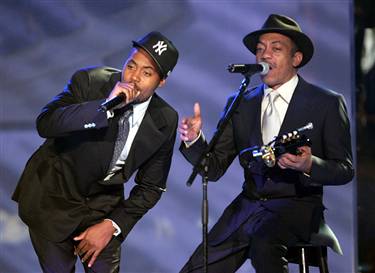

Big News > Newsweek > Olu Dara raps about son Nas
Olu Dara raps about son Nas
Hip-hop Poppa
Nas’s new single subverts the hip-hop fatherhood paradigm—with a little help from his dad, Olu Dara
WEB EXCLUSIVE
By Brian Braiker
Newsweek
Updated: 3:59 p.m. ET Nov. 16, 2004Nov. 16 - Rap megastar Nas has described his style as “bold, daring, brave and honest.” His double album “Street Prophet” won’t come out till later this month, but fans have already gotten a taste of his lyrical derring-do on “Bridging the Gap,” the record’s first single: “Yeah daddy,” he shouts out to his father, “love you, boy.”
advertisement
The song is a collaboration with—and mini-paean to—his old man, jazz and blues musician Olu Dara. “My pop told me be your own boss/keep integrity at every cost,” he rhymes. Dara returns the favor by singing “I told him as a youngster he’ll be the greatest man alive.” The song, aside from its hackneyed Muddy Waters sample, is fun, raucous and in a similar vein to Nas’s 2003 single “I Can” (“B-Boys and girls, listen up/You can be anything in the world, in God we trust/An architect, doctor, maybe an actress/But nothing comes easy/ it takes much practice”).
Dara, who plays cornet and sings on the new single, has worked with his son before, notably on Nas’s breakthrough classic “Illmatic.” A New York jazz fixture in the late 1970s and early ‘80s, Dara says he was constantly bringing Nas to shows and showing him around the studio. The two, he says, were inseparable and he never saw it as anything but natural. But, for better or worse, the tight father-son bond is an anomaly in rap, which—when it does broach the topic—portrays fathers as deadbeat baby-daddies.
Dara, whose own albums include the soulful roots gumbo of “In the World: From Natchez to New York” and “Neighborhoods,” recently spoke with NEWSWEEK’s Brian Braiker about the message behind his son’s new single, his own take on rap in general and what he thought of controversial comments made earlier this year by comedian Bill Cosby. Excerpts:
This isn’t the first time you guys have worked together.
I was on one song on his first album, “Illmatic.” I was on the song “Life is a Bitch.” He asked me to come and rap, but I didn’t want to be the oldest rapper in the world. So I opted to play a little on one song. The next time we played together was on my first album, where he does some spoken word. And on his album “God’s Son” I played some. We made music together when he was young in the house. So it’s like doing it the way we used to do it in the house—that’s how easy it feels.
Are you working on anything yourself?
When this settles down, I’ll go back into the studio.
You do some theater, too.
In a couple weeks I’m going down to George Mason University to put up a play with Diane McIntyre about the anniversary of Brown v. [Board of Education]. Usually I would be in it, but I don’t have time. I am going to go down there and compose the music and musically direct it. I’m busy working with my band too. We just left New Orleans.
Do you see this single as a message song or just a celebration of your own relationship?
Initially, I just thought about it as a relationship between father and son. It wasn’t anything unusual for me. But I’m finding out it’s kind of an anomaly to most people in the world. Why? I don’t know. Maybe fathers and sons are not as close as I thought they were. So maybe it is a wholesome message since people think it’s unusual.
It must be fun to do this with him.
We always did. He and I have never had a minor dispute. I may have had to chastise him when he was 7 years old. But our relationship has been very healthy throughout, from the beginning. In hindsight, I remember getting comments from the women in the neighborhood saying how special it was to see a man with his son walking around every day. I think that’s really when I started realizing that it’s an unusual sight to see. I find that with most men of all races it’s hard to see fathers and sons [together].
What’s your take on Bill Cosby’s comments about raising kids in the black community when he railed against “the young males who become fathers and [are] not held responsible, the young women having children and moving back in with their mothers and grandmothers?"
Well, he’s in the ivory tower. A lot of times you see wealthy people who escape the hard life of the ghetto, they become separated from that. He’s basically detached, which is why he can make those statements. He’s been away from that kind of thing for a long time. Only a detached person would have nerve enough to say anything like that. That’s just my own take.
Do you think the way you raised Nas encouraged him to do the positive songs like this and “I Can?”
That song [came out of] an overt conversation about 10 or 12 years ago with his grandmother, my mother, who told him to make sure that before he finished his career that he would make a song for kids. That’s the one thing he would have to do to really make a dent in the family, get appreciation from the family.
You’re a jazz and blues man. Do you listen to rap?
Oh sure, I knew a lot of the rappers during the embryonic stages of hip-hop in New York, Queens and places like that. I watched them get it rolling before it was popular. I love to dance, so rap attracted me first because of the way they use the music. I like the medium tempos they use. You listen to something like “Lean Back” by Fat Joe and if you dissect his song you hear European classical violins, you hear indigenous sounds in the back, you hear the blues beat. They actually mix four or five different genres on one song.
What about the harshness or violence of some of the more outré lyrics?
If you’re older, like me, you’ve heard it [before]. Those lyrics are not going to surprise you
So it doesn’t bother you to hear some of your son’s tougher lyrics when they come out of his own mouth?
Look, I’ve been to movies that are deeper than that. I can go and watch “Godfather” I, II and III and not only hear it but see it. I can see blood and guts, you know? It’s only something that gets people talking about it because it’s from the young black culture. One guy who interviewed me said “I don’t like gangsta rap; I don’t like what they’re saying.” And yet he was a fan of “Halloween” I, II and III. He liked Humphrey Bogart and James Cagney. He didn’t mind the scene in the Godfather when they messed up the man’s daughter-in-law. But people have a way of singling out hip-hop. One day I’m going to write something about the psychology of the criticism of hip-hop.
And you can vouch for how true-to-life the lyrics are that pertain to Nas’s childhood in songs like “Poppa was a Playa”—which is a warts-and-all portrait of you?
He portrays accurate things in his lyrics. If he speaks anything about me or his mother or anything like that, that stuff is right. It’s on. That’s it.
Hip-hop Poppa
Nas’s new single subverts the hip-hop fatherhood paradigm—with a little help from his dad, Olu Dara
WEB EXCLUSIVE
By Brian Braiker
Newsweek
Updated: 3:59 p.m. ET Nov. 16, 2004Nov. 16 - Rap megastar Nas has described his style as “bold, daring, brave and honest.” His double album “Street Prophet” won’t come out till later this month, but fans have already gotten a taste of his lyrical derring-do on “Bridging the Gap,” the record’s first single: “Yeah daddy,” he shouts out to his father, “love you, boy.”
advertisement
The song is a collaboration with—and mini-paean to—his old man, jazz and blues musician Olu Dara. “My pop told me be your own boss/keep integrity at every cost,” he rhymes. Dara returns the favor by singing “I told him as a youngster he’ll be the greatest man alive.” The song, aside from its hackneyed Muddy Waters sample, is fun, raucous and in a similar vein to Nas’s 2003 single “I Can” (“B-Boys and girls, listen up/You can be anything in the world, in God we trust/An architect, doctor, maybe an actress/But nothing comes easy/ it takes much practice”).
Dara, who plays cornet and sings on the new single, has worked with his son before, notably on Nas’s breakthrough classic “Illmatic.” A New York jazz fixture in the late 1970s and early ‘80s, Dara says he was constantly bringing Nas to shows and showing him around the studio. The two, he says, were inseparable and he never saw it as anything but natural. But, for better or worse, the tight father-son bond is an anomaly in rap, which—when it does broach the topic—portrays fathers as deadbeat baby-daddies.
Dara, whose own albums include the soulful roots gumbo of “In the World: From Natchez to New York” and “Neighborhoods,” recently spoke with NEWSWEEK’s Brian Braiker about the message behind his son’s new single, his own take on rap in general and what he thought of controversial comments made earlier this year by comedian Bill Cosby. Excerpts:
This isn’t the first time you guys have worked together.
I was on one song on his first album, “Illmatic.” I was on the song “Life is a Bitch.” He asked me to come and rap, but I didn’t want to be the oldest rapper in the world. So I opted to play a little on one song. The next time we played together was on my first album, where he does some spoken word. And on his album “God’s Son” I played some. We made music together when he was young in the house. So it’s like doing it the way we used to do it in the house—that’s how easy it feels.
Are you working on anything yourself?
When this settles down, I’ll go back into the studio.
You do some theater, too.
In a couple weeks I’m going down to George Mason University to put up a play with Diane McIntyre about the anniversary of Brown v. [Board of Education]. Usually I would be in it, but I don’t have time. I am going to go down there and compose the music and musically direct it. I’m busy working with my band too. We just left New Orleans.
Do you see this single as a message song or just a celebration of your own relationship?
Initially, I just thought about it as a relationship between father and son. It wasn’t anything unusual for me. But I’m finding out it’s kind of an anomaly to most people in the world. Why? I don’t know. Maybe fathers and sons are not as close as I thought they were. So maybe it is a wholesome message since people think it’s unusual.
It must be fun to do this with him.
We always did. He and I have never had a minor dispute. I may have had to chastise him when he was 7 years old. But our relationship has been very healthy throughout, from the beginning. In hindsight, I remember getting comments from the women in the neighborhood saying how special it was to see a man with his son walking around every day. I think that’s really when I started realizing that it’s an unusual sight to see. I find that with most men of all races it’s hard to see fathers and sons [together].
What’s your take on Bill Cosby’s comments about raising kids in the black community when he railed against “the young males who become fathers and [are] not held responsible, the young women having children and moving back in with their mothers and grandmothers?"
Well, he’s in the ivory tower. A lot of times you see wealthy people who escape the hard life of the ghetto, they become separated from that. He’s basically detached, which is why he can make those statements. He’s been away from that kind of thing for a long time. Only a detached person would have nerve enough to say anything like that. That’s just my own take.
Do you think the way you raised Nas encouraged him to do the positive songs like this and “I Can?”
That song [came out of] an overt conversation about 10 or 12 years ago with his grandmother, my mother, who told him to make sure that before he finished his career that he would make a song for kids. That’s the one thing he would have to do to really make a dent in the family, get appreciation from the family.
You’re a jazz and blues man. Do you listen to rap?
Oh sure, I knew a lot of the rappers during the embryonic stages of hip-hop in New York, Queens and places like that. I watched them get it rolling before it was popular. I love to dance, so rap attracted me first because of the way they use the music. I like the medium tempos they use. You listen to something like “Lean Back” by Fat Joe and if you dissect his song you hear European classical violins, you hear indigenous sounds in the back, you hear the blues beat. They actually mix four or five different genres on one song.
What about the harshness or violence of some of the more outré lyrics?
If you’re older, like me, you’ve heard it [before]. Those lyrics are not going to surprise you
So it doesn’t bother you to hear some of your son’s tougher lyrics when they come out of his own mouth?
Look, I’ve been to movies that are deeper than that. I can go and watch “Godfather” I, II and III and not only hear it but see it. I can see blood and guts, you know? It’s only something that gets people talking about it because it’s from the young black culture. One guy who interviewed me said “I don’t like gangsta rap; I don’t like what they’re saying.” And yet he was a fan of “Halloween” I, II and III. He liked Humphrey Bogart and James Cagney. He didn’t mind the scene in the Godfather when they messed up the man’s daughter-in-law. But people have a way of singling out hip-hop. One day I’m going to write something about the psychology of the criticism of hip-hop.
And you can vouch for how true-to-life the lyrics are that pertain to Nas’s childhood in songs like “Poppa was a Playa”—which is a warts-and-all portrait of you?
He portrays accurate things in his lyrics. If he speaks anything about me or his mother or anything like that, that stuff is right. It’s on. That’s it.
Saturday, November 13, 2004
JAZZFM: GET IT ON
JAZZFM: GET IT ON: "8.10.04 :: Branford Marsalis to present new TV documentary
Next month sees the airing of a new documentary, It's a Jazz Thing, presented by saxophonist Branford Marsalis on Channel 4 on 13 November at 7.30pm. The 90-minute documentary was made by production company Somethin' Else and is directed by Christopher Walker. The documentary follows Marsalis' travels around Europe and the US as he meets leading contemporary figures in jazz including Herbie Hancock, Michael Brecker, John McLaughlin and Dave Douglas, Bill Frisell, Medeski Martin and Wood, Tim Berne, Evan Parker, David S Ware, Ken Vandermark and the Art Ensemble of Chicago. Commenting on the project, Jez Nelson, the executive producer on the show, says: 'There hasn't been a major, terrestrial jazz TV show for many years ? so this is really exciting for us. Branford is that rare thing ? a great musician who's also a superb and engaging presenter ? this should be a fantastic journey!' "
Next month sees the airing of a new documentary, It's a Jazz Thing, presented by saxophonist Branford Marsalis on Channel 4 on 13 November at 7.30pm. The 90-minute documentary was made by production company Somethin' Else and is directed by Christopher Walker. The documentary follows Marsalis' travels around Europe and the US as he meets leading contemporary figures in jazz including Herbie Hancock, Michael Brecker, John McLaughlin and Dave Douglas, Bill Frisell, Medeski Martin and Wood, Tim Berne, Evan Parker, David S Ware, Ken Vandermark and the Art Ensemble of Chicago. Commenting on the project, Jez Nelson, the executive producer on the show, says: 'There hasn't been a major, terrestrial jazz TV show for many years ? so this is really exciting for us. Branford is that rare thing ? a great musician who's also a superb and engaging presenter ? this should be a fantastic journey!' "
Thursday, November 11, 2004
Pete Jolly, jazz pianist
Pete Jolly, jazz pianistPete Jolly, jazz pianist and accordion player known for his disciplined work as a studio musician as well as his improvisational skills in live performances, died Saturday. He was 72.
Jolly, whose composition "Little Bird" was nominated for a Grammy in 1963, died in Pasadena, Calif., of complications of bone marrow cancer and an irregular heartbeat.
The Pete Jolly Trio, which for more than 35 years included bassist Chuck Berghofer and drummer Nick Martinis, performed in Southern California clubs until Jolly's hospitalization in August.
Born Peter A. Ceragioli Jr. in New Haven, Conn., he began studying accordion with his father at age 3 and at 7 appeared on the nationwide CBS radio program "Hobby Lobby." Billed as the "Boy Wonder Accordionist," he was mistakenly introduced by the announcer as "Pete Jolly" - and liked the error so much he adopted it as his professional name.
In 1954, playing with Barney Kessel and the Shorty Rogers Giants, he became a fixture in the softer, cooler West Coast jazz movement. In 1955, he recorded his first trio album, "Jolly Jumps In." His talent on piano, organ and accordion bolstered memorable music for many television shows and films, including "Butch Cassidy and the Sundance Kid."
Jolly, whose composition "Little Bird" was nominated for a Grammy in 1963, died in Pasadena, Calif., of complications of bone marrow cancer and an irregular heartbeat.
The Pete Jolly Trio, which for more than 35 years included bassist Chuck Berghofer and drummer Nick Martinis, performed in Southern California clubs until Jolly's hospitalization in August.
Born Peter A. Ceragioli Jr. in New Haven, Conn., he began studying accordion with his father at age 3 and at 7 appeared on the nationwide CBS radio program "Hobby Lobby." Billed as the "Boy Wonder Accordionist," he was mistakenly introduced by the announcer as "Pete Jolly" - and liked the error so much he adopted it as his professional name.
In 1954, playing with Barney Kessel and the Shorty Rogers Giants, he became a fixture in the softer, cooler West Coast jazz movement. In 1955, he recorded his first trio album, "Jolly Jumps In." His talent on piano, organ and accordion bolstered memorable music for many television shows and films, including "Butch Cassidy and the Sundance Kid."
Tuesday, October 19, 2004
The New York Times > Arts > Music > Jazz Review: Soaking Up the Spaces at a New Jazz Center
The New York Times > Arts > Music > Jazz Review: Soaking Up the Spaces at a New Jazz Center: "Soaking Up the Spaces at a New Jazz Center
Soaking Up the Spaces at a New Jazz Center
By BEN RATLIFF
Some basic impressions of Jazz at Lincoln Center's new space, which opened last night: It is a sophisticated, cosmopolitan, fairly expensive-feeling experience; it is flexible and alive.
Jazz has so many different connotations for different people. But at least some part of this three-theater complex, taking up the fifth and sixth floors of the Time Warner Center on Columbus Circle, could ring the bells of recognition of someone who had never been to a jazz performance before and only possessed the received wisdom of photographs and album covers: yes, this seems right; this is jazz. And it contains enough attention to detail to impress those who have spent the better part of their lives hearing it, too.
Last night's invitation-only opening shows, broadcast live on PBS, are not going to remain in the imagination as any kind of normal night: it was an evening for board members, donors, critics, musicians and those involved with the construction of the hall. And so it is too early to tell what it will feel like as the theaters begin their season-long schedule, with the bigger concerts in the 1,200-seat Rose Theater and the 550-seat Allen Room overlapping with shows in the 140-seat Dizzy's Club Coca-Cola.
The Rose Theater, especially, was hard to get a grip on in a first encounter. It was set up as a theater-in-the-round, which won't always be the case, and for the sake of television, the ceiling lights were torching the house. And there's no way that all the different configurations of music, with guests coming and going for every song (among them Abbey Lincoln, Tony Bennett, Mark O'Connor, Giovanni Hidalgo, Cyro Baptista and Wynton Marsalis's musical family) could have been sound-checked to their best advantage. The music itself worked as a statement of purpose: a version of the organization's desired eclecticism in miniature, with a blues, a New Orleans tune ("Dippermouth Blues"), an orchestration of forró music from Northeastern Brazil, ballads, Coltrane, Basie and so on.
But at certain moments - as when the Lincoln Center Jazz Orchestra suddenly cut away from the tenor saxophonist Joe Lovano, who played a few unaccompanied bars during his solo in "Body and Soul" - you could hear some of the richness we have in store. His saxophone sound had tremendous depth and resonance, a more intimate sound than we have become used to at Avery Fisher Hall and Alice Tully Hall, where Jazz at Lincoln Center's concerts were held since the mid-1980's.
For the basic potential of hearing jazz in a theater, it might not get much better than the Allen Room. The Lincoln Center Afro-Latin Jazz Orchestra, eighteen musicians on an oval bandstand, set up there for three sets, through more than three hours of music, and they played their repertory, from Machito to new works like Tom Harrell's "Humility." The room is exceptionally well-balanced. With only light amplification (and the idea is that some performances in the future will have none), the music was detailed. Pablo Calogero's baritone saxophone came through as well as Milton Cardona's conga drums. And the high windows overlooking Central Park South give another staggering dimension: toward the top of the glass, you see the reflection of car headlights playing on the windows.
From the smaller windows behind the bandstand at Dizzy's Club Coca-Cola, you see half Trump International Hotel and Tower, half Central Park treetops. Bill Charlap played three sets there, a small space with a variety of guests sitting in, including Wynton Marsalis, who played whinnies and melodic inventions through "Just Friends," in front of Clark Terry, stopping by to check out the new place.
Adjustments, acoustic and otherwise, are made to nearly all theaters after they open. I've seen some clubs proceed for years in a fairly raw or problematic state. But already these rooms impressively translate into bricks-and-mortar reality how the planners of Jazz at Lincoln Center have raised the stakes for jazz to become visible and powerful in the city. In their thesis, jazz isn't secluded; it's right out there, exposed and imperious, peering over the street.
Soaking Up the Spaces at a New Jazz Center
By BEN RATLIFF
Some basic impressions of Jazz at Lincoln Center's new space, which opened last night: It is a sophisticated, cosmopolitan, fairly expensive-feeling experience; it is flexible and alive.
Jazz has so many different connotations for different people. But at least some part of this three-theater complex, taking up the fifth and sixth floors of the Time Warner Center on Columbus Circle, could ring the bells of recognition of someone who had never been to a jazz performance before and only possessed the received wisdom of photographs and album covers: yes, this seems right; this is jazz. And it contains enough attention to detail to impress those who have spent the better part of their lives hearing it, too.
Last night's invitation-only opening shows, broadcast live on PBS, are not going to remain in the imagination as any kind of normal night: it was an evening for board members, donors, critics, musicians and those involved with the construction of the hall. And so it is too early to tell what it will feel like as the theaters begin their season-long schedule, with the bigger concerts in the 1,200-seat Rose Theater and the 550-seat Allen Room overlapping with shows in the 140-seat Dizzy's Club Coca-Cola.
The Rose Theater, especially, was hard to get a grip on in a first encounter. It was set up as a theater-in-the-round, which won't always be the case, and for the sake of television, the ceiling lights were torching the house. And there's no way that all the different configurations of music, with guests coming and going for every song (among them Abbey Lincoln, Tony Bennett, Mark O'Connor, Giovanni Hidalgo, Cyro Baptista and Wynton Marsalis's musical family) could have been sound-checked to their best advantage. The music itself worked as a statement of purpose: a version of the organization's desired eclecticism in miniature, with a blues, a New Orleans tune ("Dippermouth Blues"), an orchestration of forró music from Northeastern Brazil, ballads, Coltrane, Basie and so on.
But at certain moments - as when the Lincoln Center Jazz Orchestra suddenly cut away from the tenor saxophonist Joe Lovano, who played a few unaccompanied bars during his solo in "Body and Soul" - you could hear some of the richness we have in store. His saxophone sound had tremendous depth and resonance, a more intimate sound than we have become used to at Avery Fisher Hall and Alice Tully Hall, where Jazz at Lincoln Center's concerts were held since the mid-1980's.
For the basic potential of hearing jazz in a theater, it might not get much better than the Allen Room. The Lincoln Center Afro-Latin Jazz Orchestra, eighteen musicians on an oval bandstand, set up there for three sets, through more than three hours of music, and they played their repertory, from Machito to new works like Tom Harrell's "Humility." The room is exceptionally well-balanced. With only light amplification (and the idea is that some performances in the future will have none), the music was detailed. Pablo Calogero's baritone saxophone came through as well as Milton Cardona's conga drums. And the high windows overlooking Central Park South give another staggering dimension: toward the top of the glass, you see the reflection of car headlights playing on the windows.
From the smaller windows behind the bandstand at Dizzy's Club Coca-Cola, you see half Trump International Hotel and Tower, half Central Park treetops. Bill Charlap played three sets there, a small space with a variety of guests sitting in, including Wynton Marsalis, who played whinnies and melodic inventions through "Just Friends," in front of Clark Terry, stopping by to check out the new place.
Adjustments, acoustic and otherwise, are made to nearly all theaters after they open. I've seen some clubs proceed for years in a fairly raw or problematic state. But already these rooms impressively translate into bricks-and-mortar reality how the planners of Jazz at Lincoln Center have raised the stakes for jazz to become visible and powerful in the city. In their thesis, jazz isn't secluded; it's right out there, exposed and imperious, peering over the street.
The New York Times > AP > Arts > New Home of Jazz Opens at Lincoln Center
The New York Times > AP > Arts > New Home of Jazz Opens at Lincoln Center: "October 18, 2004
October 18, 2004
New Home of Jazz Opens at Lincoln Center
By THE ASSOCIATED PRESS
Filed at 8:09 p.m. ET
NEW YORK (AP) -- Led by Wynton Marsalis, a swinging group of musicians belted out ``When the Saints Go Marching In'' as they strutted down Broadway to kick off the opening of the new home of Jazz at Lincoln Center.
Office workers clapped from open windows, and other onlookers tapped their feet. Some even started to jitterbug on the street as excitement of the traditional New Orleans-style parade of saxophones, trumpets, tubas and trombones filled the brisk air.
``I just had to be here for this,'' said Igor Butman, a sax player from Moscow. ``This is the first real jazz center in the world.''
It was an event that Kiyoshi Koyama, a jazz music writer from Tokyo, didn't want to miss either.
``This is one of the major events in the history of jazz,'' Koyama said.
The $128 million Frederick P. Rose Hall features three concert and performance spaces, including Dizzy's Club Coca-Cola, a 140-seat jazz club; an education center that includes a combined rehearsal hall and recording studio large enough to house a symphony orchestra; two classrooms and a jazz Hall of Fame.
The 1,200-seat Rose Theater is designed for jazz but also will accommodate opera, ballet, theater and orchestra performances. The Allen Room is a 500-seat performance space reminiscent of a Greek amphitheater that provides an airy elegant setting with spectacular views through a 50-foot-by-90-foot glass wall overlooking Central Park.
Derek Gordon, who took over as executive director of Jazz at Lincoln Center last summer after 12 years at the Kennedy Center in Washington, where he created its jazz program, said the new center was ``dedicated to America's classical music, perhaps the only uniquely American art form.''
``This represents a higher level of acknowledgment, a new embracing of jazz as an art form,'' he said.
The opening festival continues through Nov. 5.
Marsalis, JALC'S artistic director who also was celebrating his 43rd birthday, said jazz giants such as Louis Armstrong and Dizzy Gillespie would be proud of the new center.
``They would probably start crying,'' said Marsalis, the first jazz artist to be awarded the Pulitzer Prize in music. ``They gave a lot and fought hard to earn the recognition for jazz in our culture. We respect them and honor them with this center.''
------
On the Net:
http://www.jazzatlincolncenter.org/
October 18, 2004
New Home of Jazz Opens at Lincoln Center
By THE ASSOCIATED PRESS
Filed at 8:09 p.m. ET
NEW YORK (AP) -- Led by Wynton Marsalis, a swinging group of musicians belted out ``When the Saints Go Marching In'' as they strutted down Broadway to kick off the opening of the new home of Jazz at Lincoln Center.
Office workers clapped from open windows, and other onlookers tapped their feet. Some even started to jitterbug on the street as excitement of the traditional New Orleans-style parade of saxophones, trumpets, tubas and trombones filled the brisk air.
``I just had to be here for this,'' said Igor Butman, a sax player from Moscow. ``This is the first real jazz center in the world.''
It was an event that Kiyoshi Koyama, a jazz music writer from Tokyo, didn't want to miss either.
``This is one of the major events in the history of jazz,'' Koyama said.
The $128 million Frederick P. Rose Hall features three concert and performance spaces, including Dizzy's Club Coca-Cola, a 140-seat jazz club; an education center that includes a combined rehearsal hall and recording studio large enough to house a symphony orchestra; two classrooms and a jazz Hall of Fame.
The 1,200-seat Rose Theater is designed for jazz but also will accommodate opera, ballet, theater and orchestra performances. The Allen Room is a 500-seat performance space reminiscent of a Greek amphitheater that provides an airy elegant setting with spectacular views through a 50-foot-by-90-foot glass wall overlooking Central Park.
Derek Gordon, who took over as executive director of Jazz at Lincoln Center last summer after 12 years at the Kennedy Center in Washington, where he created its jazz program, said the new center was ``dedicated to America's classical music, perhaps the only uniquely American art form.''
``This represents a higher level of acknowledgment, a new embracing of jazz as an art form,'' he said.
The opening festival continues through Nov. 5.
Marsalis, JALC'S artistic director who also was celebrating his 43rd birthday, said jazz giants such as Louis Armstrong and Dizzy Gillespie would be proud of the new center.
``They would probably start crying,'' said Marsalis, the first jazz artist to be awarded the Pulitzer Prize in music. ``They gave a lot and fought hard to earn the recognition for jazz in our culture. We respect them and honor them with this center.''
------
On the Net:
http://www.jazzatlincolncenter.org/
MSNBC > Reuters > Jazz finds a new home in a New York skyscraper
NEW YORK, Oct. 19th 2004 Perched above a shopping mall in a skyscraper at the heart of corporate America, the new home of New York's leading jazz orchestra is a long way from the smoky basements and soulful southern cities of the past.
''Welcome to the house of swing'' -- with those words Wynton Marsalis, of the legendary jazz family, opened the new headquarters of Jazz at Lincoln Center Monday night with a gala performance in an auditorium designed specially for the acoustics of jazz.
Earlier he led a New Orleans-style musical parade down Broadway, kicking off the inaugural festival at the three venues housed in the Time Warner Center that towers over the southwest corner of Central Park.
Public performances start Thursday with the Dizzy Gillespie Festival in the smallest and most intimate of the venues -- Dizzy's Club Coca Cola, whose curved walls, low lighting and tables give the atmosphere of a nightclub.
The Frederick P. Rose Hall complex, sitting above the clothes stores and cafes in the sleek new glass towers, was built at a cost of $128 million and includes recording studios and classrooms for lectures and educational events.
''We've built a house that really swings with the way jazz works, the way jazz feels, and most of all, the way jazz sounds,'' Marsalis said before the gala opening featuring names such as Tony Bennett and Abbey Lincoln, as well as another four members of the Marsalis clan.
Jazz has always been a family affair, and the new center aims to start them young. Children as young as two can join the singing and dancing in the WeBop! educational program.
The main 1,200-seat Rose Theater is designed for jazz but will also be used for opera, ballet, theater and orchestra performances. The most spectacular of the venues is the Allen Room, a 500-seat auditorium with dramatic views through a 50-foot-by-90-foot (15-meter by 27-meter) glass wall overlooking Central Park and the shimmering lights of the city.
Initial reactions were good. ''Sophisticated, cosmopolitan ... flexible and alive,'' was the verdict of The New York Times.
Artistic director Marsalis said it's all about the music. ''Either you can play or you can't play. That's the test.''
''Welcome to the house of swing'' -- with those words Wynton Marsalis, of the legendary jazz family, opened the new headquarters of Jazz at Lincoln Center Monday night with a gala performance in an auditorium designed specially for the acoustics of jazz.
Earlier he led a New Orleans-style musical parade down Broadway, kicking off the inaugural festival at the three venues housed in the Time Warner Center that towers over the southwest corner of Central Park.
Public performances start Thursday with the Dizzy Gillespie Festival in the smallest and most intimate of the venues -- Dizzy's Club Coca Cola, whose curved walls, low lighting and tables give the atmosphere of a nightclub.
The Frederick P. Rose Hall complex, sitting above the clothes stores and cafes in the sleek new glass towers, was built at a cost of $128 million and includes recording studios and classrooms for lectures and educational events.
''We've built a house that really swings with the way jazz works, the way jazz feels, and most of all, the way jazz sounds,'' Marsalis said before the gala opening featuring names such as Tony Bennett and Abbey Lincoln, as well as another four members of the Marsalis clan.
Jazz has always been a family affair, and the new center aims to start them young. Children as young as two can join the singing and dancing in the WeBop! educational program.
The main 1,200-seat Rose Theater is designed for jazz but will also be used for opera, ballet, theater and orchestra performances. The most spectacular of the venues is the Allen Room, a 500-seat auditorium with dramatic views through a 50-foot-by-90-foot (15-meter by 27-meter) glass wall overlooking Central Park and the shimmering lights of the city.
Initial reactions were good. ''Sophisticated, cosmopolitan ... flexible and alive,'' was the verdict of The New York Times.
Artistic director Marsalis said it's all about the music. ''Either you can play or you can't play. That's the test.''
Wednesday, October 13, 2004
Noted Blogs.Com > Wynton Marsalis on 60 Minutes today on CBS
Wynton Marsalis on 60 Minutes today on CBS - Wednesday, October 13th. You could say that Wynton Marsalis is at a crossroads. Wynton Marsalis about to turn 43, he just changed record labels and he and his Jazz at Lincoln Center Orchestra are about to move from Alice Tully Hall, where they have performed for almost two decades, to a new, 1,200 seat room that is the first concert hall built specifically for Jazz. And while some critics have said that Jazz itself is at a crossroads, struggling to survive, Wynton Marsalis disagrees. To hear why, watch Ed Bradley?s report this week on 60 Minutes Wednesday (CBS, October 13, 8PM EST/PT).
A fixture on the American cultural scene, Wynton Marsalis has brought Jazz back to centre stage in the U.S.A. through his relentless work ethic and drive. He is also a distinguished classical performer whose many recordings for Sony Classical have been an important aspect of his career since it began. In 1997 he became the first Jazz musician to win the Pulitzer Prize in music, for his epic oratorio on the subject of slavery, "Blood on the Fields". As a composer and performer, Wynton Marsalis is also represented on a quartet of Sony Classical releases, "At the Octoroon Balls: String Quartet No. 1," "A Fiddler's Tale," "Reel Time" and "Sweet Release" and "Ghost Story: Two More Ballets" by Wynton Marsalis. All are volumes of an eight-CD series, titled "Swinging Into The 21st", that is an unprecedented set of albums released recently featuring a remarkable scope of original compositions and standards, from Jazz to Classical to Ballet, by composers from Jelly Roll Morton to Stra!
vinsky to Monk, in addition to Wynton Marsalis.
Posted by Jean-Luc RAYMOND at 06:37 PM in In the media | Permalink
From:http://noted.blogs.com/westcoastmusic/2004/10/wynton_marsalis.html
A fixture on the American cultural scene, Wynton Marsalis has brought Jazz back to centre stage in the U.S.A. through his relentless work ethic and drive. He is also a distinguished classical performer whose many recordings for Sony Classical have been an important aspect of his career since it began. In 1997 he became the first Jazz musician to win the Pulitzer Prize in music, for his epic oratorio on the subject of slavery, "Blood on the Fields". As a composer and performer, Wynton Marsalis is also represented on a quartet of Sony Classical releases, "At the Octoroon Balls: String Quartet No. 1," "A Fiddler's Tale," "Reel Time" and "Sweet Release" and "Ghost Story: Two More Ballets" by Wynton Marsalis. All are volumes of an eight-CD series, titled "Swinging Into The 21st", that is an unprecedented set of albums released recently featuring a remarkable scope of original compositions and standards, from Jazz to Classical to Ballet, by composers from Jelly Roll Morton to Stra!
vinsky to Monk, in addition to Wynton Marsalis.
Posted by Jean-Luc RAYMOND at 06:37 PM in In the media | Permalink
From:http://noted.blogs.com/westcoastmusic/2004/10/wynton_marsalis.html
YAHOO NEWS> Entertainment - AP Gossip/Celebrity Charlie Parker's Remains May Be Moved
Wed Oct 13, 3:09 PM ET
Entertainment - AP Gossip/Celebrity
KANSAS CITY, Mo. - The American Jazz Museum Board is considering moving jazz musician Charlie Parker's remains to a new grave.
The board voted Tuesday to explore the idea of moving Parker's remains to the 18th and Vine District in Kansas City. The vote was prompted by a recent trash dumping at Lincoln Cemetery, where Parker is buried.
The board favors moving Parker's remains to a mausoleum in a sculpture of Parker at Charlie Parker Memorial Plaza, near the jazz museum.
"It would be good to move it (the grave) from an area where no one can find it to down here where ... people can come and pay their respects," said board member Mike White.
Before any final decision is made, the board will research the legal requirements and costs of such a move.
From: http://story.news.yahoo.com/news?tmpl=story2&u=/ap/20041013/ap_en_ce/people_charlie_parker
On the Net:
http://www .americanjazzmuseum.com
http://www.cmgww.com /music/parker
Entertainment - AP Gossip/Celebrity
KANSAS CITY, Mo. - The American Jazz Museum Board is considering moving jazz musician Charlie Parker's remains to a new grave.
The board voted Tuesday to explore the idea of moving Parker's remains to the 18th and Vine District in Kansas City. The vote was prompted by a recent trash dumping at Lincoln Cemetery, where Parker is buried.
The board favors moving Parker's remains to a mausoleum in a sculpture of Parker at Charlie Parker Memorial Plaza, near the jazz museum.
"It would be good to move it (the grave) from an area where no one can find it to down here where ... people can come and pay their respects," said board member Mike White.
Before any final decision is made, the board will research the legal requirements and costs of such a move.
From: http://story.news.yahoo.com/news?tmpl=story2&u=/ap/20041013/ap_en_ce/people_charlie_parker
On the Net:
http://www .americanjazzmuseum.com
http://www.cmgww.com /music/parker
Sunday, October 03, 2004
Trademark Blog > CECIL McBEE: Did Trap Sales Create Personal Jurisdiction?
Friday, October 01, 2004
Sometime after the jazz musician Cecil McBee played in Japan for the first time, someone opened a CECIL McBEE clothing store there and now it's a successful chain. McBee has sued in Japan under a theory of right of personality, with mixed success. A front page article in today's Wall Street Journal on the on-going dispute indicates (without comment) that McBee's US lawyers had agents order clothes from Japan to be shipped here. McBee then used those sales to allege personal jurisdiction and sued the Japanese chain store here. Hmmmm. There are cases that have rejected this ploy, stating that a plaintiff may not manufacture personal jurisdiction over a defendant. See, e.g. Maritz v. Cybergold (discussed in this journal article).
iBusinessLaw.info discussed the District Court case here and Perkins Coie discussed it here. It is not clear whether the three sales to Maine referred to in the case are the 'trap' sales referred to in the article.
From: http://trademark.blog.us/blog/2004/10/01.html#a1398
Sometime after the jazz musician Cecil McBee played in Japan for the first time, someone opened a CECIL McBEE clothing store there and now it's a successful chain. McBee has sued in Japan under a theory of right of personality, with mixed success. A front page article in today's Wall Street Journal on the on-going dispute indicates (without comment) that McBee's US lawyers had agents order clothes from Japan to be shipped here. McBee then used those sales to allege personal jurisdiction and sued the Japanese chain store here. Hmmmm. There are cases that have rejected this ploy, stating that a plaintiff may not manufacture personal jurisdiction over a defendant. See, e.g. Maritz v. Cybergold (discussed in this journal article).
iBusinessLaw.info discussed the District Court case here and Perkins Coie discussed it here. It is not clear whether the three sales to Maine referred to in the case are the 'trap' sales referred to in the article.
From: http://trademark.blog.us/blog/2004/10/01.html#a1398
Friday, October 01, 2004
INDB.Com > Stars Pay Tribute to Ray Charles
A host of musical stars paid tribute to the late Ray Charles at a special concert in California Wednesday night. Artists including Stevie Wonder and Michael McDonald performed the blues singer's hits at the tribute show hosted by legendary comedian Bill Cosby. Cosby quipped to the audience which included Quincy Jones and Travis Tritt that Charles, "lived more lives than any 900 hundred of you." He also shared some of his memories of the star, including an occasion when the blind musician appeared at a jazz festival backed by an all white band. Cosby said, "I said to Ray, 'Your band is all white'. He said, 'That's funny. They don't sound white'." Charles passed away aged 73 when his liver failed earlier this year. All proceeds from the tribute concert will go to the Morehouse College Centre in Atlanta, to which Charles donated $2 million during his lifetime.
From: http://www.imdb.com/news/wenn/
From: http://www.imdb.com/news/wenn/
Subscribe to:
Posts (Atom)