Contact Me By Email

Jackie McLean

John H. Armwood Jazz History Lecture Nashville's Cheekwood Arts Center 1989

Showing posts with label Sonny Rollins. Show all posts

Tuesday, October 05, 2010

The Associated Press: Rollins at 80 still wows loyal jazz fans in Japan

Outdoor portrait of Sonny Rollins, american ja...Image via WikipediaThe Associated Press: Rollins at 80 still wows loyal jazz fans in Japan

TOKYO — Tenor saxophonist Sonny Rollins — one of the last surviving legends of the golden era of jazz — has just turned 80. His hair is a burst of white, and he staggers a bit when he walks on stage.
But when he plays, he still sounds like a 20-year-old, and his Japanese fans can't get enough.
Rollins is back this week on an 80th birthday tour in this nation long known for its love of jazz.
It's also a place where Rollins feels at home. Since 1963, when he first visited Japan, Rollins has studied Buddhism, yoga and meditation, and frequents the temples and bamboo forests of the ancient capital of Kyoto.
"Maybe I was Japanese in my past life," he told The Associated Press in a telephone interview from his home in Germantown, New York, ahead of his trip.
Rollins, who turned 80 on Sept. 7, has visited Japan more than 20 times, almost always playing to sellout crowds.
Each time, he brings the unmistakable power of his legacy, which includes collaborations with some of the biggest names in jazz — Max Roach, John Coltrane, Miles Davis and Thelonious Monk.
The crowd at JCB Hall in Tokyo on Monday clapped adoringly at his solos and gave him a long standing ovation after his 1 1/2-hour performance. He has three other concerts in Japan through Saturday.
"He was gorgeous," said schoolteacher Shoko Tateishi, who has heard Rollins three times, as well as Chet Baker and Ron Carter. "You didn't sense his age a bit."
Throughout his trademark piano-less performance, with Bob Cranshaw on bass, Russell Malone on guitar, Kobie Watkins on drums and Sammy Figueroa on percussion, Rollins' sound was full and energetic — befitting his reputation as the "saxophone colossus."

Saturday, September 25, 2010

The Root Interview: Roy Haynes on the Fountain of Youth

JAZZ: Roy Haynes - Carnegie Hall Concert 2007 #2Image by Professor Bop via FlickrThe Root Interview: Roy Haynes on the Fountain of Youth
The elder grandmaster of drums Roy Haynes talks with The Root about his upcoming season-opening concert for Jazz at Lincoln Center, his roll call of influences and why his style remains in the pocket.
Roy Haynes percolating on drums is like Ali dancing on the tips of his toes, jabbin', snapping heads back, which is why they call him "Snap Crackle," for the way Haynes pops the pulse, the groove. He doesn't just keep time rudimentally -- he plays with time, listens oh so closely to his younger band mates and responds with empathy. Whenever you see him, he's always clean, dressed to the nines; in fact, back in the 1960s he was one of Esquire magazine's best-dressed men. He has a taste for vintage cars, but it's his tasty drumming style that really sets him apart and through which he's made his mark.
In the first several decades of his career, Haynes on the regular played with the icons of jazz: Pops, Prez, Bird, Diz, Monk, Miles, Mary Lou, Getz, Coltrane, Billie, Sarah, Ella, to name a bunch. Nowadays, he's a great-grandfather whose aptly named Fountain of Youth Band travels the world summoning wonder. Very recently, Haynes made an impromptu appearance at Sonny Rollins' 80th-birthday concert and threw down the gauntlet of pleasure with Rollins, Christian McBride and free-jazz pioneer Ornette Coleman.

Thursday, September 02, 2010

Sonny Rollins Takes a Ride Uptown - WSJ.com

Sonny RollinsImage via WikipediaSonny Rollins Takes a Ride Uptown - WSJ.com
Driving up to Harlem a few weeks ago, Sonny Rollins was being hard on himself. "The last time I performed at the Beacon Theater 15 years ago, I wasn't happy with how I played," he said, looking out the passenger-seat window. "I'm excited to get a chance to redeem myself. After all, it's my birthday concert, right?"
Saxophone icon and Harlem native Sonny Rollins will celebrate his 80th birthday with a Sept. 10 concert at the Beacon Theatre.
Indeed it is. Mr. Rollins turns 80 on Sept. 7, and will mark the occasion with a performance at the Beacon Theater on Sept. 10. "Sonny Rollins@80" will include guitarist Jim Hall, trumpeter Roy Hargrove, bassist Christian McBride and other special guests.
Given the pending milestones, I had suggested to Mr. Rollins that we revisit the Harlem of his youth from the comfort of a Lincoln Town Car. The point was to see the turf that helped shape him as an artist. He agreed.
Mr. Rollins remains one of the best-known and most influential jazz musicians performing today. He began his recording career in 1949, and during the 1950s developed a new introspective, expressionistic style on the saxophone that changed the landscape of jazz.
"Oh wow, I was born there, in my grandmother's house," Mr. Rollins said as the car stopped at 121 W. 137th St. The address now is an empty lot—the space occupied by a small park. "Well, at least there's a garden there. My sister told me the Sunday I was born, the bells in the two nearby churches were ringing."
During the 1930s, Mr. Rollins spent many afternoons at the nearby Odeon (on 145th Street) and Roosevelt (Adam Clayton Powell Blvd.) movie theaters, watching Westerns. "The screen cowboys taught me about fairness, justice and improvising when you're alone," he said, laughing.
As the car turned right on Lenox Avenue, Mr. Rollins looked back searching for P.S. 89, his old grade school at 135th Street. But it's gone, too. "At the Elks Rendezvous Lounge across from the school," he recalled, "I used to stare at Louis Jordan's photo outside, looking at his shiny new Zephyr alto saxophone. He was a big inspiration."
Heading north to Sugar Hill, where his family moved in 1939, Mr. Rollins talked about his parents: "My father was a stern, disciplined guy who was a chief petty officer at the U.S. Naval Academy in Annapolis. I'd take the train down to visit him in the summers, and he'd put me to work. My mother was an emotional, sensitive person who exposed us to the arts early."

Monday, August 30, 2010

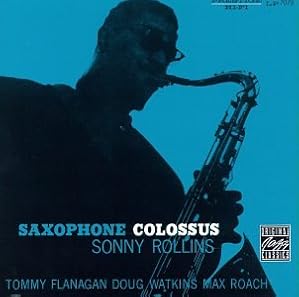
FT.com / Books / Non-Fiction - Saxophone Colossus

Cover of "Saxophone Colossus"Cover of Saxophone ColossusFT.com / Books / Non-Fiction - Saxophone Colossus
Saxophone Colossus: A Portrait of Sonny Rollins, by Bob Blumenthal and John Abbott, Abrams RRP£22.50, 160 pages
These days the great American saxophonist Sonny Rollins will take only those jobs “that put myself, and jazz, in high esteem”. It’s a statement that reflects the distance the New York-born musician has travelled from the circumstances in which he found himself when he recorded the now legendary album Saxophone Colossus in 1956.
Bob Blumenthal and John Abbott’s text-and-photograph collaboration takes that triumphant early album in order to track Rollins’s tumultuous journey from youthful miscreant to venerated statesman – via punishing routines, titanic gigs, heroin addiction and self-imposed exile from performance.

Tuesday, August 17, 2010

SentinelSource.com |COOL JAZZ

SentinelSource.com |COOL JAZZ
Composer, musician Sonny Rollins honored
By Casey Farrar
Sentinel Staff
Published: Monday, August 16, 2010
PETERBOROUGH — An aura of cool hung in the air Sunday as The MacDowell Colony honored jazz composer and tenor saxophonist Sonny Rollins during its annual Medal Day celebration.
Rollins, 79, was the 51st artist to be awarded the medal and the first jazz composer to be recognized by the colony for “an outstanding contribution to the arts,” according to the colony’s website.
Rollins told an audience of about 1,600 people he was humbled by the honor.
“Every time people tell me I help make their lives a little better, why then I realize that I’ve come full circle,” he said. “I love (music) for myself, but if I can give something to somebody else then that’s perfect.”
The MacDowell Colony was founded in 1907 by composer Edward MacDowell and his wife, Marian. Each year, artists are selected from all over the country and world to stay for free at one of the colony’s 32 studios as an artist-in-residence.

Friday, August 13, 2010

Jazz Great Sonny Rollins to Receive MacDowell Medal | New Hampshire Public Radio

Sonny Rollins + 3Image via WikipediaJazz Great Sonny Rollins to Receive MacDowell Medal | New Hampshire Public Radio
Jazz musician and composer Sonny Rollins will be in New Hampshire this weekend. The tenor saxophonist is receiving the MacDowell Medal, awarded annually at the MacDowell Artist’s Colony in Peterborough. Rollins is a jazz pioneer with a career that reaches all the way back to the 1940s. Word of Mouth producer Avishay Artsy spoke with Rollins and others about his musical legacy.
Sonny Rollins received his first saxophone when he was thirteen years old. Now nearly eighty, he shows no signs of slowing down.
                 More...

Sunday, August 08, 2010

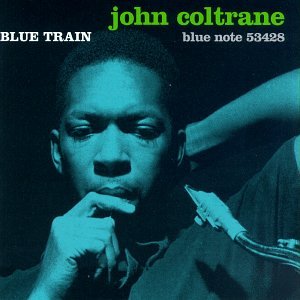
Music - Vinyl Revival - Reissues From Blue Note’s Heyday - NYTimes.com


Cover of "Blue Train"Cover of Blue Train


                                                                          Music - Vinyl Revival - Reissues From Blue Note’s Heyday - NYTimes.com


THERE are two kinds of obsessive record collectors: those who buy original pressings of rare old LPs because they’re rare and old, and those who buy them because they sound good.

In the jazz world one record label has attained near-mystical status among the antiquarians and the audiophiles: Blue Note, especially the albums released in its heyday, from 1955 to ’67.

Mint-condition Blue Notes from that era sell in specialty stores and online auctions for hundreds of dollars, and in some cases, a few thousand.

Yes, they’re available on compact disc, but the CDs lack the LPs’ visual cool — the urban photos and silk-screen lettering on the hand-pasted cardboard covers — and fall far short of the first-edition vinyl’s sonics: the vibrant horns, wood-thumping bass, head-snap drums and sizzling cymbals.

Lately a few audiophile companies have taken pains to recreate this golden-age experience. Working with the original master tapes and custom-built record-cutting gear, they’re reissuing classic Blue Notes on 12-inch LPs that are not only made of pristine vinyl but also mastered to play at 45 revolutions per minute. Since 45 r.p.m. is about one-third faster than the 33 1/3 r.p.m. of standard LPs, each disc holds one-third less music, meaning that the tracks on a single album have to be spread out over two slabs of vinyl.

These double-disc 45-r.p.m. Blue Notes are boutique items, made by just two companies — Music Matters Jazz in Los Angeles and Analogue Productions in Salina, Kan. (A third company, Classic Records in Los Angeles, which pioneered the practice, suspended business several months ago and was recently bought out by Analogue Productions.)

Both companies press these albums in limited editions of 2,500 per title. Music Matters has released 64 titles so far, with 116 more in the works. Analogue has put out 32. Each title sells for $50 (through direct order from their Web sites, musicmatters.com and acousticsounds.com).

Fifty bucks may seem outlandish for a record album. But if your turntable cost a few thousand dollars, and your stereo system cost much more, it’s not out of line, especially since these reissues sound better than originals costing 10 to 100 times as much (when you can find them).

“The Blue Note sound”, as devotees call it, was the creation of Rudy Van Gelder, an optometrist who, starting in the early 1950s, took off a day or two each week to record jazz musicians in his parents’ living room in Hackensack, N.J. Demand for his talents grew so steadily that in 1959, at the age of 35, he quit his practice, built a studio in nearby Englewood Cliffs and became a recording engineer full time.

Michael Cuscuna, a record producer who has deeply plumbed the Blue Note archive, said: “Rudy went to see a lot of live jazz as a young man. His goal, as an engineer, was to capture that live experience on tape.”

There were a handful of great jazz engineers at the time: Fred Plaut at Columbia, Roy Goodman at RCA, Val Valentin at Verve, Roy DuNann at Contemporary. (Some audiophile companies — Speakers Corner, ORG, Music On Vinyl and Pure Pleasure — have also reissued LPs of their albums.)

“What made Rudy distinctive,” Mr. Cuscuna said, “was that he had no fear. Other engineers were cautious at setting levels. Rudy pushed it to the edge. He got more signal, more music, more power — this saturation of sound. When you listen to Jackie McLean playing saxophone on a Blue Note album, you hear all this wind pushing through the horn. There’s this up-close, you-are-there sound.”

In 1994 Mike Hobson, who owned a high-end audio store in Lower Manhattan, approached Mr. Cuscuna with the idea of reissuing a series of Blue Notes on high-quality vinyl. Mr. Hobson, then 35, had just started Classic Records and was making vinyl reissues of RCA Living Stereo classical LPs, the originals of which were audiophile collectors’ items.

Mr. Cuscuna helped Mr. Hobson select titles and arrange licensing rights. Classic’s first Blue Note reissues — famous titles like John Coltrane’s “Blue Train” and Cannonball Adderley’s “Somethin’ Else” — came out in 1996 and sold well enough to spur more.

Initially he cut these LPs at 33 1/3 r.p.m. That was daring enough: CDs had reigned supreme for nearly a decade; most audiophiles figured vinyl was dead. Still, Mr. Hobson ultimately wanted to make 45s, and he cut some test pressings just to hear them. They sounded much better.

The grooves on an LP are the music’s actual acoustic waves, etched on a master disc’s cutting lathe. A turntable’s cartridge traces those grooves; the signal, when amplified, reproduces the sound.

On standard-speed LPs, however, some grooves, especially those representing very quiet sounds, are so tiny and so tightly curved that no cartridge can track them perfectly. As a result fine details — the full shimmer of a cymbal, the vibrating wood of a bass, the sense of real people playing in a real space — get a little bit smeared.

But the grooves on a 45-r.p.m. LP are spread out more widely. Their undulations are much less sharp, so they’re easier to navigate. “The cartridge ferrets out a lot more low-level detail within the groove’s walls,” Mr. Hobson said. “It connects you a little more closely to the live music. We’re trying to do time traveling here.”

In the mid-1970s a handful of small labels released albums of new music at 45 r.p.m. They never sold enough to generate even a minor trend, but they sounded amazingly vivid.

In 1998 Mr. Hobson took a leap and released his first 45-r.p.m. reissues, starting with RCA Living Stereos. In 2000 he moved on to some Blue Notes. (The first ones were, again, the Coltrane and Adderley LPs.) He pressed only a few hundred copies of each. “And they didn’t exactly fly out the window,” he recalled.

One problem might have been that he went too far. He’d heard tests in which single-sided LPs — with grooves on one side, a flat blank surface on the other — sounded better than two-sided LPs. (This may seem crazy, but it’s true; I’ve heard the same tests.) So he put out his 45s like that, meaning each album had to be spread out across not just two slabs of vinyl but four. “I figured if we’re going all out, let’s go all out,” he recalled. But these records were very expensive to make, and even audiophiles found them unwieldy.

Still, those who heard them were impressed with the sound. One was Chad Kassem, president of Analogue Productions. A canny entrepreneur who speaks in a slow New Orleans drawl, Mr. Kassem started collecting records in 1986, when he was 24. He turned it into a business four years later, first buying and selling private collections, then manufacturing LP reissues, including albums from Fantasy’s Original Jazz Classics catalog, like Bill Evans’s “Waltz for Debbie” and Sonny Rollins’s “Way Out West.”

After hearing Classic’s 45s Mr. Kassem put out the first of 100 Fantasy albums in 45 r.p.m. (though on just two LPs per title, not four), in editions of 1,000, for $50 each. About half the titles sold out.

Around this time Ron Rambach and Joe Harley started thinking about joining the game. Mr. Rambach had run the archive for Leon Leavitt, the world’s largest purveyor of rare jazz records. Mr. Harley was (and still is) vice president of a high-end audio manufacturer, AudioQuest, and had produced some jazz records on the side.

Both were passionate about Blue Note and decided they’d reissue only Blue Note albums. Initially they were going to put them out at 33 1/3 r.p.m., but after they heard Mr. Kassem’s Fantasy 45s, they knew they had to match that sonic standard.

They took the competition up a notch by meticulously recreating the Blue Note album covers, matching the Pantone colors and the 3-mil laminate lettering, even using the original photos rather than simply taking a digital scan. And rather than putting each of the two discs inside one record sleeve, they made gatefold covers and filled the inside spaces with fine reproductions of the famous photos that Francis Wolff took at the recording sessions.

Finally they decided to reissue some of the more adventurous Blue Notes. Classic and Analogue had focused on more commercial hard-bop artists (for example, Hank Mobley and Art Blakey). Music Matters did some of that too, but also reissued the likes of Eric Dolphy’s “Out to Lunch” and Andrew Hill’s “Point of Departure.”

In the meantime Mr. Kassem has moved on to reissuing 45-r.p.m. LPs from the Verve and Impulse jazz catalogs. Kevin Gray, of RTI and AcousTech, who masters LPs for Analogue and Music Matters, and for several larger pop-music labels, is cutting more vinyl now than at any other time in his company’s 15-year history, he said. Last year 2.5 million LPs were sold nationwide, up from 1.9 million in 2008 and 990,000 in ’07. These figures amount to less than 2 percent of the music market, but they’re at their highest level in two decades.

The 45-r.p.m. LP is a fringe phenomenon, but it’s the fine-laced fringe of a market that’s in revival. Mr. Rambach said, “There’s plenty of room for everyone.”

Related articles by Zemanta