Contact Me By Email

Jackie McLean

John H. Armwood Jazz History Lecture Nashville's Cheekwood Arts Center 1989

Showing posts with label Ornette Coleman. Show all posts

Monday, March 14, 2011

SFJazz Collective takes on Stevie Wonder: review

Stefon HarrisCover of Stefon HarrisSFJazz Collective takes on Stevie Wonder: review

It takes a brave soul to tackle the music of Stevie Wonder. The latest incarnation of the SFJazz Collective happens to contain eight of them.

Having taken on jazz titans like John Coltrane, Ornette Coleman and Thelonious Monk in the past, the group, which played at San Francisco's Herbst Theatre on Friday as part of the SFJazz Spring Season, picked an equally challenging target for its first foray into the pop world.

"We are celebrating the music of one of my great, great heroes," said vibraphonist Stefon Harris. The Grammy-nominated New York musician recalled listening to Wonder's 1976 masterpiece, "Songs in the Key of Life," five times in a row as a kindergartener: "That's when I knew I had a passion for music."

With a blast of horns and a skitter across the vibraphone's bars, intimidation quickly gave way to experimentation at the Herbst. The ensemble features the same lineup for the second year running - Harris, drummer Eric Harland, alto saxophonist Miguel Zenón, bassist Matt Penman, tenor saxophonist Mark Turner, pianist Edward Simon, trumpeter Avishai Cohen and trombonist Robin Eubanks.

Together they offered four distinct, loose-limbed adaptations of some of Wonder's best-known tunes alongside several original compositions by the individual band members.

The voluptuous melody of the Wonder-penned set opener "My Cherie Amour" was pulled apart and served up in an expansive jam that saw Zenón spitting back notes and Harland drawing out a maniacal groove while his head tilted back some 90 degrees.

Penman issued a dark-hued deconstruction of Wonder's "Creepin,' " while Turner retained just a few familiar chord changes amid the rousing fanfare of "Blame It on the Sun." Zenón, meanwhile, a Puerto Rican-born musician who studied at Boston's Berklee College of Music, was responsible for the Caribbean influence on the night's most faithful cover, "Superstition." He said he "put a little rice and beans and plantains into it."

The ensemble's sense of adventure spilled over into the new pieces, which veered from Harris' buoyant tribute to his 2-year-old son, "Lifesigns," to the Israeli-born Cohen's meditative, minimalist encore number, "Family." Brave doesn't really begin to describe it.

The collective serves as the house band for SFJazz, the long-running arts organization that also programs the San Francisco Jazz Festival and Summerfest, along with a host of educational services.

The spring season calendar is highlighted this year by jazz guitarist Marc Ribot, playing a live soundtrack score for Charlie Chaplin's classic 1921 film "The Kid" on Wednesday at YBCA Forum; Randy Newman performing a rare solo concert at Davies Symphony Hall on April 22; and 84-year-old Tony Bennett revisiting some of his biggest hits at the same venue on May 28.

Saturday, February 19, 2011

Celebrating Miles Davis - 02/19/2011 | MiamiHerald.com

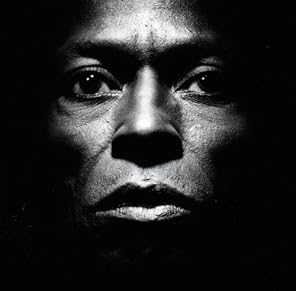
Cover of "Tutu"Cover of TutuCelebrating Miles Davis - 02/19/2011 | MiamiHerald.com

By the time of his death in 1991, trumpeter Miles Davis had lived several jazz lives.
Throughout a career spanning 50 years, Davis showed an acute sense for shifting musical paradigms and an uncanny ability to both absorb and transcend the musical trends of the day. Time and again, he reinvented himself as needed, and as he did, he also changed the sound of jazz.

Two sides of Davis’ music — one acoustic, featuring classic songs from albums such as Kind of Blue, the other electric, centering on Tutu, the most memorable studio recording of his late period — are the subject of Celebrating Miles, a concert featuring trumpeter (and Davis’ protégé) Wallace Roney, bassist-producer Marcus Miller, up-and-coming trumpeter Christian Scott and bassist Ron Carter, among others. The show, part of the Adrienne Arsht Center for the Performing Art’s Jazz Roots series, takes place at the Knight Concert Hall at 8 p.m. Friday.

“It’s an honor to be part of a tribute to Miles, although I feel I pay tribute to him every time I play the trumpet,” Roney said in a recent phone interview. “I feel my own music is an extension of what he gave to the art form — but I think everybody’s music has been influenced by him.”

Roney’s career includes stints with Art Blakey, Tony Williams and Ornette Coleman, as well as 16 albums as a leader. He also won a Grammy in 1994 as a member of the Miles Davis Tribute Band, featuring Wayne Shorter, Herbie Hancock, Carter and Williams. He will perform in the acoustic half of the concert, leading an exceptional group comprised of Billy Childs on piano, Donald Harrison on alto sax, Javon Jackson on tenor sax, Carter on bass and Al Foster on drums.

Roney’s own music includes distinctly contemporary elements including turntables and down-tempo grooves. But he won’t approach this show like a repertory player performing a role.

“Playing Miles’ music is as much me as playing my own music. Playing Miles’ music is how I grew up, it’s how I’ve learned,” he says. “So it’s me. I don’t have to think ‘Well, now I’m going to role-play.’ All I have to do is go to that part of me.”

Jazz phenom

Roney, who will be 51 in May, was already being hailed as a young jazz phenom when he met Davis at a tribute to the trumpeter at the Bottom Line in New York City in 1983. After hearing him play, Davis took an interest and became his mentor. “He heard himself in me,” says Roney, matter-of-factly. “ ‘You remind me of me,’ he told me. ‘You look at me like I used to look at Dizzy.’ ”

In 1991, Davis invited Roney to be part of his concert at the Montreux Jazz Festival in Switzerland. That evening, working with an orchestra conducted by Quincy Jones, Davis revisited some of the charts of his classic collaborations with arranger Gil Evans. Roney was a featured soloist.

He chuckles as he discusses the perception and truth of Davis’ cultivated, forbidding persona.

“Miles had a vibe. He definitely had a vibe. He walked into a room and everybody would turn, and he knew how to use that to make people back away from him,” Roney says. “But he was a beautiful person. He was funny. He was friendly. He was generous. He was everything that people would love in a human being but, if you crossed him, oh buddy, ooooh buddy. Then you’d see the “Evil Miles Davis” — and I saw that, too.”

He says that often lost in Davis’ mystique is the fact that “this man was one of the greatest trumpet players of all time.”

“I got to hear his sound in my ear, and I never heard anybody sound like that in my life,” Roney says. “He had a sound that seemed to come from the clouds. I’m telling you. It was not from this Earth. It came from the clouds.”

For all of Davis’ tough posturing, his sound spoke with a touching vulnerability, which served him well in the ’50s and ’60s (just check his classic ballad playing), but also in the ’70s, as he stirred a witches’ brew of electric rock-jazz fusion.

A new groove

In Tutu, recorded 25 years ago this month, the deep humanity of Davis’ sound is set in a world of synthesizers and pre-programmed grooves. Here, he’s Everyman standing in a shiny, mechanical world of zeros and ones, smooth metal and plastic.

“That’s what I was hoping to get,” said Tutu co-producer Miller, 51, who wrote and arranged most of the songs, and played most of the instruments on the album. “To me it was the sound of someone who had been through so much, trying to make his way in this weird, technological world. Miles’ sound was perfect for that.”

The recording was strictly a studio affair. Co-producer Tommy LiPuma, then the head of jazz at Warner Bros., Davis’ new label, decided not to use a live band. To complement Miller’s work, additional musicians were called as needed. As for Davis’ involvement, Miller recalls that “Miles came in, heard the tracks and told me to call him when I needed the trumpet. That’s it. But he was involved the whole time. I was just making a suit he would put on, and hoping it fit well.”

Some of the songs in Tutu were later incorporated into Davis’ live show playlist, but the idea of playing the whole album top to bottom only emerged a couple of years ago, as a one-off event, part of a Miles Davis exhibit in Paris.

“I wanted to do a tribute to Miles, but I also knew Miles would absolutely hate the idea of going back in time and recreating something from 25 years ago,” Miller explains. “Miles never liked to look back. ... And then I got the idea: if I could find some young musicians who were babies when Tutu came out and introduce these great young musicians to the world and have them interpret it, now that could be something Miles would appreciate.”

Miller found New Orleans trumpeter Scott, who will be 28 in March; Louis Cato, drums, 25; Federico Gonzalez Pena, piano, 42, and Alex Han, alto sax, 22. The performance was a success, concerts promoters called, and the one-time-only event became a touring show.

“When we first played the music it tripped me out. Every note brought up a memory of when I was hanging with Miles, working on the music, so it was really emotional to play it,” recalls Miller. “But I really enjoyed playing it live, bringing it to life.”

“What you are going to get out of these shows is how much influence this guy had in our music, in all of us,” says Miller. “Because we are all kind of his children, his family. It’s going to be a beautiful thing to see how Miles still lives.”

Thursday, October 21, 2010

Jazz Articles: Jazz Saxophonist Marion Brown Dies — By Lee Mergner — Jazz Articles

Marion BrownCover of Marion BrownJazz Articles: Jazz Saxophonist Marion Brown Dies — By Lee Mergner — Jazz Articles
Known for his association with Archie Shepp, Amiri Baraka, Ornette Coleman and other bright lights of the 60s avant garde jazz community, Marion Brown died on Monday, October 18, in Hollywood, Florida. He was 79. Brown had been ill for many years and had not performed publicly in a long time. Brown recorded over a dozen albums as a leader for Impulse!, ESP, Black Lion and ECM, but is perhaps best known for his appearance as a sideman on two seminal records of the ‘60s: John Coltrane’s Ascension and Archie Shepp’s Fire Music.
Brown was born in the Atlanta area. He left high school in the 10th grade and enlisted in the Army, where he quickly became a member of the Army band and was stationed for 18 months at Hokkaido, an obscure island of Japan. After he returned home to Atlanta, Brown enrolled at Clark College to major in music education. He went on to study at Howard University in Washington, DC and it was there that he became immersed in the new music played by artists such as Ornette Coleman, Cecil Taylor, John Coltrane, Amiri Baraka, Archie Shepp and others. Within a few years, several of these artists would become mentors or associates of Brown. Disenchanted with his academics at Howard, Brown moved to New York in order to play this new music professionally.

Saturday, September 25, 2010

The Root Interview: Roy Haynes on the Fountain of Youth

JAZZ: Roy Haynes - Carnegie Hall Concert 2007 #2Image by Professor Bop via FlickrThe Root Interview: Roy Haynes on the Fountain of Youth
The elder grandmaster of drums Roy Haynes talks with The Root about his upcoming season-opening concert for Jazz at Lincoln Center, his roll call of influences and why his style remains in the pocket.
Roy Haynes percolating on drums is like Ali dancing on the tips of his toes, jabbin', snapping heads back, which is why they call him "Snap Crackle," for the way Haynes pops the pulse, the groove. He doesn't just keep time rudimentally -- he plays with time, listens oh so closely to his younger band mates and responds with empathy. Whenever you see him, he's always clean, dressed to the nines; in fact, back in the 1960s he was one of Esquire magazine's best-dressed men. He has a taste for vintage cars, but it's his tasty drumming style that really sets him apart and through which he's made his mark.
In the first several decades of his career, Haynes on the regular played with the icons of jazz: Pops, Prez, Bird, Diz, Monk, Miles, Mary Lou, Getz, Coltrane, Billie, Sarah, Ella, to name a bunch. Nowadays, he's a great-grandfather whose aptly named Fountain of Youth Band travels the world summoning wonder. Very recently, Haynes made an impromptu appearance at Sonny Rollins' 80th-birthday concert and threw down the gauntlet of pleasure with Rollins, Christian McBride and free-jazz pioneer Ornette Coleman.

Friday, September 24, 2010

Why We Love Ornette Coleman : A Blog Supreme : NPR

Ornette Coleman at Enjoy Jazz Festival 2008, H...Image via WikipediaWhy We Love Ornette Coleman : A Blog Supreme : NPR
This weekend, The Jazz Gallery in New York will host a three-day festival called Celebrating Ornette Coleman. As tributes to the jazz legend go, this one is special.
For one, the lineup is packed with stars and musician's musicians: Mark Turner, Joe Lovano, Nasheet Waits, Johnathan Blake, Kevin Hays and Joel Frahm are leading bands with such sidepersons as Matt Wilson, Seamus Blake, Marcus Gilmore, Stanley Cowell, Avishai Cohen, Joey Baron and more. (The collaborative trio of Vijay Iyer, Matana Roberts and Gerald Cleaver will also perform.) For another, The Jazz Gallery is a small room usually committed to the up-and-coming generation of artists — this weekend, they'll be packing in artists who often command theaters and weeklong club runs. And as a third, the shows are presented by Jimmy Katz, the jazz portrait photographer and audio engineer. With his wife, Katz raised all the funds; he is also recording the shows, and the musicians will own their masters. There are no guidelines for how each group will play their tributes.